What happens during a professional teeth cleaning?
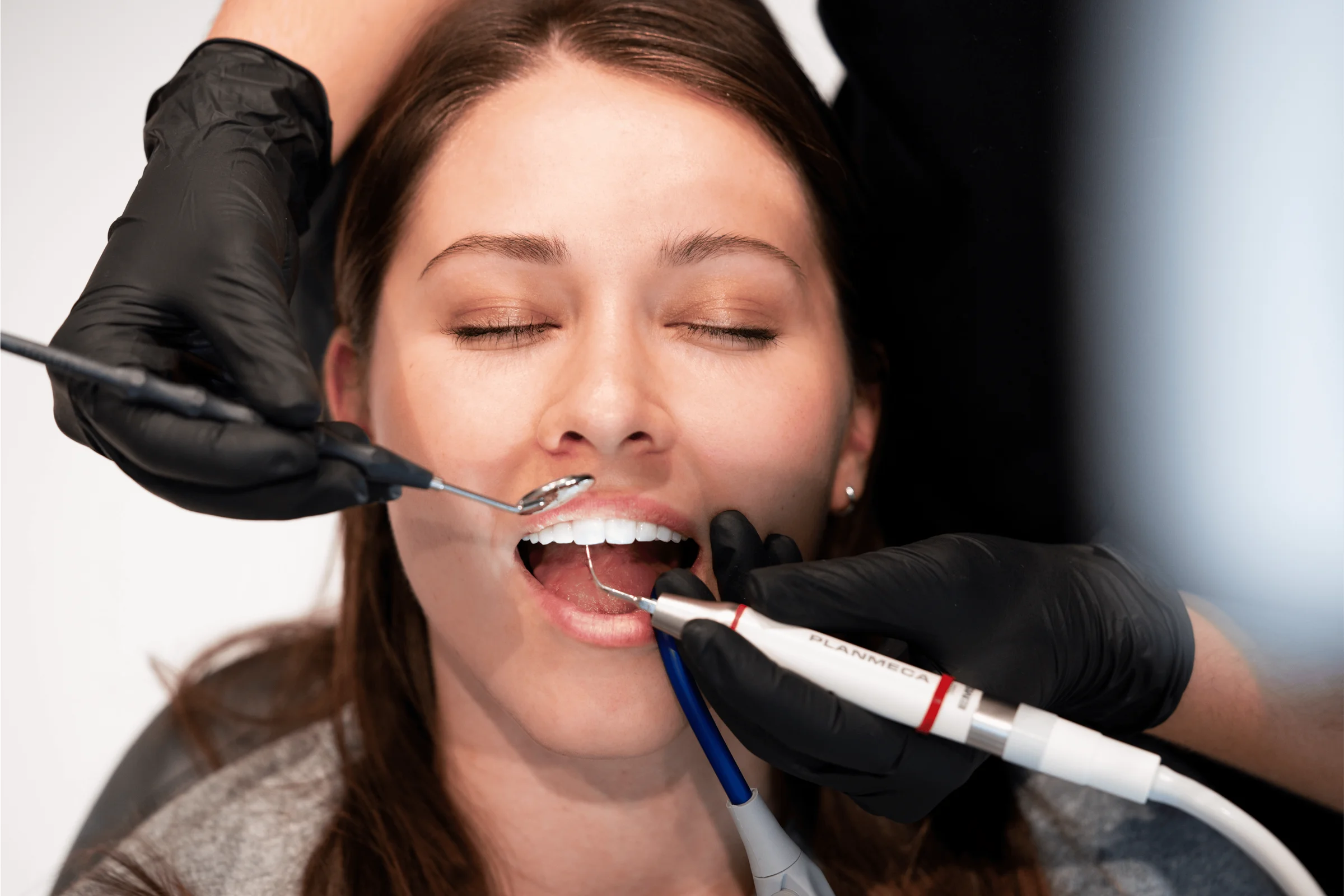
A professional teeth cleaning is usually carried out by a dental hygienist at the ALPINE WHITE studio or at a dental practice. Various techniques and instruments are used to thoroughly clean your teeth. First, stubborn plaque and tartar are removed with special hand instruments or ultrasound devices. These devices use vibrations to gently remove the hard deposits.
After that, the interdental spaces are cleaned, where food particles or plaque often hide. Dental floss or interdental brushes are used here to reach those hard-to-reach areas. This is important to prevent tooth decay and gum inflammation.
Finally, the teeth are polished with special pastes and air-flow devices to make the surfaces smooth and clean. This helps to prevent new plaque from forming. Fluoridation provides additional protection for your teeth by strengthening the enamel.
How often should you have a professional teeth cleaning?
The frequency of professional teeth cleaning depends largely on the condition of your teeth and gums. In general, it is recommended to have a professional teeth cleaning at least once a year. However, if you tend to bleed or have gum disease such as gingivitis, you should have it done more often.
A professional teeth cleaning is also particularly important for people with dentures, as plaque can more easily collect on prostheses or bridges. If you are having orthodontic treatment, it is advisable to have a professional teeth cleaning done regularly to avoid plaque in hard-to-reach places.
What should you bear in mind before a dental cleaning?
There are a few things you should be aware of before a dental hygiene appointment. If you have inflamed gums, you should tell your dentist, as the gums may be more sensitive to the cleaning in this condition. Exposed tooth necks or periodontitis can also pose a challenge, so a thorough check before the treatment is important.
If you suffer from bad breath, a professional teeth cleaning can be particularly helpful as it reduces the bacterial load in the mouth. Often, it is stubborn plaque or inflammation in the gum pockets that cause bad breath.
What is particularly important after a teeth cleaning?
After a dental hygiene appointment, you should take extra care with your dental care to maintain the results achieved for as long as possible. This is because after a thorough cleaning, your teeth are not only free of plaque and discolouration, but they are also particularly smooth and sensitive. With consistent follow-up care, you can ensure that your oral health remains at a high level and prevent new deposits.
Intensify your regular dental care
Your teeth will be in optimal condition immediately after a professional clean, but plaque can quickly accumulate again, especially in the interdental spaces, which are often difficult to access. That's why it's important to incorporate dental floss or interdental brushes into your daily dental care routine. These help to thoroughly remove food particles and plaque in the interdental spaces, where cavities often develop first. Interdental brushes are particularly effective for cleaning between teeth with narrow interdental spaces or exposed tooth necks and for preventing gum irritation.
Mouthwash as a supplement
In addition to mechanical cleaning with a toothbrush and dental floss, mouthwashes can be a further step in your daily routine. They help to reduce bacteria in the oral cavity, which is particularly useful after professional tooth cleaning, as the gums may still be somewhat sensitive after the removal of tartar and plaque. Mouthwashes with antibacterial ingredients promote gum health and prevent inflammation.
Pay attention to your diet
In the days following your teeth cleaning, you should take extra care to avoid colouring foods such as coffee, tea, red wine, beetroot and spicy foods. Your teeth are particularly smooth after polishing and can be more susceptible to new discolouration. A temporary switch to less colouring foods can help to preserve the lighter tooth colour for longer. Of course, this doesn't mean that you have to avoid these foods permanently – but you should take extra care immediately after your professional teeth cleaning to ensure the best possible results.
Fluoride protects your teeth
Another important point is choosing the right toothpaste. Make sure you use a toothpaste with fluoride to strengthen your tooth enamel and reduce the risk of cavities. Fluoride hardens the enamel and makes it more resistant to acid attacks that can result from consuming foods that are high in sugar and acid. Special fluoride mouthwashes can also be used to provide additional protection for your teeth. Use our whitening toothpastes from ALPINE WHITE.
Gentle care for sensitive gums
If your gums are sensitive after a professional cleaning, you should use particularly gentle dental care products for the first few days. Toothpastes that have been developed for sensitive teeth and gums can help to prevent irritation. A soft toothbrush is also gentle on your gums and ensures that you do not irritate them further.
Follow-up care at ALPINE WHITE
It may also be useful to schedule regular check-ups with your dental hygienist to ensure that your oral health remains stable after the professional teeth cleaning. If your hygienist finds signs of gum disease or cavities during the cleaning, more frequent monitoring may be useful to take early action.
By integrating these follow-up measures into your daily dental care routine, you can maintain the results of your professional teeth cleaning in the long term and optimally support your dental health. Investing in good oral hygiene pays off – for a healthy smile and fewer visits to the dentist.
What can you do about bleeding gums and sensitive tooth necks?
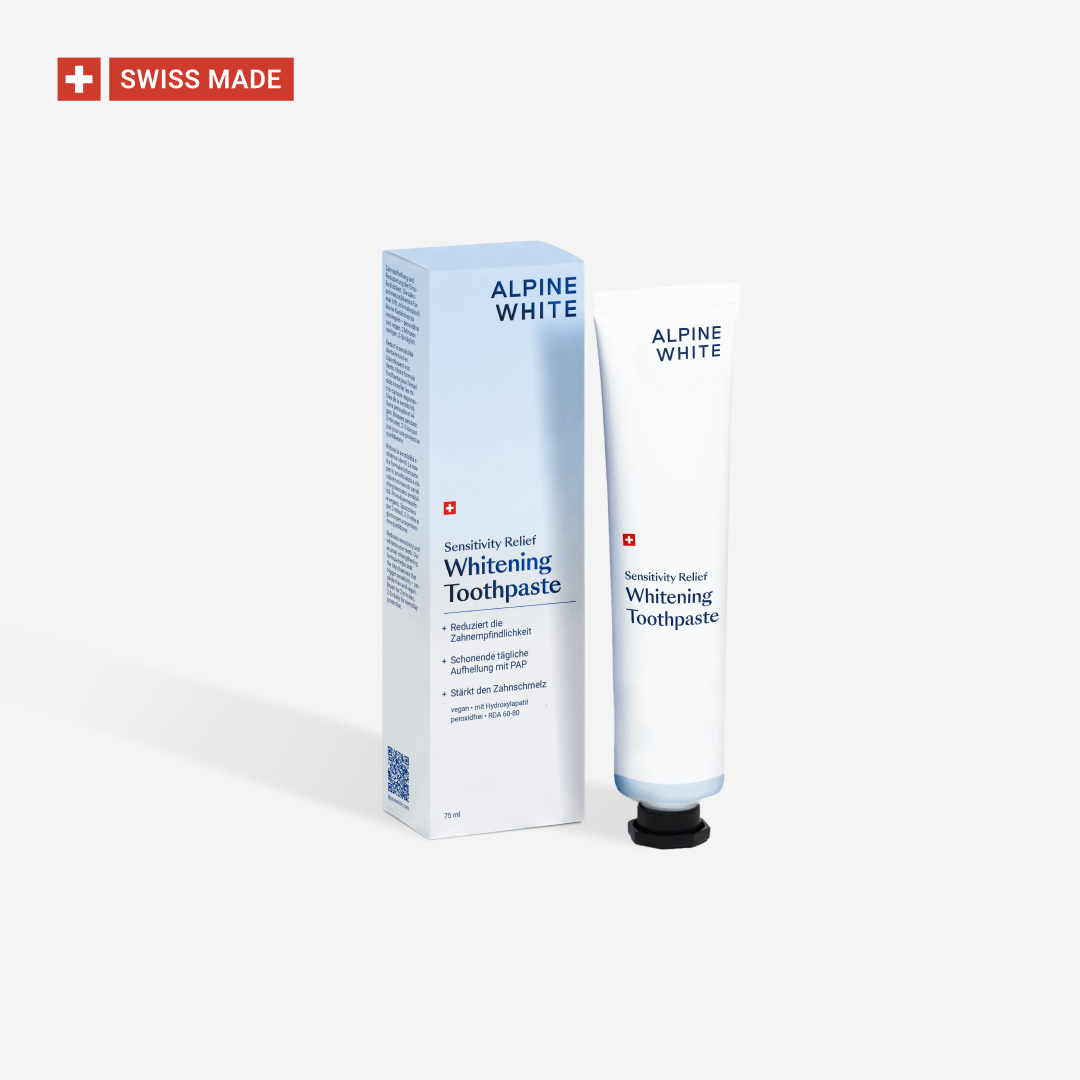
If you experience bleeding gums during or after a professional teeth cleaning, it could be a sign of gum disease. In such cases, it is important to maintain thorough oral hygiene and to have regular check-ups with your dentist. Tooth necks A toothpaste specially formulated for sensitive teeth can help by protecting the enamel and providing relief. Use our whitening toothpaste Sensitivity Relief for this purpose.


 Dental Hygiene