What exactly are peroxides?
Peroxides are compounds with a special bond between two oxygen atoms, linked to other elements or compounds. This oxygen-oxygen bond makes them reactive, which is why they are used in industry and in everyday products. You have probably heard of hydrogen peroxide (H₂O₂), the best-known peroxide. But the group is much wider: peroxides can be organic or inorganic, depending on which other atoms are attached to the oxygen.
Hydrogen peroxide: the best-known peroxide
Hydrogen peroxide is usually used as a water-based solution, for example as a disinfectant or bleach. It is a strong oxidising agent: it can release oxygen, and that reactivity is what lets it kill bacteria and viruses.
It is also used as a bleaching agent. The oxygen released as it breaks down attacks organic compounds such as the pigments in teeth or hair, which makes them look lighter. That is why hydrogen peroxide is a common ingredient in conventional teeth whitening products. At high concentrations, however, peroxides can cause side effects such as tooth sensitivity and irritation.
Organic and inorganic peroxides
Besides hydrogen peroxide, many other peroxides matter in chemistry and industry. They fall into two groups, organic and inorganic. Their properties and uses differ, but they all contain the oxygen-oxygen bond that makes them reactive and versatile.
Organic peroxides: initiators for plastics
As the name suggests, organic peroxides contain carbon compounds as well as oxygen. In industry they are mainly used as initiators in polymerisation, where small molecules (monomers) are linked into long chains (polymers). This is a key step in making plastics, and organic peroxides start the reactions that set it off.
A well-known industrial example is the anthraquinone process, in which hydrogen peroxide is produced from anthraquinone. The resulting hydrogen peroxide solution is used in many fields, including the pulp and paper industry, to bleach paper.
Organic peroxides can also be dangerous: some count as explosives. At high concentrations and in unstable mixtures they can react violently, so strict safety rules apply to their storage and handling.
Inorganic peroxides: highly reactive
Inorganic peroxides contain no carbon compounds. One example is sodium peroxide (Na₂O₂), a strong oxidising agent used to bleach pulp. It removes discolouration by reacting with the organic compounds in the pulp.
Inorganic peroxides are often very reactive. They react quickly at higher temperatures and release a lot of energy, which makes them useful as oxidisers in areas such as rocket propulsion.
Are peroxides dangerous? Hazards and safety
Organic and inorganic peroxides can become hazardous, especially in contact with other chemicals or high temperatures, where they may form reactive, even explosive, mixtures. Hydroperoxides, a group of organic peroxides, are often very unstable and so particularly reactive. They can break down easily in the presence of atmospheric oxygen and trigger dangerous reactions.
The by-products can be a problem too. When hydrogen peroxide breaks down, it releases oxygen, which in large quantities can cause a dangerous build-up of pressure. If you handle peroxides, wear gloves and safety glasses, avoid skin contact and keep them away from sources of ignition. Store them cool and dry, and away from flammable materials.
How does your body break down hydrogen peroxide?
Hydrogen peroxide also occurs naturally in the human body, in very small amounts. In higher concentrations it is harmful, so the body has ways to break it down. The enzyme catalase plays the central role: it splits hydrogen peroxide into water and oxygen, which makes it harmless. The reaction is fast, so hydrogen peroxide does not normally build up and cause damage.
Peroxides in industry, submarines and contact lens care
Peroxides are used across the chemical industry, in medicine and in food processing. Hydrogen peroxide disinfects in hospitals and bleaches in the paper industry. Because of their reactivity, peroxides need special conditions for storage and transport, and strict regulations cover how hazardous substances like these are handled.
Some submarines use hydrogen peroxide as an oxygen source, because it releases oxygen underwater. And many contact lens cleaning solutions contain hydrogen peroxide because it removes bacteria and deposits effectively. It must be fully neutralised before the lenses go back in, otherwise it can irritate your eyes.
Peroxides in teeth whitening: an overview
Many people want whiter teeth. Over time, coffee, tea, red wine and smoking can stain them. Many conventional teeth whitening products use peroxides, above all hydrogen peroxide, to remove these stains. So what happens when peroxides are used to whiten teeth, and what are the risks?
How does hydrogen peroxide whiten teeth?
Hydrogen peroxide is a strong oxidising agent. Applied to the tooth surface, it starts a chemical reaction that releases oxygen. The oxygen penetrates the enamel and breaks down the organic compounds that cause staining, so the tooth looks brighter.
Hydrogen peroxide is central to many whitening products, both at home and at the dentist. Dental practices often use higher concentrations for quick, visible results. This kind of professional bleaching needs careful application to avoid harming the teeth or gums, so it is best done by your dentist or dental hygienist.
Does hydrogen peroxide affect sensitive teeth and enamel?
Hydrogen peroxide whitens effectively, but there are growing concerns about its effects on dental health. The most common problem is increased tooth sensitivity. Because the peroxide penetrates deep into the enamel, it can reach the dentin underneath, which can cause temporary and, in some cases, lasting sensitivity.
There is also a risk of gum irritation, especially at high concentrations, and in some cases chemical burns to the gums. Repeated use may weaken the enamel and make it thinner, leaving teeth more prone to cavities and other damage. If you have sensitive teeth or notice pain or bleeding gums, speak to your dentist.
Alpine White: gentle whitening at home
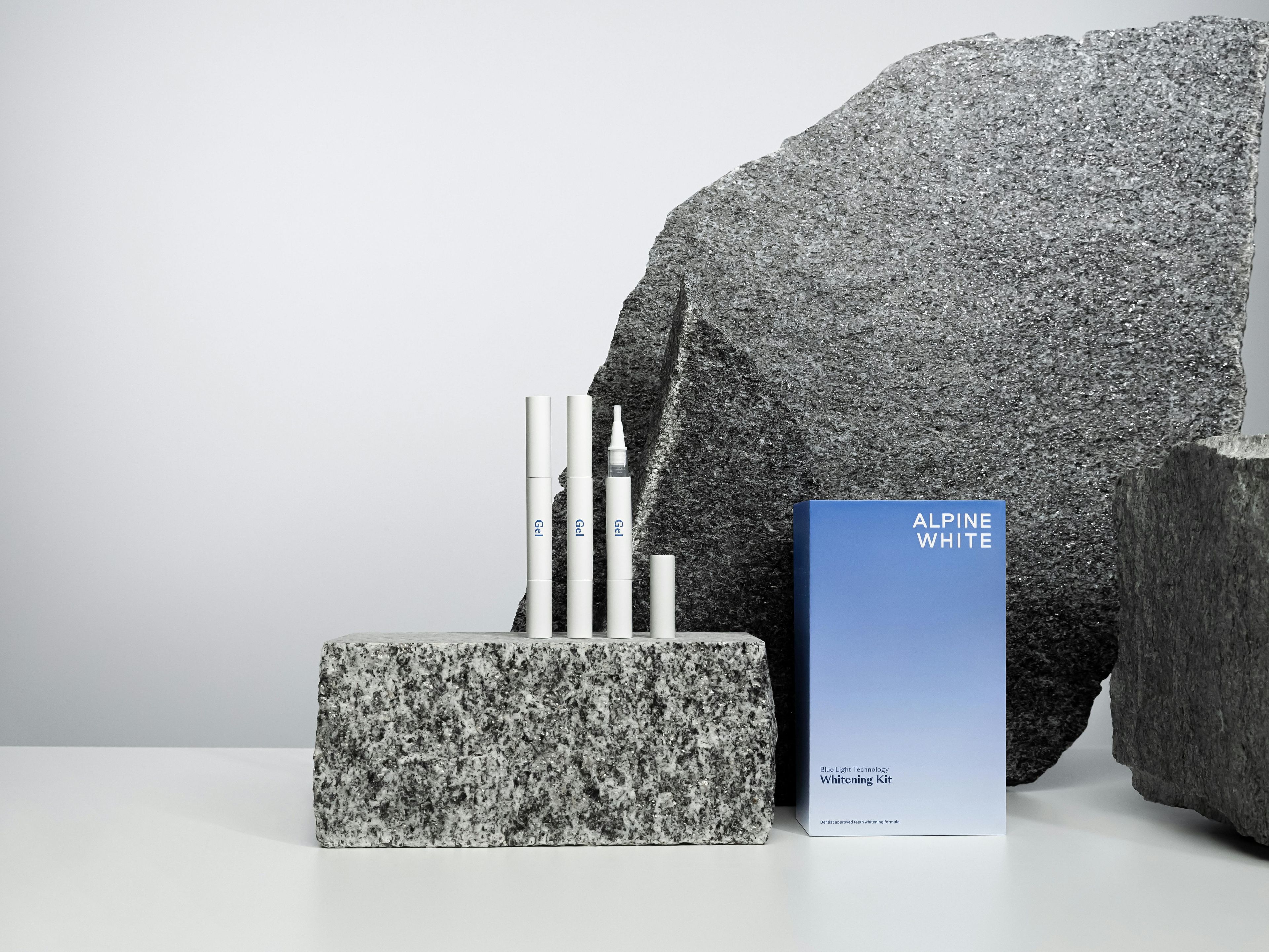
At Alpine White we believe you can have a bright smile without putting your dental health at risk. Many people hesitate to whiten their teeth because of the risks linked to hydrogen peroxide. That is why we developed peroxide-free products that are gentle on your teeth. Try our whitening strips or the complete Whitening Kit for gentle whitening at home.

 Teeth Whitening