Back to overview
Black silhouettes of a development series on a square, a man looks at his phone

Teeth whitening trends: how the market has changed in five years

Teeth WhiteningAug 19, 20245 min read

Interest in teeth whitening has surged worldwide. Brighter smiles, social media and a stronger focus on dental health are all behind it. We look at how the trend has developed over the past five years, using statistics and studies.


Andrea Seraina

Andrea Seraina

Dental Content Specialist

How big has the teeth whitening market become?

Interest in teeth whitening has grown steadily over the past five years. It reflects a wish for a brighter smile and a growing willingness to invest in how we look. According to Fortune Business Insights, the global market rose from about 6.14 billion USD in 2019 to an estimated 8.21 billion USD in 2023. That is a compound annual growth rate (CAGR) of roughly 6.1%.

Several factors explain this growth. Awareness of the value of a bright smile is rising, so demand for cosmetic dental care is rising with it. Products for whitening teeth at home have also become far easier to find, which opens whitening up to a much wider audience. Innovations such as LED devices and newer whitening gels have added further momentum.

The market is expected to keep expanding. Ongoing urbanisation in emerging markets, rising purchasing power and the popularity of minimally invasive cosmetic treatments may all support this. Teeth whitening is therefore likely to remain a central part of aesthetic dentistry.

How has social media changed teeth whitening?

Social media has played a major part in making teeth whitening mainstream. On Instagram, TikTok and YouTube, influencers and celebrities show off bright white teeth to millions of viewers. This has created a desire for similar results and raised awareness of the different ways to whiten teeth.

A survey by Statista found that over 35% of respondents in 2022 first heard about teeth whitening through social media. Younger audiences in particular are strongly influenced by the beauty ideals they see online, and many are willing to invest in products that help them get a similar look.

Social media does more than promote products. It also lets people share their own experiences through reviews, before-and-after photos and tutorials. These peer reviews add credibility and help the trend spread.

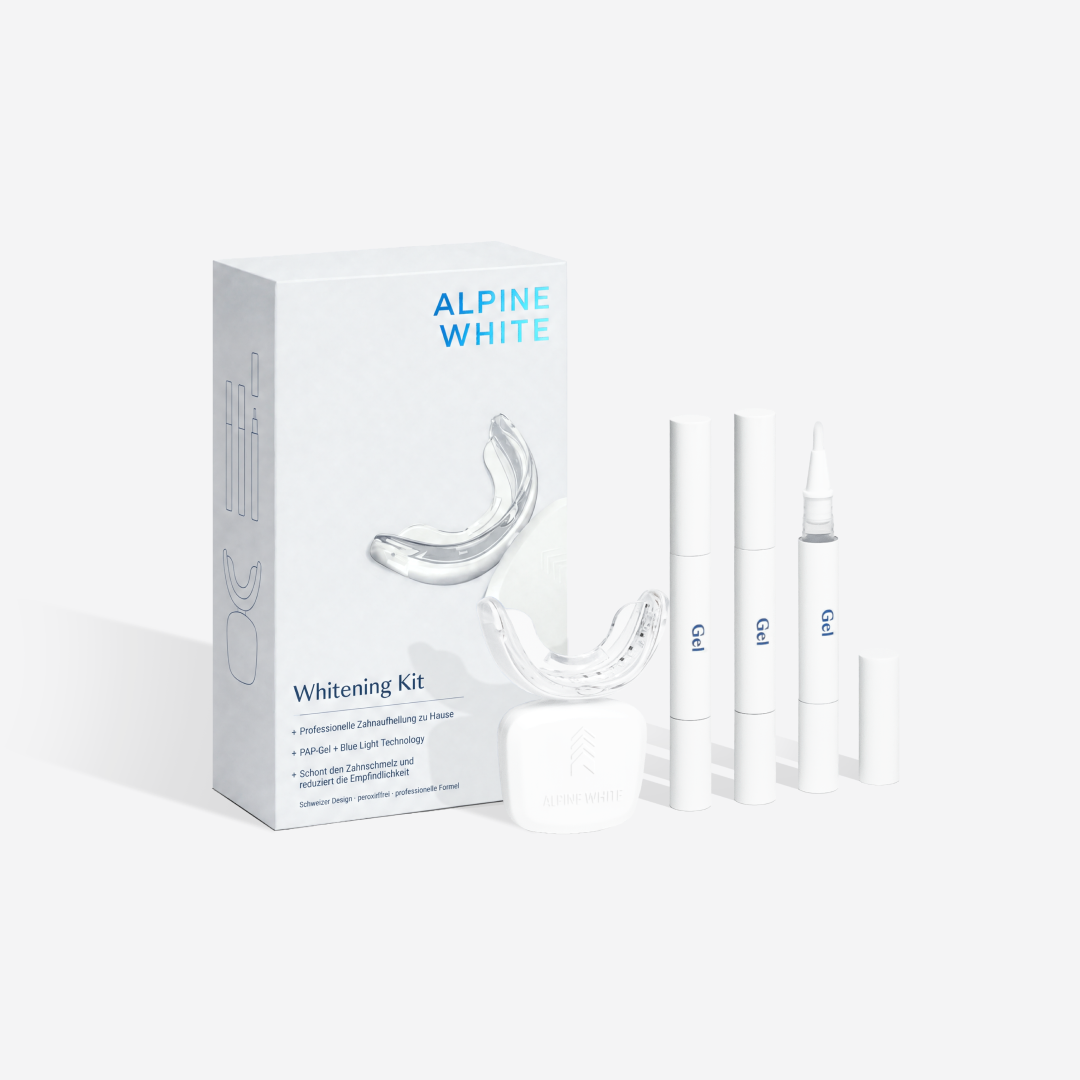
Pack of ALPINE WHITE Whitening Kit with tray, charging case and three gel pens
4.6(82)

Whitening Kit

€ 79.90

1 pc • € 79.90

Learn more

Why is awareness of dental health growing?

Alongside interest in cosmetic treatments, awareness of general dental health has risen clearly. A 2021 survey by the Oral Health Foundation shows that 45% of respondents aged 18 to 34 are considering teeth whitening products or treatments. In 2017 the figure was 32%. The increase goes hand in hand with a better understanding of why oral hygiene and dental care matter.

As a result, more people use whitening products, and they increasingly look for high-quality, safe products. Shoppers today are better informed. They check the ingredients and think about the possible effects on their dental health, which has pushed many brands to adapt their products.

Whitening is also seen less as a cosmetic luxury and more as part of a complete approach to oral hygiene. Many people see it as a way to boost confidence while looking after their dental health. In the long run, whitening could become a fixed part of the daily oral care routine.

Why are peroxide-free whitening products in demand?

There has been a clear shift towards peroxide-free whitening products. More and more people look for gentle alternatives that whiten teeth without the risk of sensitive teeth or damage. This reflects growing awareness of the possible side effects of peroxide-based products, which are often linked to gum irritation and enamel loss.

According to a study by Transparency Market Research, peroxide-free products were expected to make up about 40% of the market by 2025, compared with 25% in 2018. Consumers clearly prefer products that are effective but also gentle.

Alpine White offers an at-home range for people who prefer to whiten in their own time. The whitening strips and the Whitening Kit are made for whitening at home, and the Whitening Toothpaste Extra White helps you keep your results between whitening sessions.

If you would like a professional option, your dentist or dental hygienist can explain what in-office bleaching involves and whether it suits your teeth. Whichever route you choose, a good daily routine at home helps you maintain the result.

The demand for peroxide-free solutions is part of a wider move towards sustainability and natural-feeling products in personal care. Shoppers want products that are safe, effective and kinder to the environment, and brands are working to meet those expectations.

How does demand for teeth whitening differ by region?

Teeth whitening is gaining popularity worldwide, but demand and growth vary by region. In Europe and North America, demand for fast teeth whitening has traditionally been high, thanks to strong purchasing power and a pronounced beauty awareness. These markets are fairly saturated, yet demand stays stable as people keep looking for innovative, effective products.

The Asian market is growing much faster. An analysis by Mordor Intelligence from 2023 expects the Asian market to grow at a CAGR of 8% until 2027. The main drivers are urbanisation, rising wealth and interest in Western beauty standards.

In countries such as China, India and South Korea, the wish for a bright white smile has risen sharply. Wider availability of whitening products and the popularity of beauty treatments contribute, and so does the cultural importance of a "perfect" smile in many Asian countries.

These differences create varied opportunities for the industry. In established markets such as Europe and North America the focus is on product innovation and quality, while Asia offers great potential for expansion. Companies that adapt their products and marketing to local needs can benefit most from this growing global interest.

Conclusion: is teeth whitening just a trend?

Teeth whitening is now more than a cosmetic trend. It reflects a growing awareness of how much a bright smile matters. The last five years show a market that keeps growing and diversifying, especially with new, gentler products. Social media and the desire for both healthy and attractive teeth will keep driving the trend in the years ahead.

This might also interest you

Smiling woman brushes her teeth in front of the bathroom mirrorTeeth Whitening

PAP Teeth Whitening: How Gentle Whitening Supports Healthy, White Teeth

Most of us want whiter teeth, but worry about enamel and sensitivity. Classic bleaching is often linked with strong ingredients and unpleasant side effects. PAP teeth whitening offers a gentler alternative: it aims to reduce stains and support healthy, white teeth without putting unnecessary stress on your enamel. In this article, we explain in simple terms what PAP is, how it works and how ALPINE WHITE whitening strips and whitening toothpaste can fit into your daily oral care routine.

Light blue toothbrush next to an ALPINE WHITE toothpaste tube on a shelfOral Care

How a modern oral care routine helps you avoid costly, painful dental treatment

Most of us know we should look after our teeth better, but between work, family and everyday life there is rarely time for a clear plan. Dental treatment is not getting any cheaper, and every painful session in the dentist’s chair is a reminder of how valuable prevention is. This article shows you how a realistic, modern oral care routine can protect your teeth and gums, keep plaque and stains in check, and lower your risk of costly, painful treatment.

Woman places a Whitening Strip on the upper teethTeeth Whitening

Best teeth whitening strips in Europe: why Alpine White is the top choice

Looking for the best teeth whitening strips in Europe, without sensitivity or harsh chemicals? Find out why Alpine White's clinically validated, peroxide-free whitening strips are trusted in Germany, Austria and Poland. Developed in Switzerland and sold by leading European retailers, they deliver visible results in just 3 days – gently, effectively and with no fuss.