Back to overview
Smiling woman brushes her teeth with a blue toothbrush against a white background

How to brush your teeth properly for good oral hygiene

Oral CareSep 26, 20225 min read

Good oral hygiene starts with brushing your teeth properly. Find out what to look for in your daily dental care, from technique to tongue cleaning.


Andrea Seraina

Andrea Seraina

Dental Content Specialist

Why good oral hygiene matters

Smiling is one of life's great pleasures. Cleaning your teeth is perhaps less so. But a healthy, radiant smile does not come by itself. Your dental health affects your overall well-being.

Studies show a link between the condition of your teeth and the risk of heart attacks and diabetes. Healthy teeth are therefore not just a question of looks. They also protect your general health.

Good oral hygiene needs regular, correct daily care. Your dentist can treat cavities, gingivitis and other dental problems, but looking after your teeth yourself can save you costly treatment later. To keep healthy teeth healthy in the long term, you need to clean them thoroughly and carefully every day.

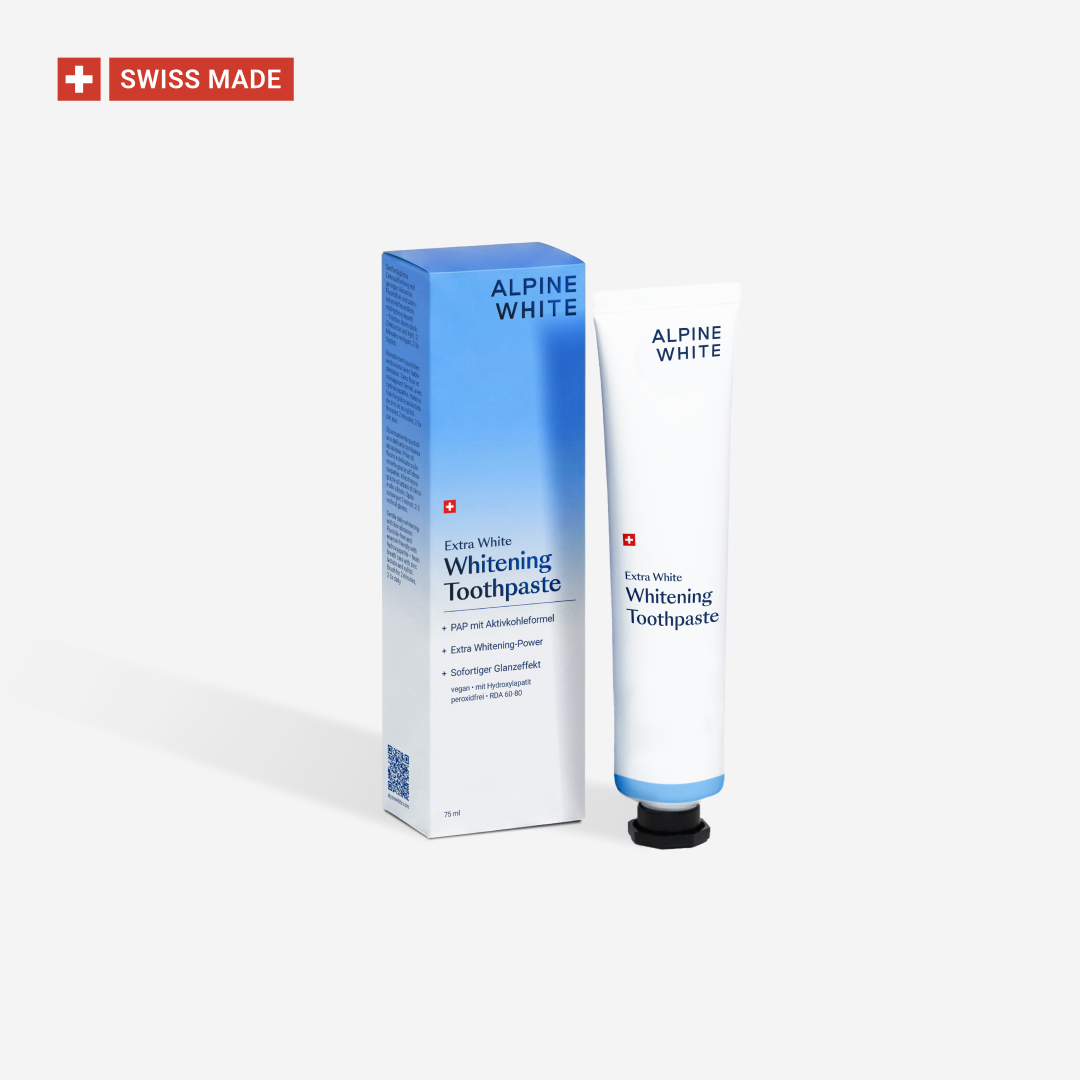
Folding box and tube ALPINE WHITE Extra White Whitening Toothpaste, “Swiss Made” note
4.7(69)

Whitening Toothpaste Extra White

€ 19.90

75 ml • € 26.53

Learn more

How do you brush your teeth properly?

The basis of optimal oral hygiene and a healthy oral microbiome is proper, thorough teeth cleaning. With a good toothbrush and the right toothpaste, you remove plaque and food debris. Removing plaque takes away the breeding ground for harmful bacteria, so less plaque can build up. Regular care benefits not only your teeth and gums but also your tongue, throat and the lining of your mouth.

Adults should brush at least twice a day, using only light pressure and moving from the gum towards the tooth. A good brushing technique usually takes at least two minutes, so that every tooth is cleaned properly. Do not press the bristles hard against your teeth and do not scrub. Your gums and the necks of your teeth need gentle handling to avoid gum irritation and bleeding.

It helps to follow a fixed order every time you brush. For example, start with the upper jaw and work from the centre out to the left and right molars, then move on to the lower jaw. Do not forget the inner surfaces and the chewing surfaces, as they need careful cleaning too. Overall, do not brush for longer than three minutes, as this can harm your enamel.

Choose a toothpaste with active ingredients against plaque bacteria and fluoride. An electric or sonic toothbrush can make brushing even more effective, as it offers extra cleaning support such as timers and pressure control.

To support your daily routine, have your teeth cleaned professionally by your dentist or dental hygienist on a regular basis. You can read more about this in our article on dental hygiene.

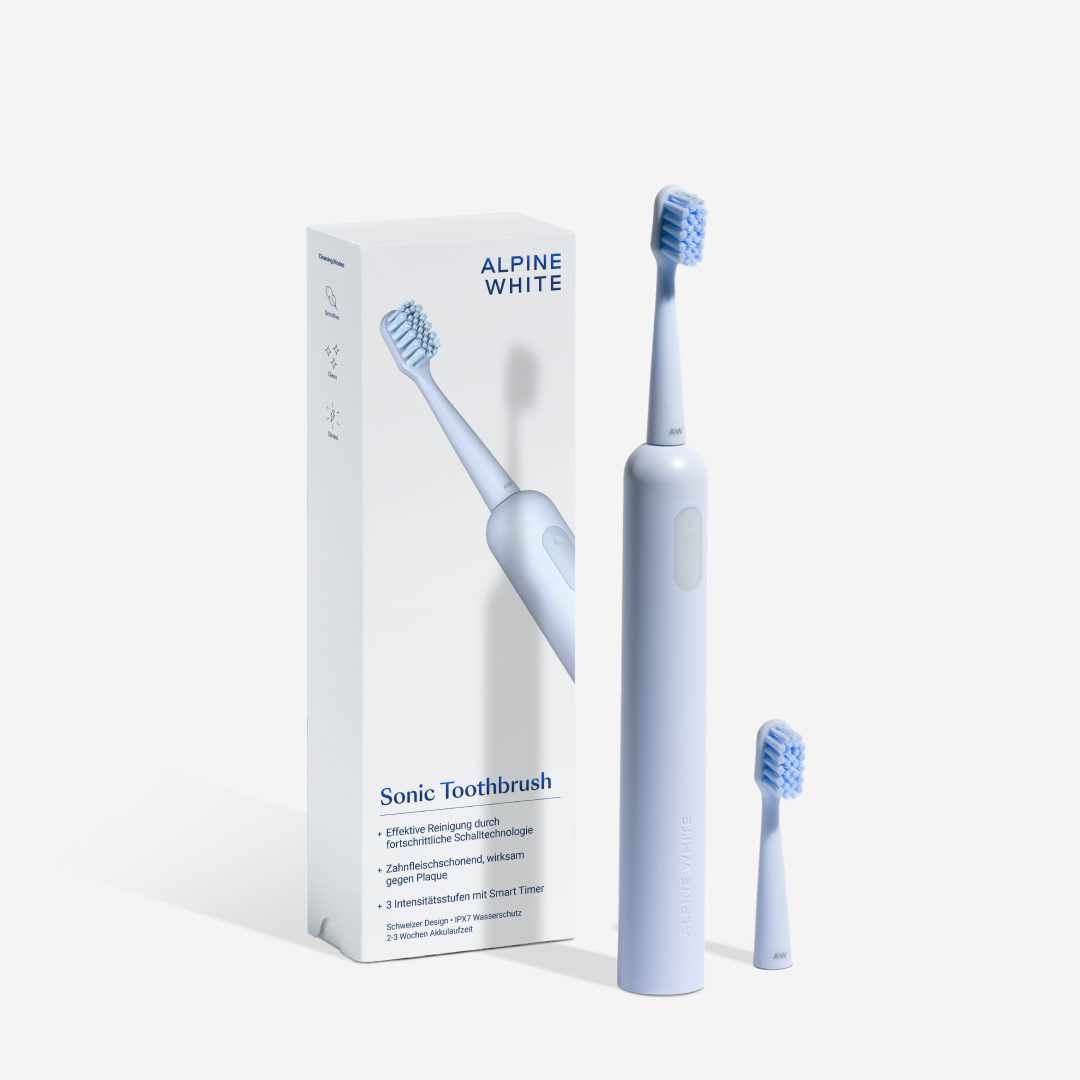
Sonic Toothbrush next to its packaging and a replacement brush head against a light background
5.0(3)

Sonic Toothbrush

€ 99.90

1 pc • € 99.90

Learn more

How do you clean between your teeth?

A toothbrush removes most of the plaque from the surface of each tooth. The bristles usually cannot reach the narrow spaces between your teeth, though, so these are not cleaned properly. Many people only clean the tooth surfaces.

Cleaning between your teeth is just as important. Many people use a water flosser to rinse food out of the gaps, but this does not remove plaque and deposits satisfactorily. Dental floss is ideal for reaching tight spaces and removing plaque. If you floss daily as part of your routine, you can help prevent cavities and gum inflammation in the long term. It also reduces the build-up of harmful bacteria and the risk of infections in the mouth.

Move the floss gently back and forth between the teeth without pressing hard. Mouthwash or interdental brushes can supplement floss and your toothbrush, as they help reduce bacteria further. Avoid using chlorhexidine mouthwash regularly, though, as it fights not only harmful bacteria but also the beneficial ones.

An airflow treatment at your dental practice can also help clean the spaces between your teeth.

Get children used to this routine early, so it becomes second nature in adulthood. Baby teeth need to be kept healthy too.

Tongue scraper or toothbrush: how do you clean your tongue?

Very few people use a tongue scraper. Yet many bacteria collect on the surface of the tongue and can contribute to bad breath, cavities or gum disease such as gingivitis and periodontitis.

These bacteria mostly sit on the back third of the tongue, which a toothbrush does not reach directly. A tongue scraper, also called a tongue brush, removes this coating so you can clean your tongue properly.

With a scraper you can keep up good oral hygiene at home. To support it, have a professional teeth clean and check-up at least once a year. Your dentist or dental hygienist can reach and clean hard-to-reach spaces between the teeth.

Can xylitol chewing gum help protect your teeth?

Are you often on the go but still want a good way to look after your teeth when you cannot brush? Chewing sugar-free gum between meals helps neutralise harmful acids. Many gums now contain the natural sweetener xylitol, also known as birch sugar, and dental professionals recommend them.

Xylitol is extracted from birch bark and is about as sweet as sugar, so it is increasingly used as a sugar alternative. Its cavity-inhibiting effect was shown in Finland as early as the 1970s and has since been confirmed in many studies.

Unlike ordinary sugar, xylitol has a positive effect on your teeth, which is why it appears in toothpaste and dental care chewing gum. It has an alkaline effect in the mouth and is antibacterial. It reduces plaque formation and slows the growth of cavity-causing bacteria, because they cannot metabolise xylitol and so lose their food source.

Xylitol also reduces acid formation in plaque, and a strong reduction in cavities has been observed with xylitol consumption. When you have no time to brush, chewing gum is a useful stopgap. It also stimulates alkaline saliva, which helps reduce bad breath.

Look after your oral health with Alpine White

With Alpine White whitening toothpaste and our other whitening products, you can keep up your daily oral care and gently lift surface stains. Our Swiss-developed products also support protection against gingivitis, cavities and tartar, help remineralise your enamel and ease existing tooth sensitivity.

Folding box and tube ALPINE WHITE Extra White Whitening Toothpaste, “Swiss Made” note
4.7(69)

Whitening Toothpaste Extra White

€ 19.90

75 ml • € 26.53

Learn more

This might also interest you

Smiling woman with curly hair holds a blue toothbrush with toothpasteOral Care

How to look after your teeth properly

Do you remember the school dentist handing out purple or dark blue tablets for the whole class to chew? They left coloured stains on your teeth, and some pupils ended up with far more colour than others. Those stains were plaque, and they show why good dental care is about brushing thoroughly, not just brushing often.

Two smiling women against a white background, one in green top, the other in beige jacketDental Hygiene

Professional teeth cleaning with a dental hygienist

A visit to the dental hygienist does two jobs. Cosmetically, a professional teeth cleaning removes stains and plaque for a cleaner, brighter smile. Medically, it protects your gums and teeth, so they stay healthy for much longer. Here is how a scale and polish works, what it prevents and how to support it at home.

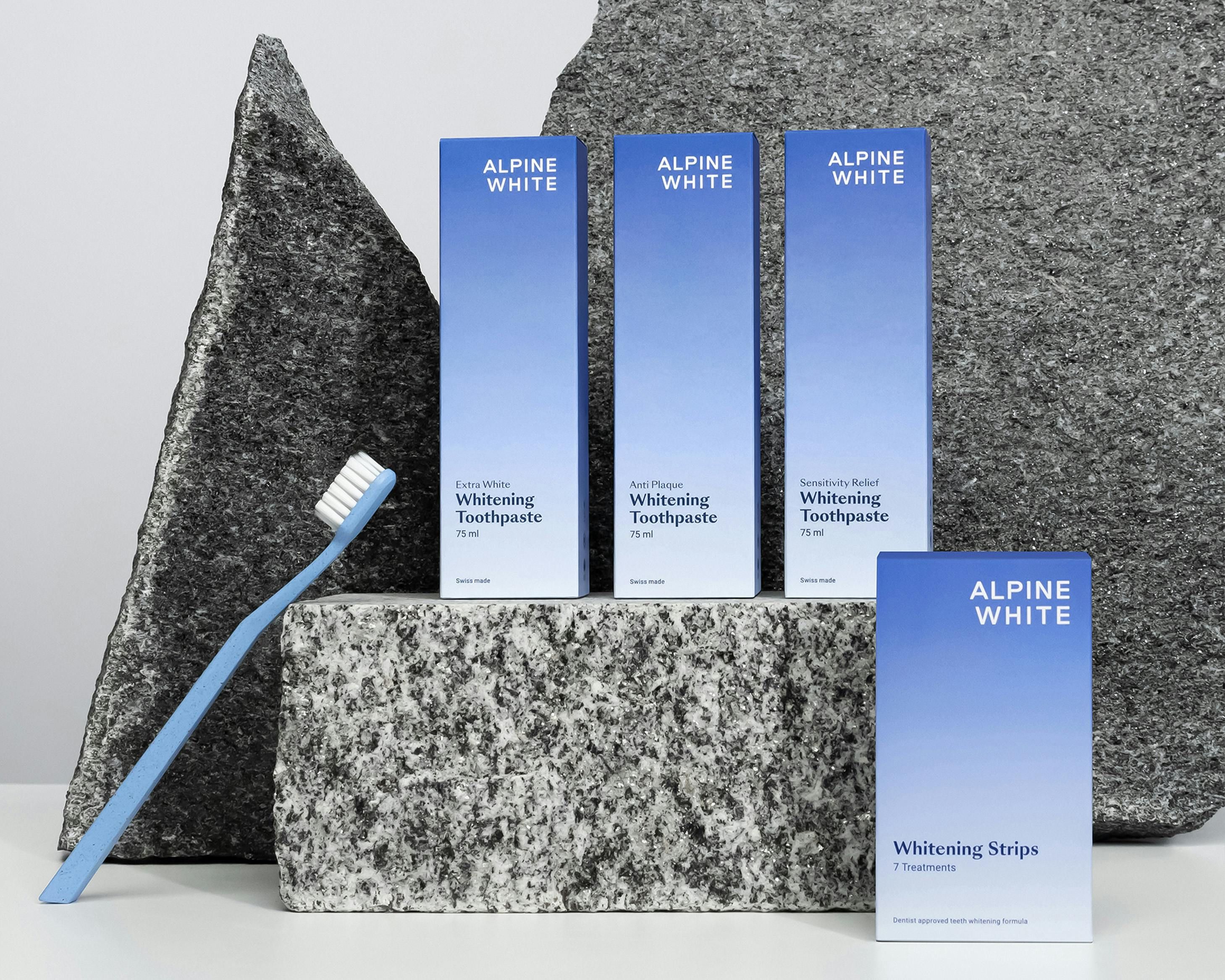
ALPINE WHITE Whitening Toothpaste in three variants next to Whitening Strips and a blue toothbrush, in front of rocksOral Care

The best toothpaste for you

There are hundreds of toothpastes on the shelf. One promises fresh breath, another supports your gums or whitens your teeth, and others target tartar, sensitive teeth or mouth ulcers. Some contain fluoride, some do not. This guide explains the main types of toothpaste and the ingredients worth checking, so you can pick the best toothpaste for your teeth.