Toothpaste is part of your daily routine, yet few people check what is in the tube. Some of it is absorbed through the lining of your mouth, even if you spit most of it out. So the best toothpaste is one that cleans thoroughly, protects against cavities and is gentle on your teeth and gums, without ingredients you would rather avoid.
Which toothpaste ingredients should you avoid?
Many toothpastes from supermarkets and drugstores contain ingredients that are debated. We spit out most of the paste after brushing, but some ingredients still pass through the mucous membrane of the mouth into the body. The following ingredients are controversial and should be avoided or used with care.
Triclosan
Triclosan is the most controversial ingredient. It is a chemical disinfectant and preservative that kills microbes of all kinds. It is added to some toothpastes and mouthwashes to help prevent cavities and treat gum problems, and it also appears in everyday products such as deodorants and hand soaps.
Because it kills every kind of microbe, it does not only harm the bacteria that cause tooth decay, but also upsets your healthy oral flora. The natural defences of the oral mucosa, which normally protect the body against invading germs, cannot regenerate properly in the presence of triclosan.
Sodium lauryl sulphate
Sodium lauryl sulphate (SLS) is a surfactant used as a cleansing agent in many personal care products, toothpaste included. It is considered relatively aggressive and can irritate the mucous membranes. Milder alternatives exist, so it is better to choose a toothpaste without it.
Parabens
Parabens keep toothpaste fresh for longer. Many manufacturers find high-quality preservatives such as grapefruit seed extract or vitamin E too expensive, so they often use parabens instead. On the label they appear as methylparaben, ethylparaben, propylparaben, butylparaben or benzylparaben.
Parabens act on the hormone system, and science does not dispute that they influence hormone balance. The health effects are hard to assess, but it is clear that parabens accumulate in the body.
Titanium dioxide (E171 or CI 77891)
Titanium dioxide is a white pigment that has been used for hundreds of years in paints, plastics and building materials. Since the 1990s it has also appeared as nanoparticles in food and cosmetics, which is how it reaches toothpaste, where it simply makes the paste look white.
The substance has long been classed as potentially harmful and carcinogenic, but only when it is present as a nanomaterial in dust that can be inhaled. With toothpaste there is generally no risk of inhaling it, and the share of nanoparticles is often very small.
Fluoride: friend or foe?
Fluoride is added to toothpaste to harden the enamel and help prevent cavities. Fluoride toothpaste is the best-known protection against tooth decay. In normal use fluoride is harmless, but an overdose can be harmful. In this article you can find out the right amount of fluoride for your body weight.
Which toothpaste cleans my teeth properly?
Your toothpaste is your daily companion, so it should clean thoroughly and be gentle on your teeth and gums. It should also protect against cavities and harden the enamel. According to the German consumer organisation Stiftung Warentest, a toothpaste should contain fluoride, because fluoride fights tooth decay.
Then think about your own needs. Do you have sensitive teeth, exposed tooth necks or wear damage? Choose a toothpaste with low abrasion. Do you have a lot of tartar or bad breath? Try a toothpaste containing zinc. Struggling with bleeding gums? There are toothpastes designed to support you with that.
What types of toothpaste are there?
You can choose between three types of toothpaste.
- Universal: standard care for healthy teeth. It has a positive effect on your teeth, gums and enamel, and it protects against cavities because it contains fluoride.
- Sensitive: people with sensitive teeth should use a suitable toothpaste. A common cause of sensitivity is exposed tooth necks. To counteract this, the toothpaste should be gentle with low abrasion. Stannous fluoride or potassium nitrate, for example, are used in these toothpastes as desensitising agents.
- Whitening: whitening toothpastes often have a higher RDA value. This value measures how abrasive a toothpaste is: the higher the value, the more the tooth surface is worn away. Very abrasive whitening pastes should therefore not be used permanently, as they can damage the tooth substance. If you have gum problems or sensitive teeth, choose a gentler whitening toothpaste or avoid highly abrasive ones.
The right toothpaste for children
Finding the right toothpaste for children is no easier than finding the perfect one for yourself. Special children's toothpaste gels should be used until the age of 6. They contain less fluoride than adult toothpaste, and a precise dose helps prevent fluorosis, the white enamel spots that appear when young children take in too much fluoride. Gels for milk teeth also contain fewer abrasive particles, to avoid excessive wear.
Clean beauty and natural toothpaste
It is hard to imagine the cosmetics industry without clean beauty. It is no longer a passing trend but a growing movement. Behind it is the wish to use only products whose ingredients do not harm the body. It means something like "clean cosmetics", although there is no fixed definition.
Manufacturers usually leave out controversial ingredients that burden the environment and are suspected of affecting our health. Some labels also require that products are not tested on animals and contain no irritants. Today's consumers want more transparency and sustainability from the cosmetics industry.
There is no generally accepted list of what is left out, but the focus is on silicones, PEGs (polyethylene glycol), parabens, phthalates (plasticisers that can disrupt hormones), sulphates, mineral oil products, formaldehyde and chemical UV filters such as oxybenzone.
Clean beauty is not the same as natural cosmetics, which are based on raw materials of natural origin. Sustainable products are also made without animal testing and under fair working conditions.
With toothpaste, as with any other cosmetic product, it pays to check the ingredients. Be careful with risky beauty trends on social media, too: read about them in this article.
Alpine White whitening toothpaste
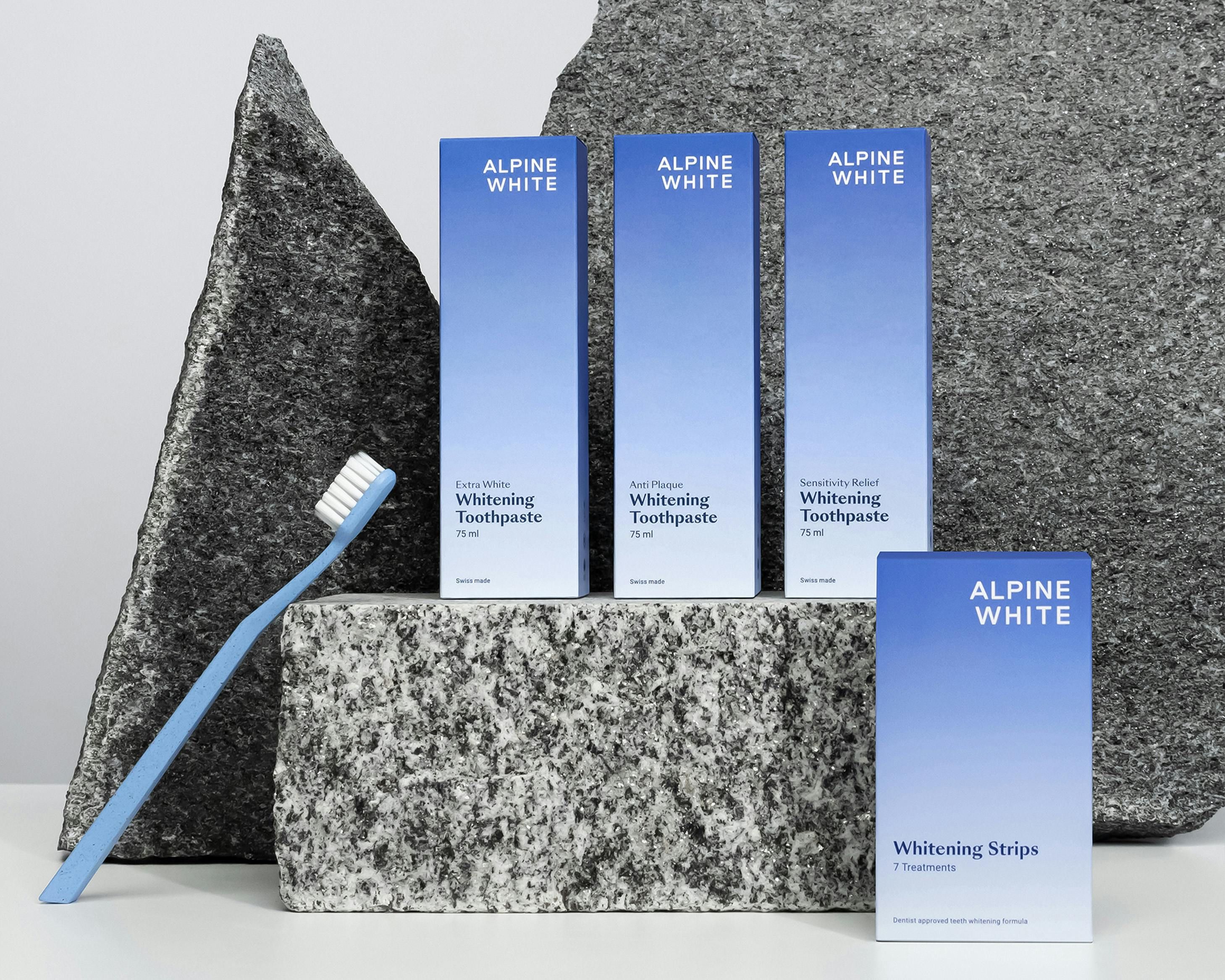
Alpine White toothpaste is based on a clinically tested whitening formula and was formulated in Switzerland. It supports your gentle daily mouth and teeth care. The antioxidants in the paste promote healthy gums and help protect against gum inflammation. The RDA value is in the normal range for an adult, so you can use it every day.
Whitening toothpaste for whiter teeth
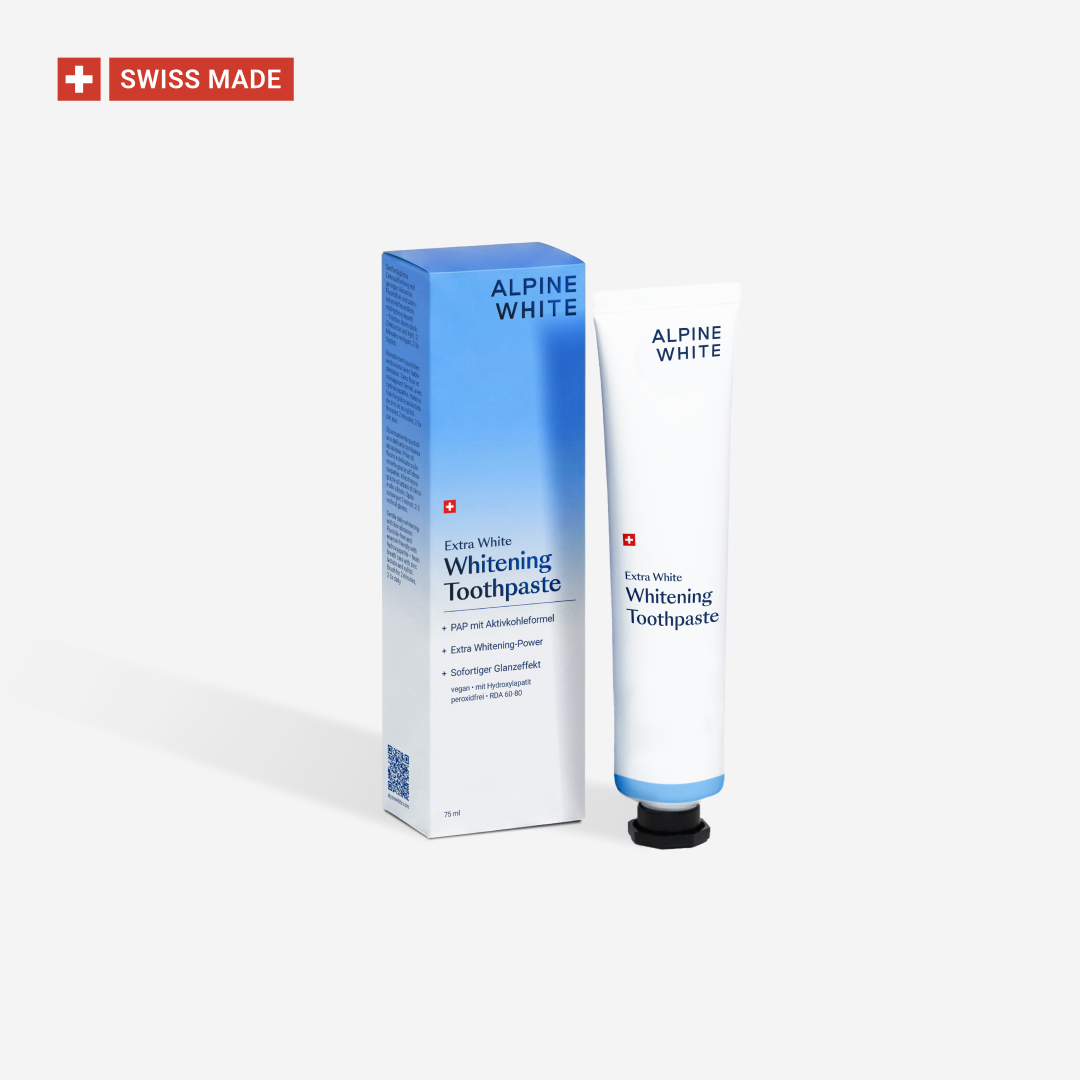
With our Whitening Toothpaste Extra White you get a whitening boost every time you brush. Activated charcoal and optical blue light filters tackle stains on your teeth for an extra bright smile.

 Oral Care