How does AIRFLOW teeth cleaning work?
With AIRFLOW technology, hard and soft deposits and tartar are removed from the tooth surfaces, the spaces between the teeth and the gum pockets. Tartar forms when plaque hardens. The microbial film is removed gently, and the piezon no-pain method leaves tartar and stubborn stains little chance.
Ultrasonic scaling and polishing
Stubborn plaque can be removed with an air or powder jet device and an ultrasonic device. Afterwards, the tooth surface is smoothed and polished. On request, the teeth can be treated with fluoride, which helps to harden the enamel.
A fluoride varnish closes tiny cracks (fissures) on the tooth surface. This keeps disease-causing germs out for a long time and makes it harder for plaque to settle. With good daily care, the result can be kept up in the long term.
How can you support your dental hygiene at home?
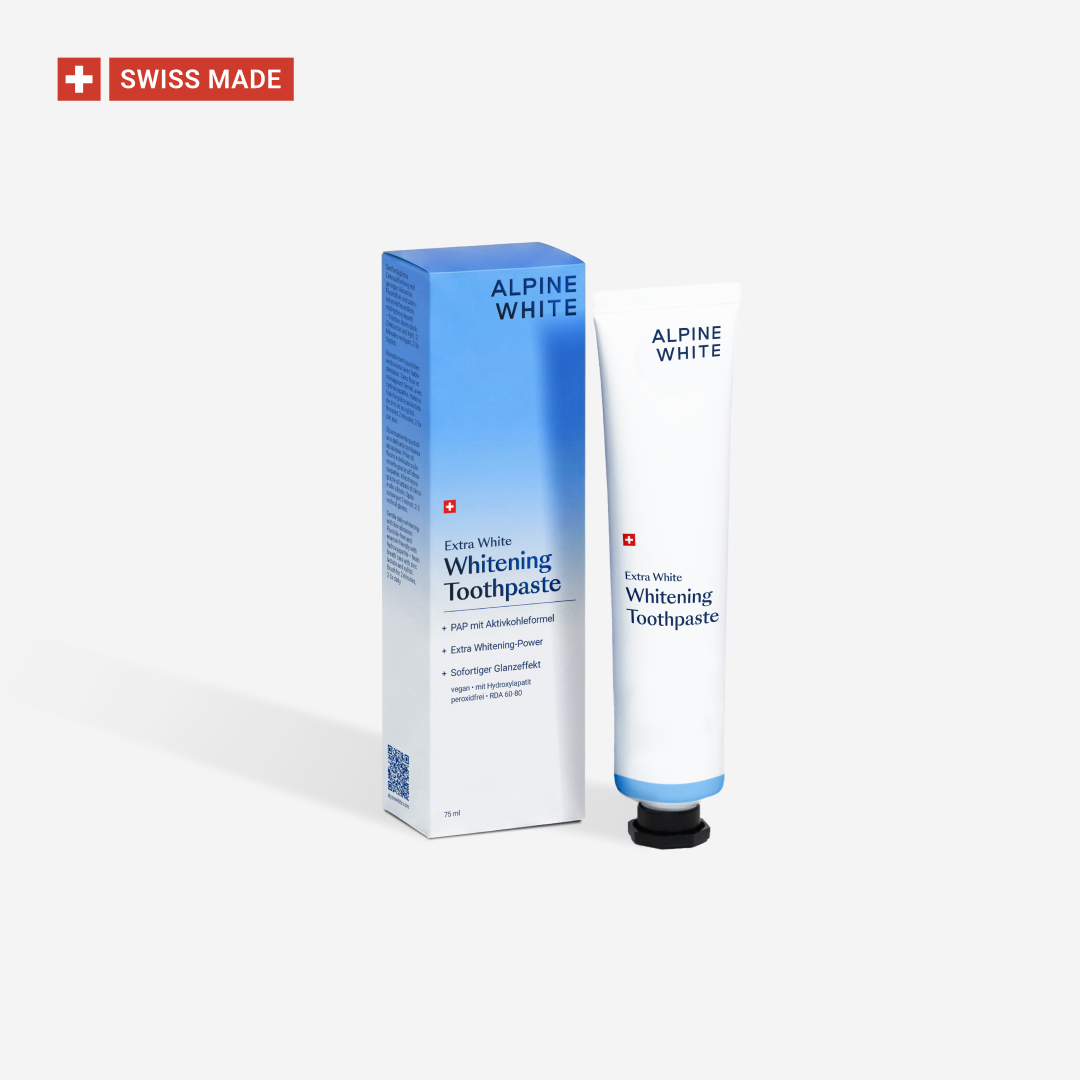
Healthy teeth and good oral hygiene need regular brushing, flossing and visits to your dentist. Between appointments, an Alpine White Sonic Toothbrush and a fluoride whitening toothpaste help you keep plaque under control and your teeth clean and bright.
How long does a dental hygiene appointment take?
The length of a professional teeth cleaning depends on the health of your teeth. Stubborn stains or heavy plaque can make the session longer, but the average appointment lasts about one hour.
How much does a dental hygienist cost?
The cost of dental hygiene depends on the extent of the treatment and can vary a lot between practices and countries. Ask your dental practice for a quote before you book.
Are your teeth still not bright white?
After a thorough cleaning, your teeth should shine with their natural brightness again. If you would like to go a step further, your dentist can talk you through professional bleaching, or you can whiten gently at home with Alpine White whitening strips.
Final thoughts
Dental hygiene plays a key role in your oral health. It removes stains, helps you keep a bright smile and protects against problems such as cavities and periodontitis. Regular prevention, both at home and with professional cleanings, keeps your teeth and gums healthy for the long term. Whether you have sensitive teeth or special needs such as implants, thorough hygiene lowers the risk of future problems. If you notice pain, bleeding gums or persistent bad breath, see your dentist.


 Teeth Whitening