What is periodontitis and what causes it?
Periodontitis is an inflammation of the tissues that hold your teeth in place, caused by bacteria. It can lead to symptoms such as bleeding gums, receding gums and bone loss. Bleeding gums are often the first sign. In advanced stages, deeper gum pockets form where bacteria collect and drive the inflammation further.
Gum disease often starts as gingivitis, a milder form of gum inflammation. If it is not treated, it can develop into severe periodontitis that affects the jawbone. The main cause is the bacterial plaque that forms constantly on your teeth. Plaque can harden into tartar, which only a professional teeth cleaning can remove. Other risk factors include smoking, diabetes mellitus, poor oral hygiene and a genetic predisposition.
Periodontitis symptoms and diagnosis
Typical symptoms of periodontitis include:
- Red or swollen gums
- Bleeding gums
- Pain when chewing
- Loose teeth
- Receding gums
- Persistent bad breath or halitosis
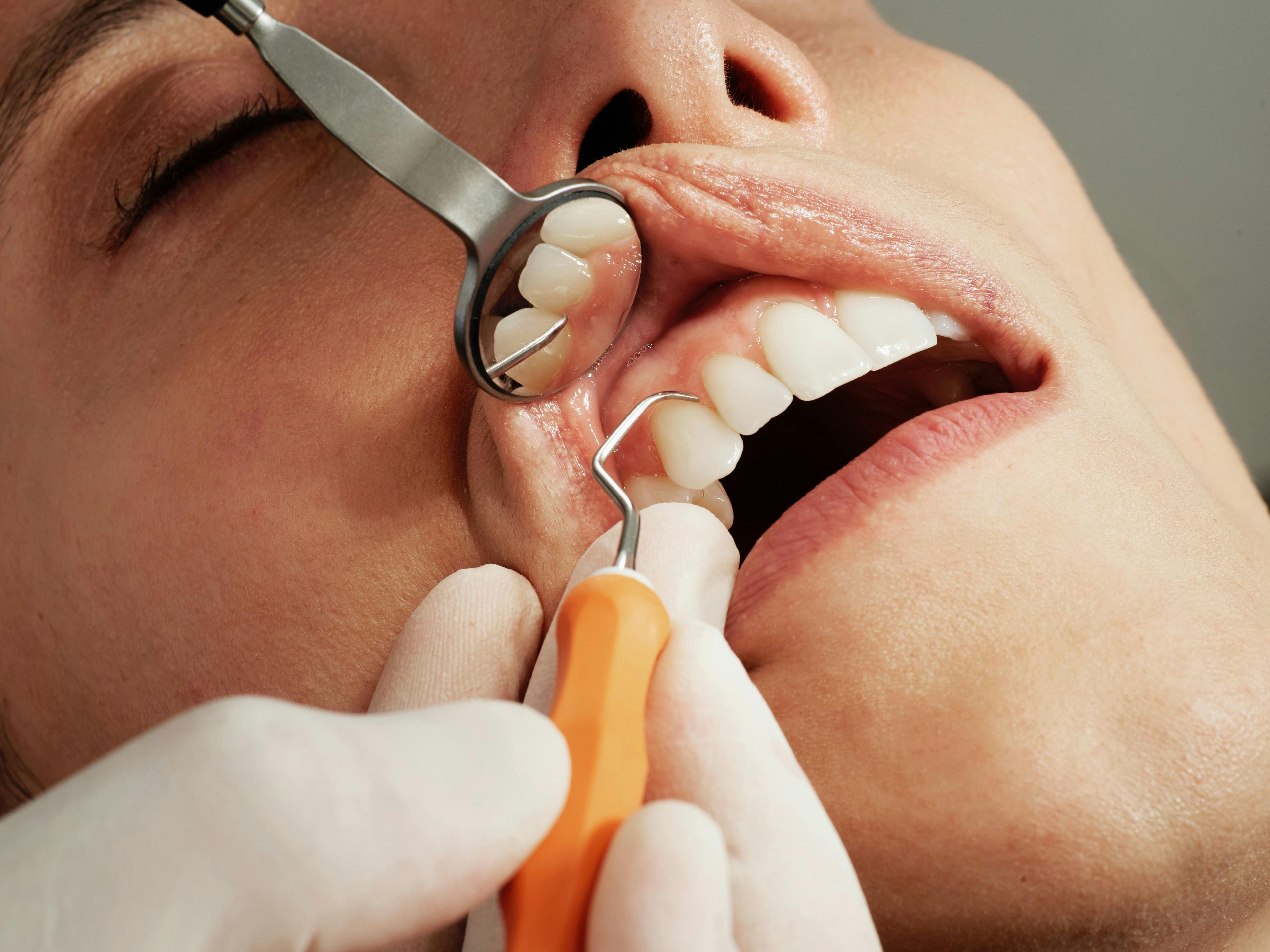
A dentist can tell whether you have periodontitis by examining your mouth and taking X-rays. They check in particular the depth of your gum pockets and the condition of the gum line.
What are the complications of gum disease?
Untreated periodontitis can have these consequences:
- Tooth loss: One of the most serious complications, because the bone that supports your teeth is broken down by the inflammation.
- Abscesses: Pus-filled abscesses can form in the gum pockets, causing pain and swelling.
- Gum recession: The gums can pull back and expose the necks of your teeth, which leads to more sensitive teeth.
- Jawbone loss: Advanced bone loss can change the structure of your face and affect your appearance.
- Effects on the whole body: There is evidence that periodontitis may be linked to other health problems, including cardiovascular disease, diabetes and respiratory disease.
- Problems with other dental treatment: Bone loss can make it harder to place implants or carry out other dental procedures.
- Spread of infection: In rare cases, the infection can enter the bloodstream and affect other parts of the body.
What does a periodontist do?
Periodontology is a dental speciality that deals with the diagnosis, prevention and treatment of gum and periodontal disease. In a specialised dental practice, patients receive thorough advice and treatment to improve the condition of their gums and the tissue around their teeth.
This matters because periodontitis can do more than cost you teeth: it is also associated with serious health problems. A periodontist has the specialist knowledge to treat complex and advanced cases and often works together with other dental specialists to provide complete care.
How is periodontitis treated, step by step?
Periodontitis treatment begins with a thorough examination of the affected teeth and gums. Fillings, cavities and other factors that may affect your dental health are taken into account.
The treatment itself usually takes place in several steps:
- Medical history and diagnosis: Before treatment starts, your dentist carries out a thorough examination. This includes questions about your oral care habits, a clinical examination of your mouth and X-rays to assess the condition of your jawbone.
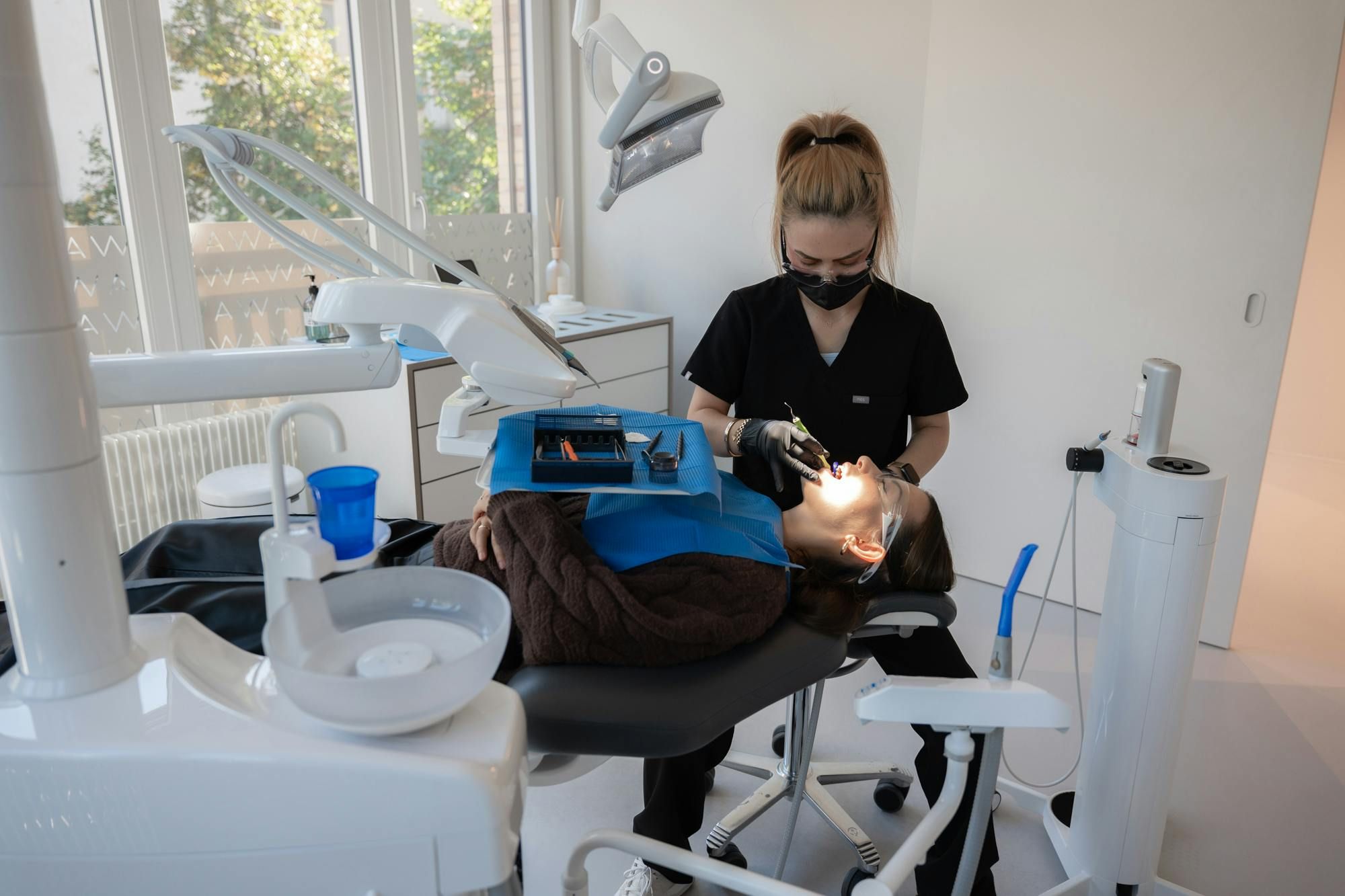
- Professional teeth cleaning (scale and polish): Plaque and tartar are removed above and below the gum line. This is often the first step in reducing the inflammation.
- Deep cleaning (scaling and root planing): If periodontitis is advanced, a deeper clean may be needed. Special instruments such as curettes remove plaque and calculus from the tooth surfaces and from the gum pockets. The tooth roots are smoothed so that bacteria find it harder to attach. This is usually done under local anaesthetic.
- Medication: In some cases, antibiotics or antimicrobial mouthwashes may be prescribed to fight the bacteria that cause periodontitis.
- Surgical procedures: In severe cases, where earlier treatment is not enough, surgery may be necessary. This can involve removing diseased tissue, smoothing bone defects or even bone augmentation.
- Aftercare and regular check-ups: After treatment, regular check-ups and professional cleanings (often every 3-4 months) are necessary to make sure periodontitis does not return and your oral health stays stable.
- Oral hygiene coaching: You are often taught how to improve your oral hygiene, including the right brushing technique, flossing and the use of mouthwash.
Supportive periodontal therapy: keeping gum disease away
Supportive periodontal therapy is an essential part of aftercare once periodontitis treatment is complete. Its main goal is to secure the long-term success of the treatment and prevent the disease from flaring up again. During these visits, regular professional cleanings are carried out, with particular attention to cleaning and monitoring the gum pockets. You are also coached in optimal oral hygiene and informed about your risk factors. It is a proactive approach to keeping your oral health stable and minimising the risk of tooth loss from recurring gum disease.

 Dental Health