Back to overview
Smiling woman looks into a round hand mirror, in which her smile is visible

Teeth bleaching for sensitive teeth: how to whiten gently

Teeth WhiteningMay 31, 20244 min read

Want whiter teeth but worry about pain? Teeth bleaching for sensitive teeth is possible if you choose the right method. Find out why classic peroxide bleaching can cause sensitivity, who should hold off, and how to whiten your teeth gently and safely with a little help from your dentist and a good at-home routine.


Andrea Seraina

Andrea Seraina

Dental Content Specialist

Why does teeth bleaching cause sensitive teeth?

Classic peroxide bleaching can cause toothache, especially if you already have sensitive teeth. The reason lies in the bleaching agent. Peroxides such as hydrogen peroxide or carbamide peroxide, which are commonly used in professional bleaching at the dentist, can change the pH in your mouth and temporarily demineralise the teeth. This can expose the necks of the teeth, which react strongly to changes in temperature and pressure.

The bleaching gel can also seep through microscopic cracks in the enamel and reach the dentine, where the nerve endings are. The result is heightened tooth sensitivity and pain after whitening. Irritation is more likely if you already have gum disease, or if you don't brush regularly or thoroughly.

Before any planned bleaching, talk through the risks with your dentist and ask which precautions they take. Some practices, for example, use potassium nitrate in their products to reduce sensitivity. If you are prone to staining and to tooth pain, be cautious and choose gentler ways to improve the natural whiteness of your teeth.

How can you whiten sensitive teeth gently?

Sensitive teeth can affect everyday life. Cold food, hot drinks or sweet snacks often trigger an unpleasant twinge. Many traditional whitening methods rely on hydrogen peroxide or carbamide peroxide, which can irritate the gums and make sensitivity worse. If your teeth are sensitive, a slower, gentler approach usually works best: whiten in small steps, stop if it hurts, and look after your enamel in between.

What does professional bleaching involve?

Professional bleaching is carried out at your dentist or a professional practice. It typically follows three steps.

  1. Consultation and needs analysis: you fill in a health questionnaire and the practice tailors the treatment to your needs.
  2. The bleaching itself: the teeth are lightened in the practice, often in a single session.
  3. Aftercare: for the first 24 hours, avoid strongly colouring foods and drinks to get the best result. Bleaching is a process, so the result may need topping up, and a good at-home routine helps you keep it.

What are the benefits of gentle whitening?

  • Gentle: less irritation of enamel and gums, and less sensitivity afterwards.
  • Effective: visibly whiter teeth, matched to your natural tooth colour.
  • Safe: best done with professional advice and products that suit sensitive teeth.

Who should not have their teeth bleached?

Bleaching suits most people who want a brighter smile. In these cases, however, it is better to avoid it or have your dentist check first:

  1. Erosion on the front teeth: acid damage increases the risks
  2. Early lesions and advanced cavities: bleaching can be problematic
  3. Defective fillings: they need to be sorted out first
  4. Plastic build-ups and dentures: they do not respond to bleaching
  5. Gum disease (periodontitis): bleaching can aggravate the irritation
  6. Heavy tartar build-up: it gets in the way of an even result
  7. Heavily bleeding gums: complications when applying a gum barrier
  8. Very thin enamel: take extra care with whitening
  9. Very light teeth: bleaching is simply unnecessary

How can you get the best result?

For the best result, have a scale and polish with a dental hygienist before bleaching. This removes plaque and tartar and prepares the tooth surface for the whitening. Afterwards, you can keep your smile bright at home with Alpine White whitening strips and whitening toothpaste, and top up the result from time to time.
Teeth whitening is a process, not a one-off

Think of whitening as an ongoing routine rather than a single event. Just as dyed hair needs regular touching up to keep its shine, whitened teeth need repeat treatments and good daily care to stay bright. Regular upkeep helps your teeth stay white for longer instead of just looking brighter for a short time.

Which products help with whitening at home?

Alpine White offers products for the care your teeth need between dental visits:

  • Whitening strips and Whitening Kit: a practical way to whiten your teeth gently at home.
  • Whitening Toothpaste Extra White: for daily use, it supports whitening while caring for your teeth.
  • Professional teeth cleaning: a regular scale and polish at your dentist or dental hygienist removes plaque and tartar and prepares your teeth for whitening.

Why choose a sonic toothbrush for sensitive teeth?

The Alpine White Sonic Toothbrush is more than an ordinary electric toothbrush. Developed in Switzerland, it delivers up to 40,000 vibrations per minute for a deep clean that goes beyond what a manual toothbrush can do.

Features of the Sonic Toothbrush

  • Effective sonic cleaning: up to 40,000 vibrations per minute remove plaque and reach hard-to-reach areas.
  • Antibacterial, soft bristles: a gentle clean that suits sensitive teeth and gums. The special coating means 99% fewer bacteria on the bristles.
  • Easy to use: one button switches between cleaning modes to suit your needs.
  • Long-lasting battery: up to three weeks per charge, ideal for travelling. A USB-C cable is included.

With its advanced technology and Swiss design, the Sonic Toothbrush is a simple upgrade for your daily brushing routine.

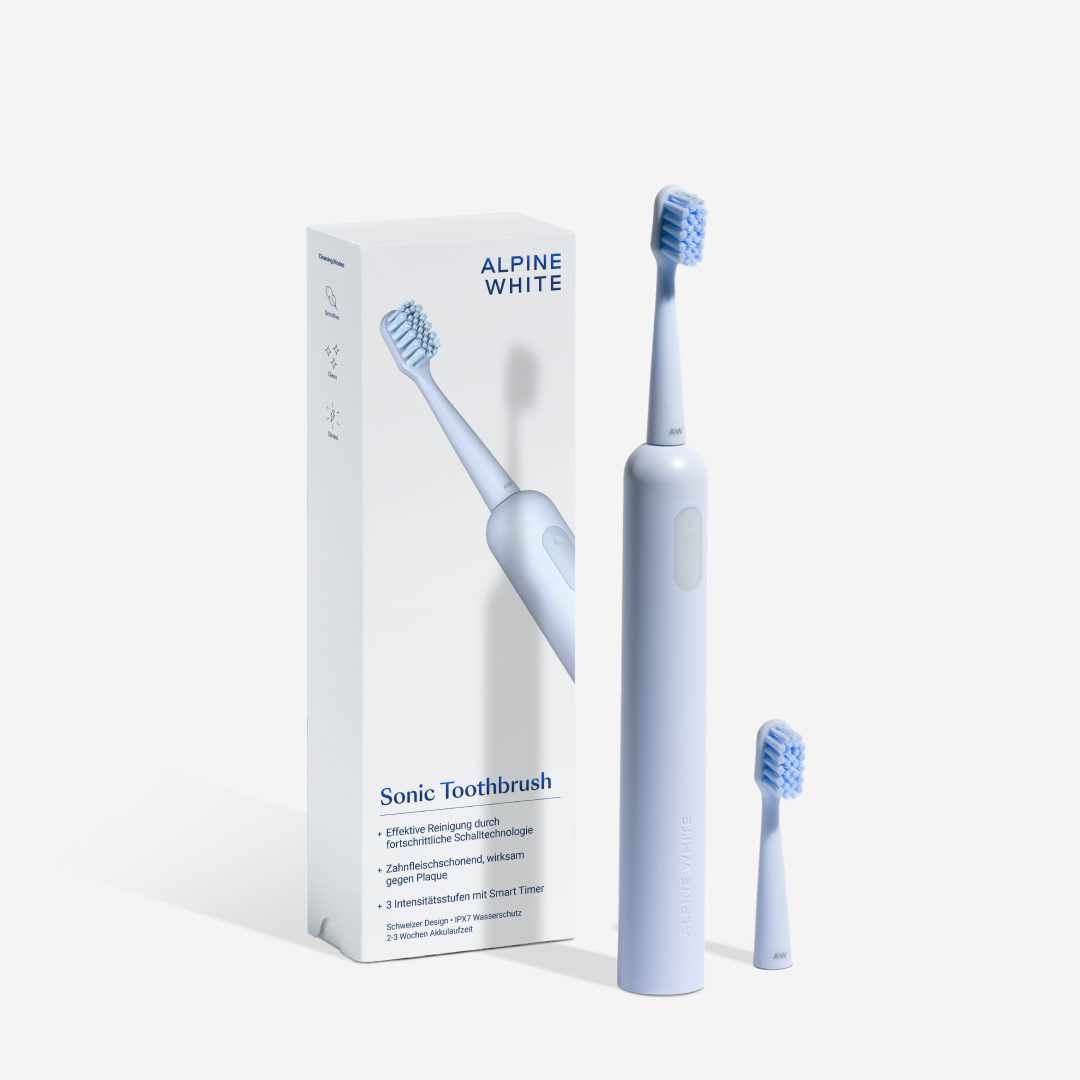
Sonic Toothbrush next to its packaging and a replacement brush head against a light background
5.0(3)

Sonic Toothbrush

€ 99.90

1 pc • € 99.90

Learn more

Final thoughts

Your smile is as unique as you are. With sensitive teeth, the key is a gentle approach: talk to your dentist, whiten step by step and support the result with a good at-home routine. That way you can enjoy a healthy, bright smile without compromising your oral health.

This might also interest you

Laughing man with sunglasses, looking up, close-up of the teethTeeth Whitening

Power bleaching: healthy alternatives for whiter teeth

Looking for a fast way to remove tooth stains? Many people consider power bleaching, a professional teeth whitening treatment that lifts deep-seated discolouration. Because it uses a high-strength peroxide gel, it can also cause painful sensitivity. In this guide, we explain what power bleaching is, how it works and what the risks are. We then show you gentler ways to whiten your teeth at home.

Lavish breakfast buffet with fruit, eggs, waffles, donuts and sausage packsTeeth Whitening

What to eat after teeth whitening

A whiter smile is only worth having if it lasts. In the first days after teeth whitening, what you eat and drink makes a real difference to how well your result holds up. So which foods are safe after whitening, and which should you avoid? Here is a simple guide, including a 48-hour white diet and long-term habits for white teeth.