Back to overview
Close-up of a mouth, a woman holds something dark between her teeth and fingers

Whitening strips for sensitive teeth: are they safe?

Teeth WhiteningNov 12, 20244 min read

If you have sensitive teeth, you may wonder whether teeth whitening strips are an option at all. Cold drinks and sweet treats already make you wince, so a whitening product sounds risky. The good news: a gentle, peroxide-free formula can lighten stained teeth without the sting. Here is how whitening strips work on sensitive teeth, how to use them and what results to expect.


Andrea Seraina

Andrea Seraina

Dental Content Specialist

What are teeth whitening strips?

Whitening strips are thin strips coated with a whitening gel. You press them onto the surface of your teeth, and the gel gradually lifts stains and discolouration. Alpine White whitening strips contain ingredients such as PVP, glycerine and, in some cases, mild whitening agents that do the actual work. Depending on how long you wear them and how often you use them, your teeth become whiter step by step.

The Alpine White formula is extra mild and made with sensitive teeth in mind. It contains no hydrogen peroxide, so you can whiten teeth without the usual risk of toothache or irritation. Its gentle active ingredient is PAP, and the strips are suitable for sensitive teeth too.

Why do sensitive teeth need a gentler whitening product?

Sensitive teeth often react to hot or cold food and to sweet or acidic drinks. The cause can be enamel loss or exposed tooth necks. Whitening products with strong bleaching agents can make this sensitivity worse. Alpine White whitening strips are designed to avoid exactly that, so the whitening stays comfortable.

With Alpine White whitening strips you get:

  • A gentle, peroxide-free formula that does not attack your enamel.
  • Care for your gums to help avoid irritation.
  • A wear time of 1 to 2 hours, depending on the whitening effect you want.
  • Visibly whiter teeth after just a few applications.

How do whitening strips work on sensitive teeth?

Instead of hydrogen peroxide, the gentle formula relies on PAP (phthalimido peroxy caproic acid), an innovative active ingredient known for gentle but effective whitening. It delivers quick results without the typical side effects of stronger bleaching agents.

The strips also contain glycerine, which helps keep the gel comfortable on your teeth. For the best results, use the strips regularly and finish with a suitable whitening toothpaste, such as Alpine White Whitening Toothpaste Extra White.

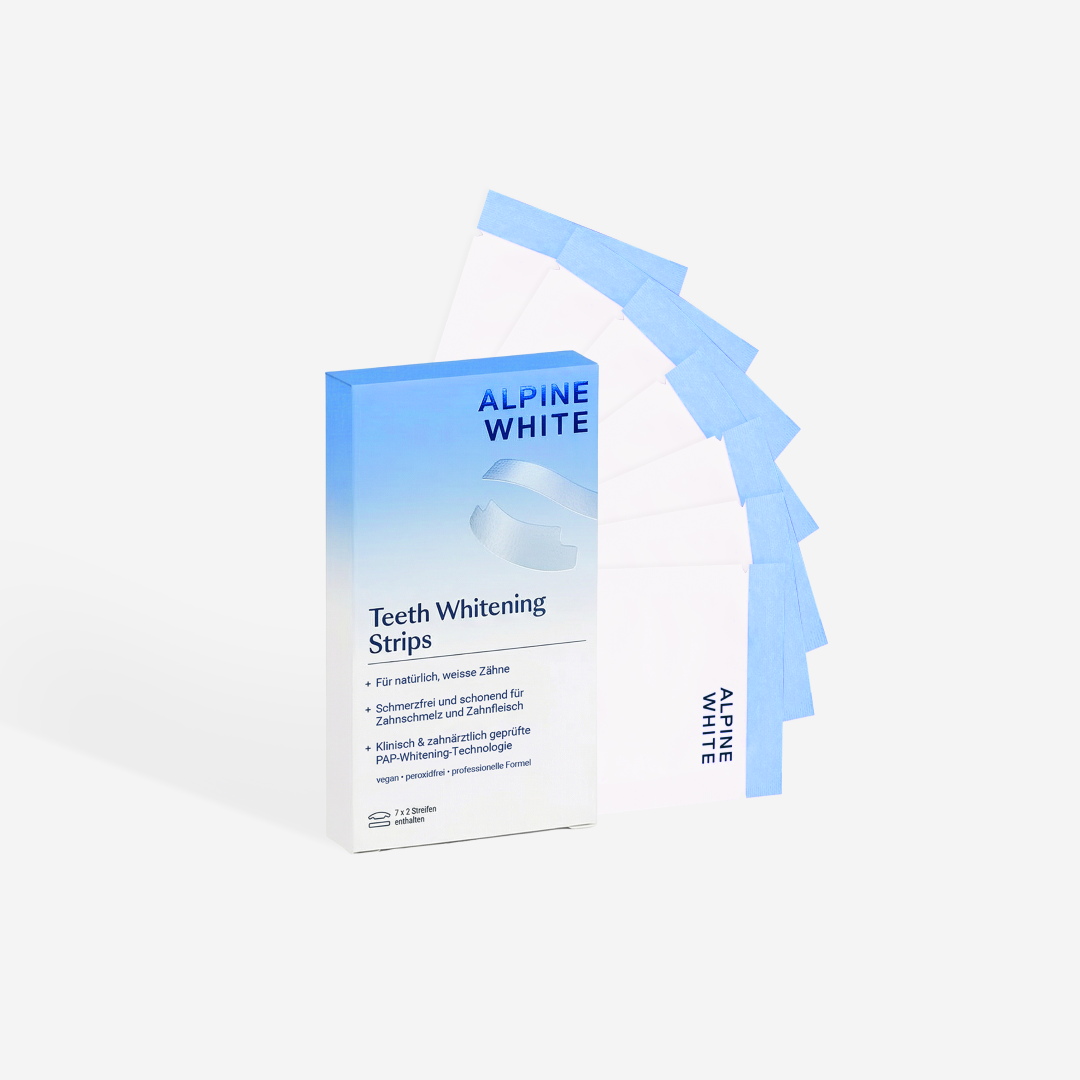
ALPINE WHITE Whitening Strips: pack with fanned-out pouches
4.4(128)

Whitening Strips

€ 29.90

14 pc • € 2.14

Learn more

How to use whitening strips on sensitive teeth

A few simple habits help you get the most out of your teeth whitening strips while keeping your teeth comfortable.

Preparation

Make sure your teeth are clean before you apply the strips. Brushing thoroughly just before removes plaque and surface stains, so the strips work evenly. A whitening toothpaste adds to the effect.

Placing the strips

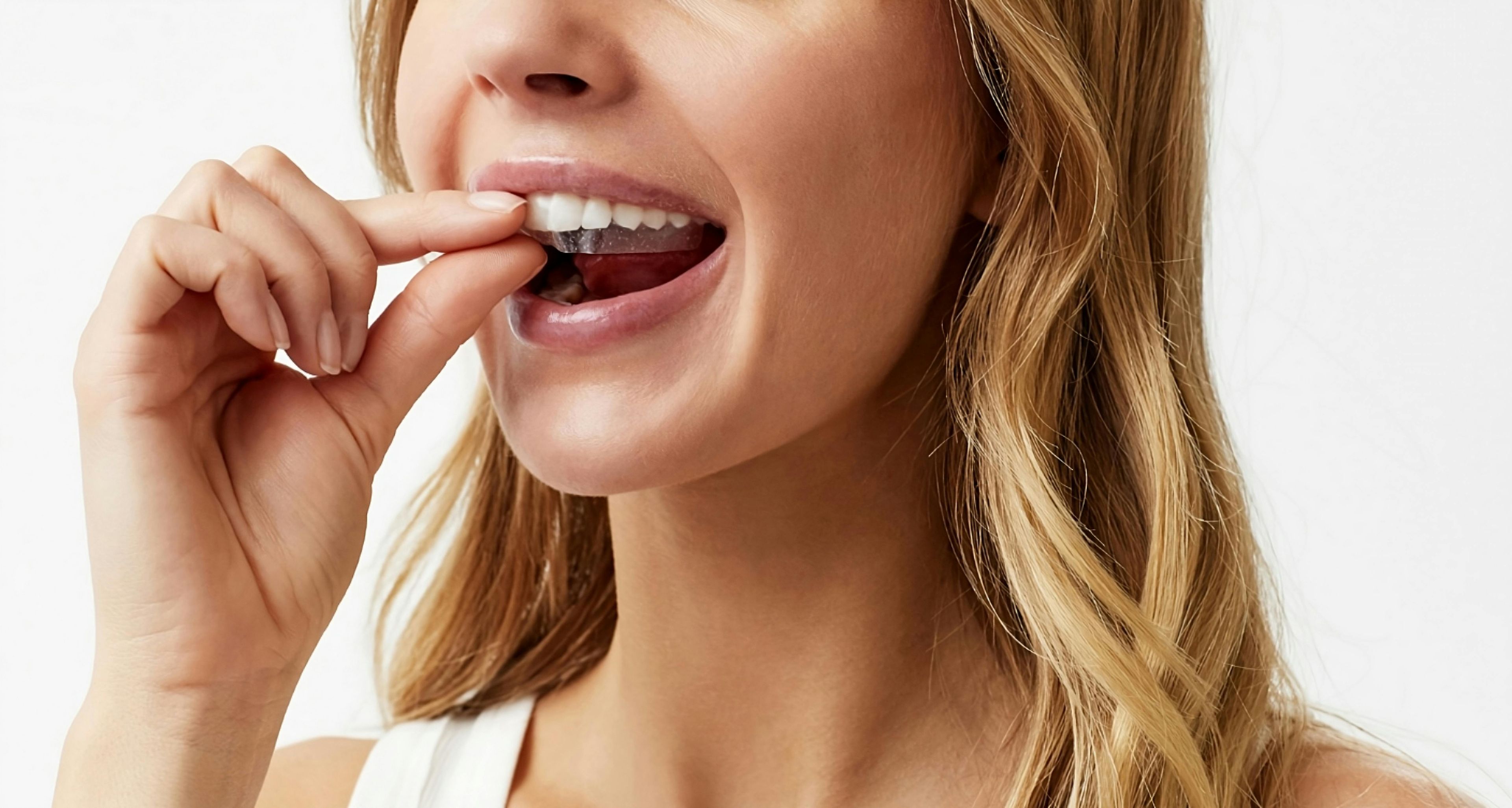
Open the packaging and carefully peel off the protective film. Apply a strip to your upper teeth and one to your lower teeth, pressing them on evenly so they stick firmly. Fold the overhanging part behind your teeth for a secure hold. That way the strips stay in place, even when you are moving around.

Wear time

Wear the strips for 1 to 2 hours. They stay put whether you are exercising, in a meeting or on the go. Ingredients such as aqua and menthol also give a pleasant, fresh feeling.

After use

Remove the strips and rinse your mouth. Then brush with a whitening toothpaste to clear any gel residue and help keep your teeth white as part of your daily routine.

Good to know

  • Alpine White whitening strips come in different strengths, so you can whiten teeth gradually, at your own pace. The formula is developed to be particularly gentle.
  • In the Alpine White online shop you can also find bundles that offer a price advantage.
  • Use the strips regularly, but take breaks between applications to give your teeth time to recover.

What makes Alpine White whitening strips special?

Alpine White whitening strips have been clinically tested and developed in Switzerland. They offer a safe and sustainable way to a whiter smile. Beyond whitening, they bring further benefits:

  • Cruelty-free and vegan, respecting the environment and animal welfare.
  • A climate-neutral and sustainable formulation, kind to your teeth and to the planet.
  • A formula that is gentle on teeth and gums.

How long do the results last?

Results often show after the first few applications, and after about three days you should notice clearly whiter teeth. How long they last depends on your diet and daily dental care. Coffee, tea and red wine can reduce the whitening effect. To keep your results, top up with the strips from time to time. A professional clean from your dentist or dental hygienist also helps remove surface stains.

Why are whitening strips a good choice for sensitive teeth?

  • Easy to use: the strips need no special preparation, and the extra-mild formula makes them comfortable on sensitive teeth.
  • Fast results: many users report a visibly whiter smile after just a few applications, and results are simple to refresh.
  • Gentle on your teeth: the peroxide-free formula is kind to the enamel and the gums, so you can have white teeth without harming them.

Conclusion

Yes, Alpine White whitening strips are suitable for sensitive teeth. Thanks to the peroxide-free formula and gentle whitening agents such as PAP and glycerine, you get visible results while protecting the sensitive tooth surface. If you have pain, bleeding gums or persistent sensitivity, talk to your dentist before whitening.

Ready to try it? Discover Alpine White whitening strips and see the gentle results for yourself.
This might also interest you

Laughing couple in sunglasses, close-upOral Care

How to keep your teeth beautiful, healthy and white

Dreaming of beautiful teeth and a smile that turns heads? It starts with thorough daily oral hygiene, ideally backed up by professional teeth cleaning at the dental hygienist. Here is why cleaning matters so much, and how to look after your teeth at home.

Hand holds a white tray in blue lightTeeth Whitening

Teeth whitening with trays at home: how it works

Wondering how to whiten teeth at home without harming your dental health? Whitening trays are one popular option. This guide explains how they work, what the whitening gel does, how to protect your teeth and gums, and which tray-free alternatives are worth a look.