 Oral Care
Discover our products
Are you overwhelmed by the selection of our products and want to know which one is right for you? Then read this article and get inspired.
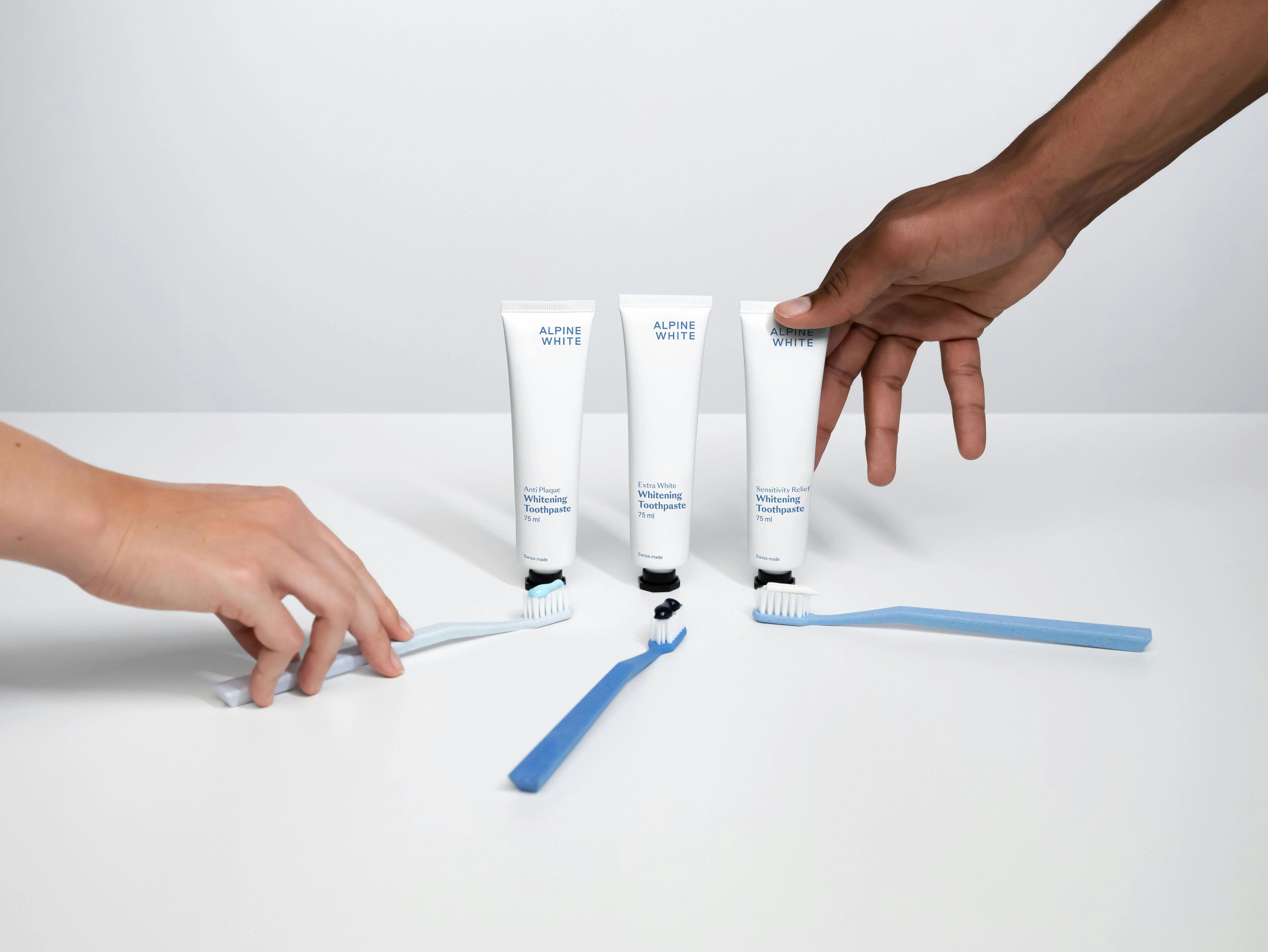
A radiant white smile stands for health and self-confidence. In everyday life, however, factors such as drinking coffee or tea or using tobacco can lead to tooth discolouration. To counteract this, many people turn to whitening toothpastes that promise to whiten the teeth and remove discolouration. But which of these toothpastes really deliver what they promise? In this blog post, we take a detailed look at the best whitening toothpastes, with a particular focus on ALPINE WHITE products: Extra White, Anti Plaque and Sensitivity Relief.

Andrea Seraina
Dental Content Specialist
A radiant smile starts with the right oral care and choosing suitable products for teeth whitening. Modern whitening toothpastes offer an easy way to brighten discoloured teeth and support their natural whiteness. Using our electric toothbrush can further increase the effectiveness of such toothpastes, as it enables particularly thorough cleaning, reduces tartar build-up and removes deposits. At ALPINE WHITE, we rely on gentle formulas that protect the enamel and whiten the teeth without damaging them – ideal for keeping healthy teeth in the long term.
While conventional whitening products and toothpastes often promise short-term results, regular use of gentle whitening pastes achieves a lasting and natural white.
Whitening toothpastes, also known as whitening tooth creams, are special oral care products designed to remove discolouration from the teeth and ensure white teeth. These toothpaste variants contain ingredients that either gently polish away discolouration or provide chemical components that actively lighten surface stains. Conventional toothpastes clean the teeth and prevent tooth decay, while whitening toothpastes additionally target teeth whitening specifically.
The difference lies in the addition of so-called abrasive cleaning agents and chemical brighteners, which help to mechanically remove stains on the tooth surface. Whitening agents such as phthalimidoperoxycaproic acid (PAP) are popular because they can lighten deeper stains. Removing discolouration is often done in combination with special abrasive agents that specifically dissolve the pigments of discoloured teeth. This achieves the goal of an even and radiant white smile, which helps many people maintain a fresh and healthy appearance.
Whitening toothpastes usually work by using fine pastes and particles that remove stains mechanically. A high abrasion value (RDA value) can lift discolouration very effectively and intensify the whiteness of the teeth. But be careful: too high an abrasion value can attack the tooth enamel, which is why products with gentle abrasion are recommended for regular use. Gentle toothpastes are particularly suitable if you have sensitive gums or already suffer from sensitive teeth.
Chemical brighteners, such as the PAP mentioned above, target deeper discolouration. They help to lighten the shade of the teeth without the need for intensive abrasion. Many users look for a combination of teeth whitening and protection for healthy gums. Such a combination not only supports an attractive smile, but also contributes to dental health. The fluoride in these toothpastes also helps to prevent tooth decay, which plays an important role in teeth cleaning.
Modern whitening tooth creams are often formulated to work well with electric toothbrushes too, which further increases their effectiveness in removing plaque. Some products from the chemist's or from Amazon promise not only radiant white teeth, but also fresh breath and less tartar. In practice, the best whitening toothpastes are those designed for sensitive teeth as well as for intensive bleaching and thorough teeth cleaning.
Fluoride is an important protective agent in oral care that actively helps to prevent tooth decay and strengthen the enamel. It supports the remineralisation of the tooth surface and makes teeth more resistant to harmful acids.
Some whitening toothpastes contain activated charcoal – a natural substance that gently absorbs discolouration and whitens the teeth. It binds pigments caused by coffee, tea or nicotine, ensuring a fresh and natural white.
As a natural building block of tooth enamel, hydroxyapatite helps to remineralise and strengthen it. It repairs microscopic damage and helps to maintain the protective function of the enamel, for a healthy and resilient tooth surface.
When choosing the best whitening toothpaste, the following criteria should be taken into account:
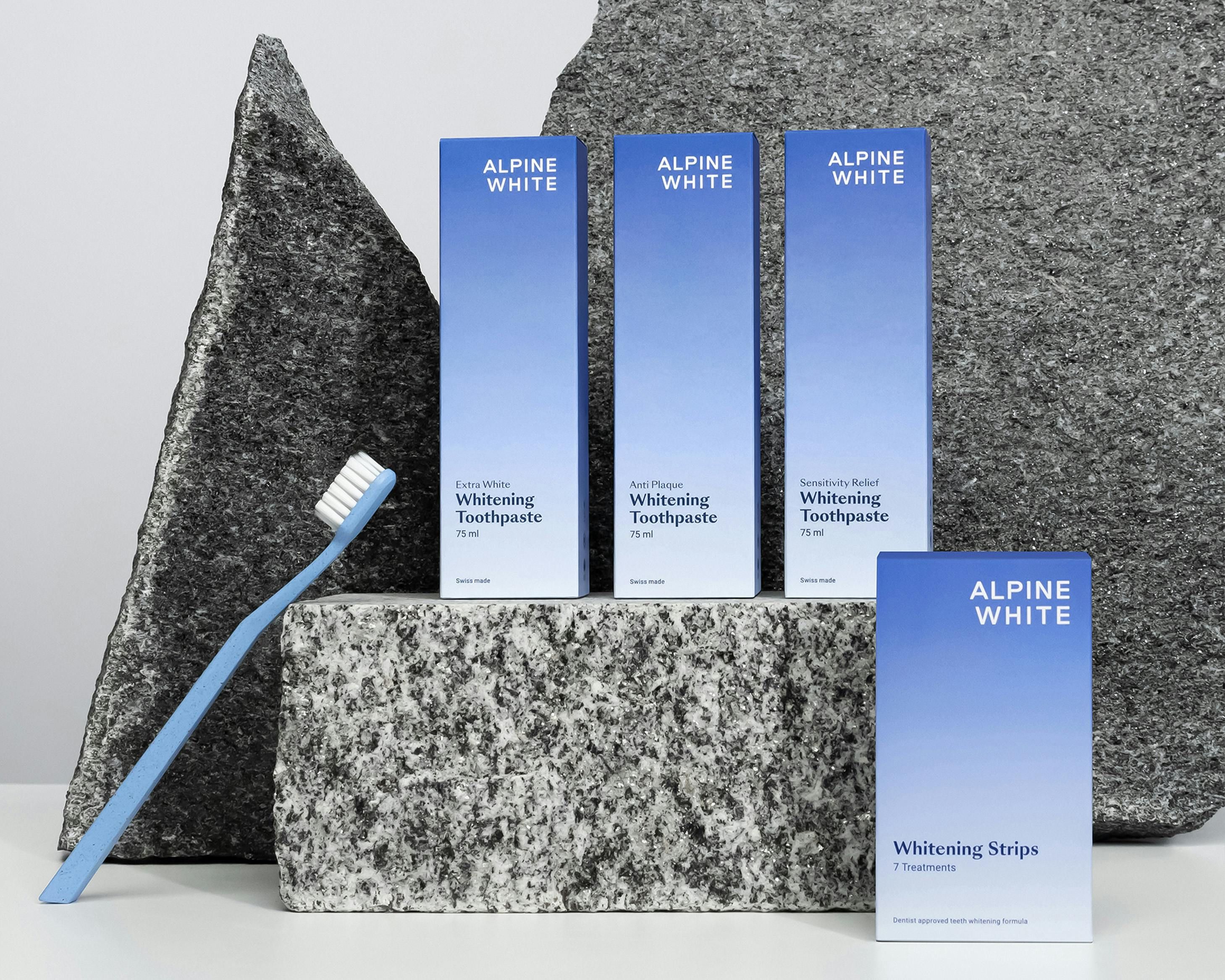
ALPINE WHITE, a Swiss company, offers three special whitening toothpastes tailored to different needs:
The ALPINE WHITE Extra White toothpaste was developed specifically for those who want to whiten their teeth while cleaning them gently. A main component of this toothpaste is activated charcoal, a proven means of removing discolouration. Activated charcoal acts like a magnet for pigments that can result from drinking coffee, tea or wine, binding them so they are gently removed when you brush. The natural colour of the teeth is preserved, and the teeth gain a fresh, natural shine.
Another advantage of this toothpaste is the addition of fluoride, which makes the teeth more resistant to tooth decay. Fluoride helps to remineralise the tooth surface and thus strengthens the enamel – a crucial protective mechanism against acids from food and drink. The RDA value (Relative Dentin Abrasion) of between 60 and 80 ensures balanced abrasion and removes discolouration without unnecessarily wearing down the tooth surface. This makes “Extra White” toothpaste a good choice for daily oral care that both whitens and protects.
The ALPINE WHITE Anti Plaque toothpaste is aimed at those who want to effectively counteract the formation of plaque and tartar. Plaque is a soft bacterial deposit on the teeth that hardens and can turn into tartar if it is not removed regularly. The special formula of this toothpaste aims to reduce plaque as it forms and to prevent bacteria from accumulating on the teeth.
With an RDA value of 80 to 100, “Anti Plaque” toothpaste provides thorough cleaning that works effectively against stubborn deposits without attacking the enamel. Its cleaning agents gently remove plaque and help keep the enamel smooth and clean, making it harder for bacteria to adhere. Like all ALPINE WHITE toothpastes, “Anti Plaque” toothpaste also contains fluoride, which remineralises and strengthens the teeth to protect them from tooth decay. This combination makes “Anti Plaque” toothpaste ideal for all-round dental health, reducing plaque and tartar without overtaxing the teeth.
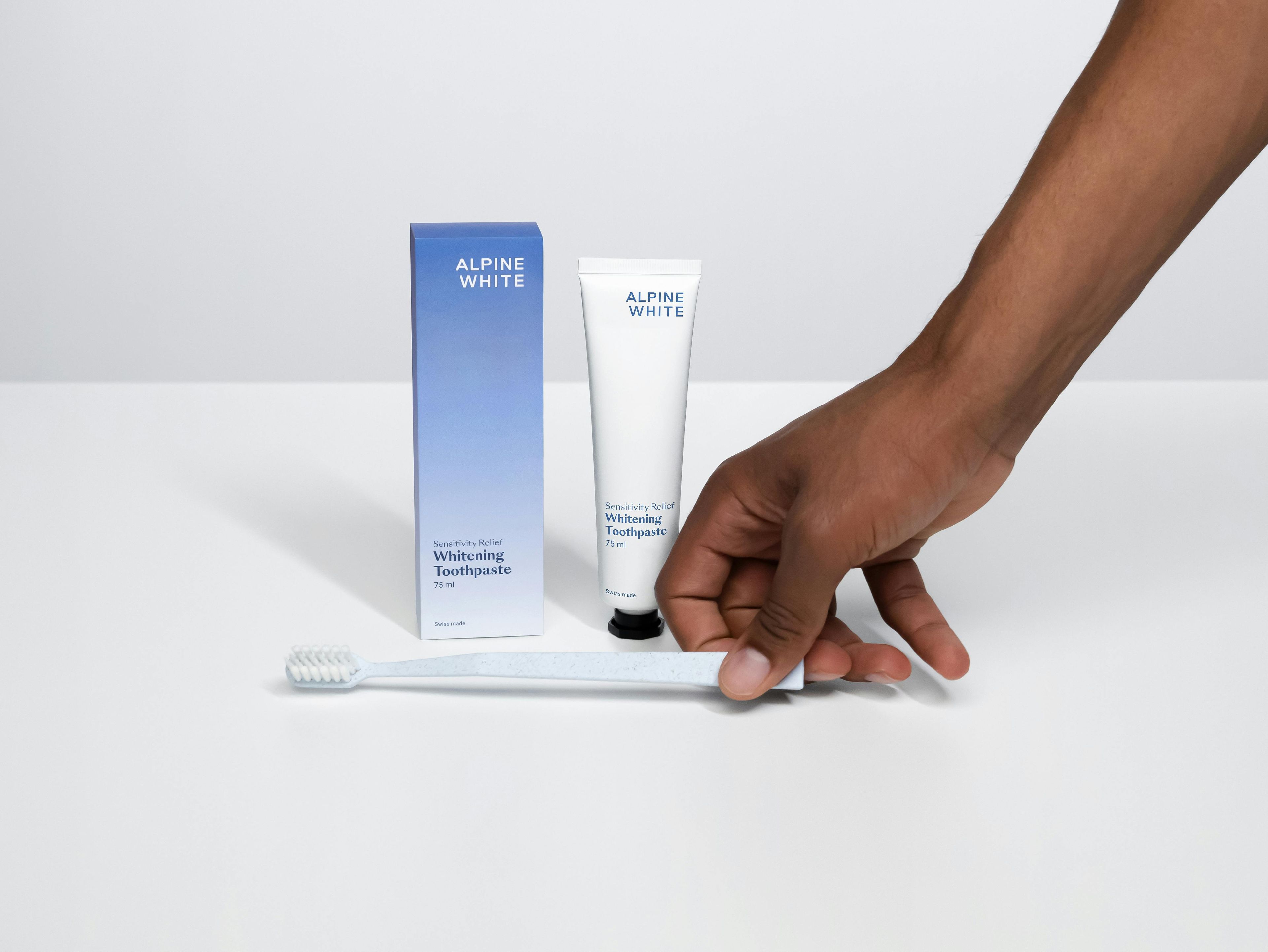
For people with sensitive teeth, ALPINE WHITE has developed Sensitivity Relief toothpaste, which is specially tailored to the needs of people with tooth sensitivity. This toothpaste contains mild but effective ingredients that help to relieve tooth sensitivity without sacrificing gentle whitening.
Thanks to its gentle formula with an RDA value of 60 to 80, “Sensitivity Relief” toothpaste provides thorough yet gentle cleaning that protects the enamel and helps to prevent irritation. Its special composition forms a kind of protective layer over sensitive areas, reducing sensitivity to hot, cold or sweet food and drink. This toothpaste also contains fluoride, which further contributes to caries prevention and strengthens the enamel. “Sensitivity Relief” toothpaste is therefore excellent for daily use and ideal for whitening sensitive teeth while gently protecting them.
To get the most out of your teeth whitening and general oral care, a consistent routine is essential. Here are some tips to help prevent discolouration and maintain the natural whiteness of your teeth:
Brushing your teeth at least twice a day for two minutes is the cornerstone of a good oral care routine. A high-quality toothpaste such as ALPINE WHITE's whitening toothpastes can help to remove discolouration on the tooth surface and prevent tooth decay. Use a suitable toothbrush – whether manual or an electric toothbrush. Electric toothbrushes, recommended by many experts, help to remove plaque more thoroughly and can further enhance the effectiveness of whitening toothpastes. Make sure you reach all areas of your mouth, especially the back teeth and the gum line.
Dental floss is an often neglected but extremely important addition to daily oral care. It specifically removes plaque and food debris from between the teeth, where a toothbrush cannot reach. By flossing every day, you reduce the risk of gum disease and make sure that no discolouration settles in these hard-to-reach areas. Interdental brushes are also a good alternative and are particularly effective where the gaps between teeth are somewhat larger.
Strongly staining foods and drinks such as coffee, tea, red wine and tobacco can quickly lead to discolouration. If you don't want to avoid them completely, it helps to rinse your mouth with water after consuming them. This prevents pigments from adhering directly to the tooth surface. You can also drink beverages that promote discolouration through a straw to reduce contact with your teeth.
With a careful and regular oral care routine combined with good habits, you can help preserve a radiant white smile and support the effect of whitening products in the long term.
Choosing the right whitening toothpaste depends on individual needs. With its Extra White, Anti Plaque and Sensitivity Relief variants, ALPINE WHITE offers high-quality options tailored to specific requirements. It is important to pay attention to the ingredients and the abrasion value in order to maintain dental health and promote a radiant white smile.
Oral CareAre you overwhelmed by the selection of our products and want to know which one is right for you? Then read this article and get inspired.
 Oral Care
At ALPINE WHITE, we've looked closely at how different toothpastes work to keep your teeth and gums healthy. We care about giving you the best options for your oral care. In this article, we share our findings and top toothpaste statistics to help you understand which toothpaste might be best for you. We've done all the hard work of testing and research so you can easily choose what's right for your smile.
 Oral Care
The range of kinds of toothpaste is huge. There are many different brands, such as Sensodyne, Crest Pro Health and Colgate. While one promises fresh breath with minty flavour, another supports the gums or helps to whiten teeth (whitening toothpaste). Still, other toothpastes are designed to combat tartar, pain-sensitive teeth or aphthae. Then there are fluoride and fluoride-free toothpastes or SLS or SLS-free.