Teeth whitening statistics: key takeaways
- The global teeth whitening market is forecast to grow by 5.0% a year from 2022 to 2030 [1].
- Whitening toothpaste had the largest market share in 2021, at 33% [1].
- About one in three orthodontists (32.8%) offer whitening, while almost two in three (65.8%) refer patients to other dental professionals for it [5].
- Dentists report the best whitening results in teenagers aged 14 to 16 [17].
- Some dentists hesitate to whiten the teeth of 14 to 18-year-olds because not all their adult teeth may have come through yet [17].
How big is the teeth whitening market?
The teeth whitening market is growing because more people want a brighter smile. It covers products and services that help teeth look whiter.
- Mordor Intelligence predicts the market will rise from $7.44 billion in 2024 to $8.94 billion by 2029, an annual growth rate of 3.75% [3].
- FMI expects the global market to expand at 4.9% a year over its forecast period [6].
- Between 2012 and 2021, sales of teeth whitening products rose by an average of 4.5% a year [6].
- In 2021, whitening products made up about 23.6% of the global cosmetic dentistry market, which was worth roughly $26.89 billion [6].
- Rising healthcare and dental costs in wealthy countries are pushing some people to travel abroad for dental care. Many elective cosmetic treatments are not covered by insurance in some countries [6].
Shops versus online
Whitening toothpaste and strips are mostly bought in physical shops, which is why in-store sales make up a large part of the market [1].
- In 2021, physical stores generated 61% of teeth whitening market revenue [1].
- Semantics found that 95% of toothpaste sales worldwide still happen offline [1].
- Online sales are growing about six times faster than before, and brands such as Colgate and P&G are selling more of their whitening products online [1].
- Online shops selling toothpaste, whitening films and gels attracted more buyers during the pandemic, which helped the market grow [1].
- SmileDirectClub Inc. reported a 47% rise in teeth whitening and straightening in 2021 [1].
In short, online shopping is becoming an important way to find whitening products, and new brands are making teeth whitening more popular and easier to access.
Global teeth whitening statistics
Whitening is popular because it helps people feel good about their smile, much like the polished smiles they see on celebrities. It has become easier and cheaper, so more people try it.
- In the US, teeth whitening is the top dental treatment, making up 32% of dental office visits. Almost everyone (99.7%) agrees that a smile is socially important [1].
- A 2016 survey by a London dental clinic, reported by White Dental Beauty, found that 84% of people feel more pressure to have a perfect smile, as more adults and celebrities have braces and other dental treatments [1].
- A 2019 Forbes article noted that 5% of influencers account for 45% of influence on social media, which is expected to boost the whitening market [1].
- North America leads the market, with about 37% of industry revenue in 2021, thanks to advances in technology and more people choosing whitening [1].
- FMI agrees: in 2021 the USA led the North American market, holding about 29.1% of the global market [6].
- Growing awareness of oral health and a rising number of gum disease (periodontitis) cases play a part. The CDC estimates that about 70.1% of adults aged 65 and older have gum disease, which tends to worsen with age [6].
- In the US, 88.8% of orthodontists had patients ask for tooth whitening, and 76.2% recommended whitening to some patients, usually fewer than 25% of their patients [5].
- China was a growing market in 2021, with about 8.6% of the global market share [6].
- Germany was a major player in the teeth whitening product market in 2021, with about 6.4% of the global market share [6].
- In 2017, tooth whitening became one of the fastest-growing beauty treatments in the UK, worth more than £40 million a year [16].
Millennials strongly influence these trends. They are better informed about the personal care products they use and more likely to follow their own routines [6]. Better technology and greater health awareness keep demand rising.
How many people whiten their teeth?
Whitening is no longer just for celebrities. Millions of people try it every year to improve the colour of their teeth.
- According to Racounter, about two-thirds of American adults have tried whitening, from professional treatments at the dentist to toothpaste and strips at home [1].
- At-home whitening gels usually contain about 3% hydrogen peroxide, which the FDA considers safe [1].
- In 2020, about 20.59 million people in America used whitening strips [8], and about 18.92 million used Crest 3D White Whitestrips [11].
- A UK survey found that 24% of people without a partner have whitened their teeth, more than double the 11% of people in a relationship [16].
- Almost half of those single people (45%) admitted to whitening their teeth illegally, compared with only 12% of people in a relationship [16].
Is teeth whitening regulated in Europe?
Yes. Under European Council rules, products with more than 0.1% hydrogen peroxide may only be sold to dentists and must be used in the dentist's practice [16].
Helen Minnery of the British Society of Dental Hygiene and Therapy has warned about the risks beauty businesses take when they offer illegal tooth whitening: "Everyone is different; and just as our hair and skin colour vary, so do our teeth. Very few people have brilliant-white teeth, and our teeth can also become more discoloured as we get older. If you choose to have teeth whitening, make sure you have it done in a safe way by a qualified dental professional." [16]
Caroline Sumpter, a beautician, was the first in the UK to successfully sue a major illegal operator, Megawhite. She had spent £1,500 on a laser tooth whitening kit, believing she did not need to be a dentist to use it [16].
Gentle whitening without hydrogen peroxide
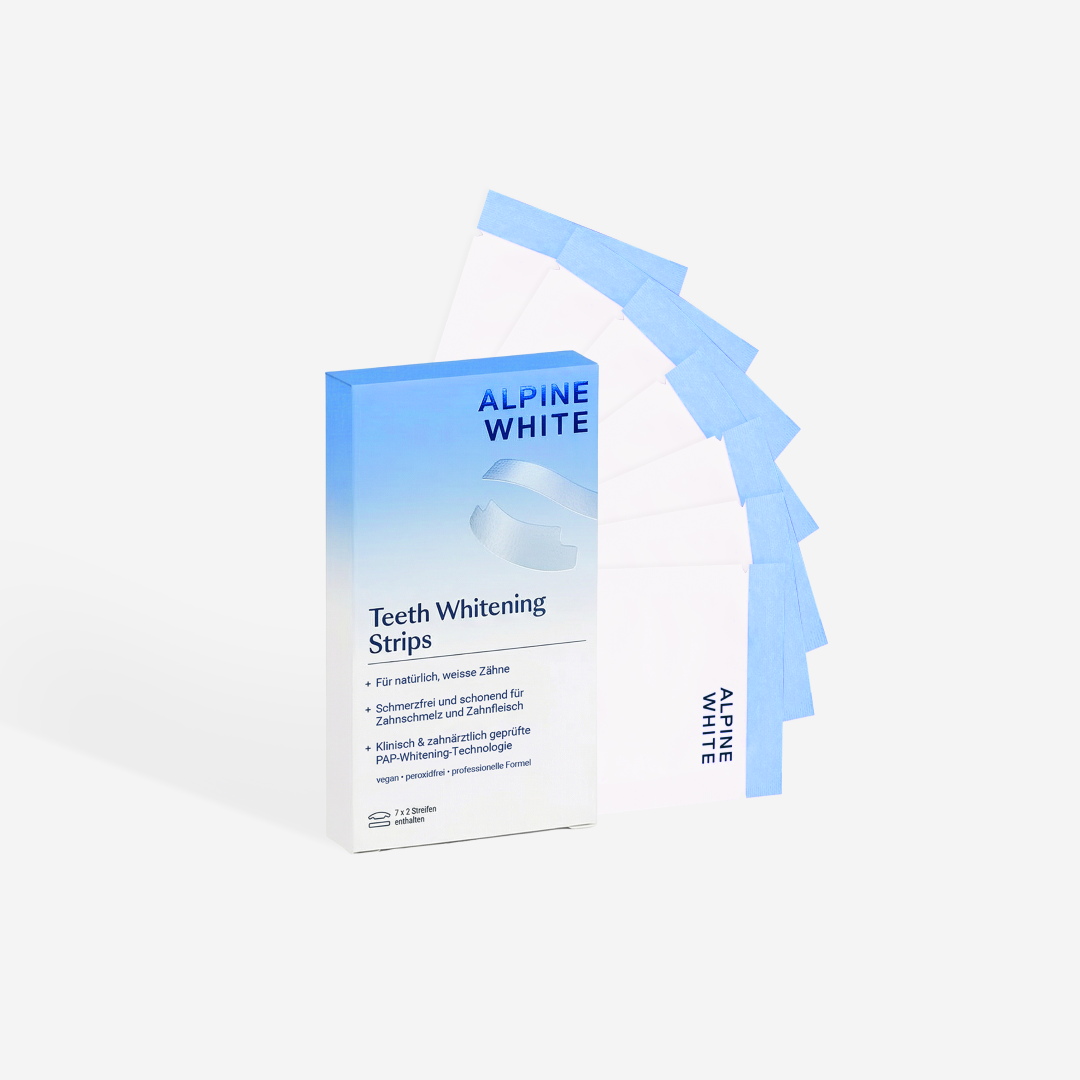
Many people want white, healthy-looking teeth, but classic hydrogen peroxide whitening can leave teeth sore or sensitive. ALPINE WHITE whitening strips take a different route: they work without hydrogen peroxide and are designed to be gentle on teeth.
A 2023 study by the Fraunhofer Institute found that the ALPINE WHITE method whitens effectively without harming tooth enamel, performing as well as other whitening options.


 Teeth Whitening