What is fluoride and why does toothpaste contain it?
Fluoride is a naturally occurring trace element found in some foods and in drinking water. In dental care, sodium fluoride is the form most often used. So why is it in almost every toothpaste? Because fluoride can help to remineralise your tooth enamel. It helps to put back the calcium and phosphate that acids from food and drink have drawn out of the enamel. This process is vital for preventing tooth decay and for your overall dental health.
Using fluoride toothpaste regularly strengthens your enamel and lowers the risk of cavities and other dental problems. Fluoride also supports oral hygiene by slowing the growth of harmful bacteria, which helps to prevent gum inflammation. It is not just protection against cavities. It supports the health of your whole mouth.
How do you use fluoride toothpaste safely?
Fluoride toothpaste is a great way to protect your teeth, but the dose makes the poison. Use the amount recommended on the packaging. Too much fluoride can cause side effects such as fluorosis, a discolouration of the teeth that mainly affects children. So supervise young children while they brush and make sure they do not swallow the toothpaste. After brushing, rinse only with a little water and avoid eating or drinking straight away. That way the fluoride stays on your teeth for longer and works to its full effect.
Fluoride and children's toothpaste: what should you know?
Choosing the right toothpaste matters most for children. Children's toothpaste has an adjusted fluoride content to suit milk teeth, which can react more sensitively to fluoride. Too much can lead to fluorosis, a discolouration or staining of the teeth. In small amounts, however, fluoride is safe and gives children effective protection against tooth decay. Choose a toothpaste made for your child's age. These products often have a lower fluoride content and come in child-friendly flavours that make brushing more fun. Always supervise brushing and make sure your child spits the toothpaste out, as swallowing it can lead to too much fluoride.
How much fluoride is right? Understanding ppm
The right amount of fluoride toothpaste is key to preventing cavities and keeping your mouth clean. Fluoride concentration is usually given in parts per million (ppm) or milligrams per gram (mg/g). Adult toothpastes typically contain about 1,000 to 1,500 ppm of fluoride, which is roughly 1 to 1.5 mg per gram of toothpaste. For children, a lower concentration is recommended, often around 500 ppm. Follow the instructions on the packaging or the advice of a dental professional so you get the right amount. Too much fluoride can cause side effects such as fluorosis, so do not exceed the recommended amount. If you are unsure what suits you or your family, ask your dentist.
Is there an alternative to fluoride toothpaste?
Many fluoride-free toothpastes on the market advertise natural ingredients such as herbs, minerals or activated charcoal. They can appeal if you have concerns about fluoride and want a natural option. However, these alternatives do not match fluoride toothpaste when it comes to preventing cavities and strengthening enamel. Scientific studies have consistently shown that fluoride effectively remineralises enamel and helps prevent tooth decay. Other ingredients have not shown this to the same extent. Our conclusion: there are interesting alternatives, but at present there is no equivalent to fluoride when it comes to complete protection and care for your teeth.
Alpine White whitening toothpaste: your daily companion for a brighter smile
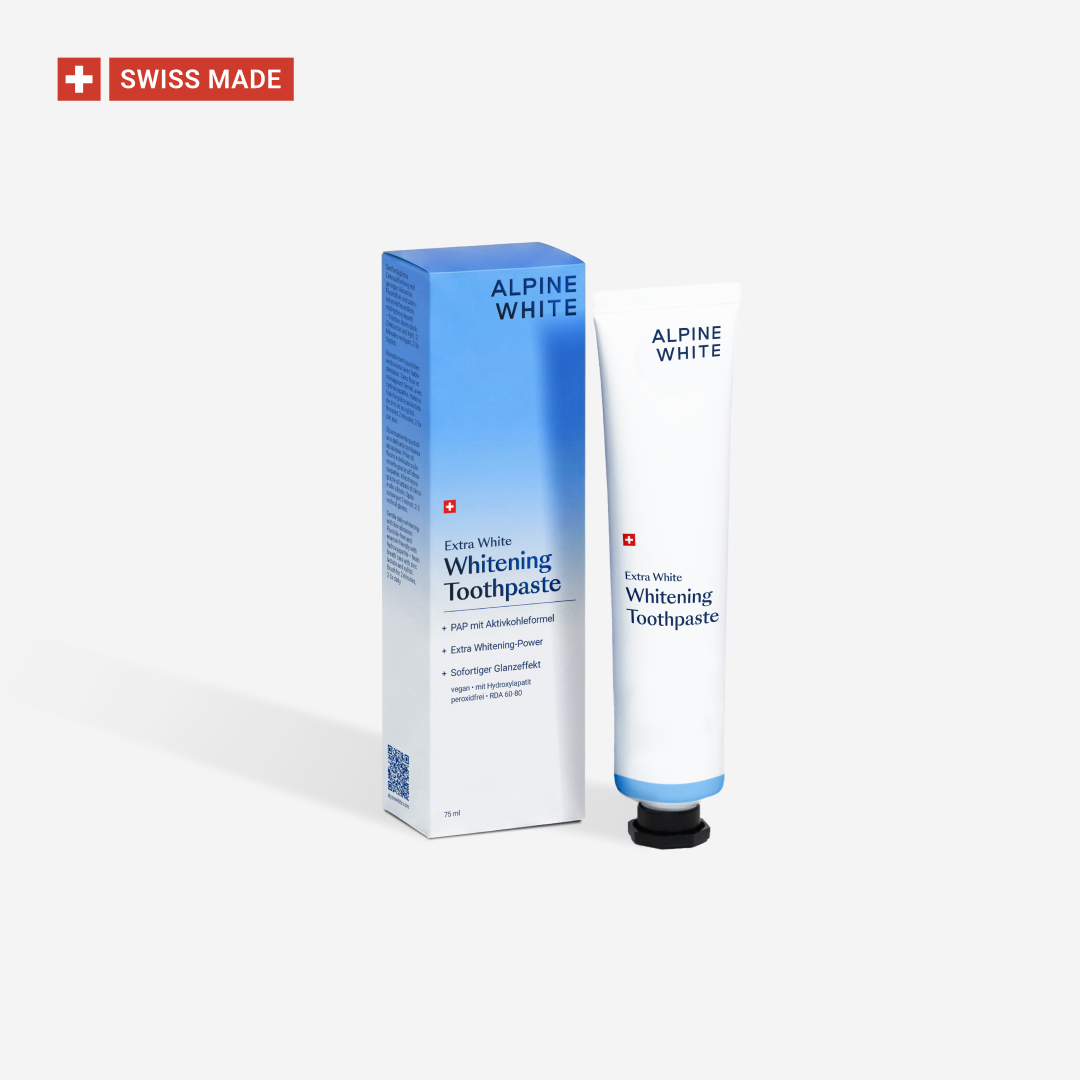
Alpine White toothpastes contain a suitable, safe level of fluoride and fit easily into your daily routine. Whitening Toothpaste Extra White is made for anyone who wants whiter teeth while caring for their enamel. If you are looking for a whitening toothpaste that combines everyday protection with a brighter smile, it is a good place to start.


 Dental Health