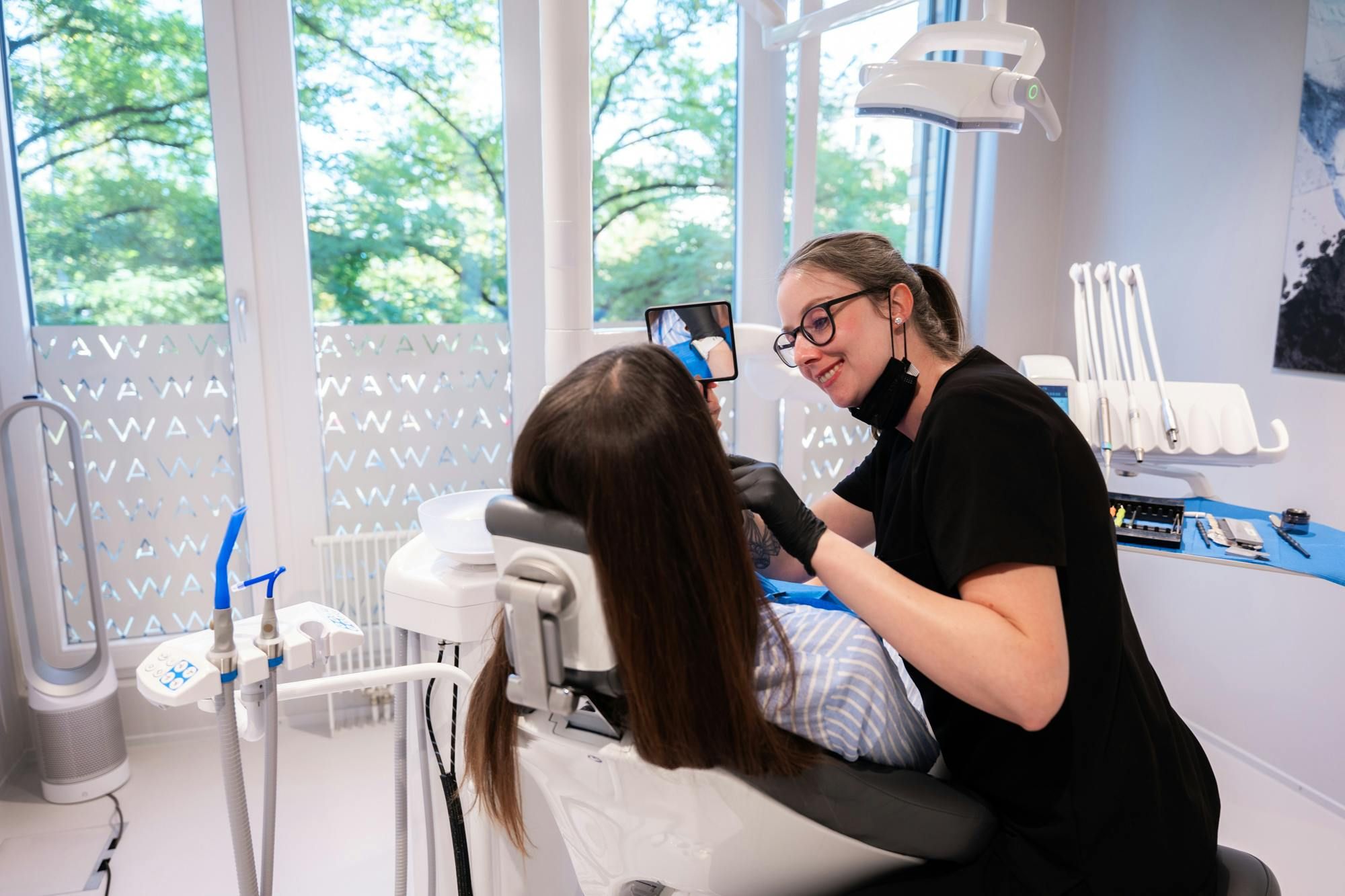
Regular application for the best results
If you want a permanently radiant smile, it is important to repeat the bleaching regularly. Even the best bleaching products cannot prevent your teeth from absorbing pigments again over time. Especially if you often consume colour-intensive foods or drinks, tooth discolouration can form again.
Regular bleaching – about every three to six months – helps to maintain the lighter tooth colour. It is important to choose a gentle but effective method, such as the peroxide-free ALPINE WHITE bleaching, which you can apply as often as necessary without endangering your oral health.
Care after bleaching
After bleaching, proper oral care is crucial to maintain the results. This includes not only daily brushing but also the use of fluoride toothpaste, which strengthens your dental substance and protects your teeth against caries. Regular visits to the studio for check-ups and cleanings are also important to remove tartar and keep your teeth healthy in the long term.
Additionally, you should watch your diet: Avoid consuming highly pigmented foods such as coffee, red wine, or berries for a few days after the whitening. These can discolour freshly whitened teeth more quickly.
If you use dental aligners for your tooth whitening, it is important to clean and check them regularly. This prevents bacteria or discolouration from settling. At the same time, it makes sense to develop a routine that refreshes the whitening every few months to maintain a brighter smile. This way, you can enjoy your white teeth for a long time without jeopardising your dental health.
What you should pay attention to
When whitening your teeth, it is important to take into account not only the natural tooth substance but also existing dental prostheses such as veneers, crowns or bridges. While natural teeth become significantly brighter with tooth whitening, dental prosthetic materials usually retain their original colour. This means that after whitening, you may notice colour differences between your real teeth and your dental prostheses. Therefore, we recommend always consulting your dentist to find out what options you have to achieve a harmonious result.
Another important point is that with a comprehensive tooth whitening, you should also pay attention to the health of your gums. People who suffer from periodontitis or have sensitive gums should pay particular attention to the ingredients of their bleaching product. Our peroxide-free bleaching gel is gentle and mild, making it suitable for people with sensitive gums.
The material of the teeth also plays a role: the dentin, which lies beneath the enamel, influences the final tooth colour after whitening. While the bleaching gel removes superficial tooth discolouration, deeper discolourations in the dentin may persist. Therefore, it is important to have realistic expectations and, if in doubt, seek professional advice to achieve the desired result.
The role of dentistry and oral hygiene
Brighter teeth are not only the result of a successful tooth whitening, but also of comprehensive oral hygiene. With the right care and the use of gentle whitening products, you can ensure that your tooth whiteness is maintained and your teeth always look healthy.
Don't forget to maintain your oral hygiene and keep an eye on healthy teeth by regularly removing tartar and using a fluoride toothpaste. With a radiant smile, you can appear confident and be sure that you keep your teeth healthy and beautiful in the long run.
Conclusion
In summary, how often you should whiten your teeth depends on your individual needs. With ALPINE WHITE, however, you have the freedom to repeat the whitening as often as you like. Our peroxide-free products are particularly gentle, so you don't have to worry about your tooth substance or your gums. Whether at home or in our studio, regular whitening of your teeth ensures that your smile always remains fresh and radiantly white.
Your oral health remains a top priority – with ALPINE WHITE, you can whiten your teeth safely and effectively, without any risks.


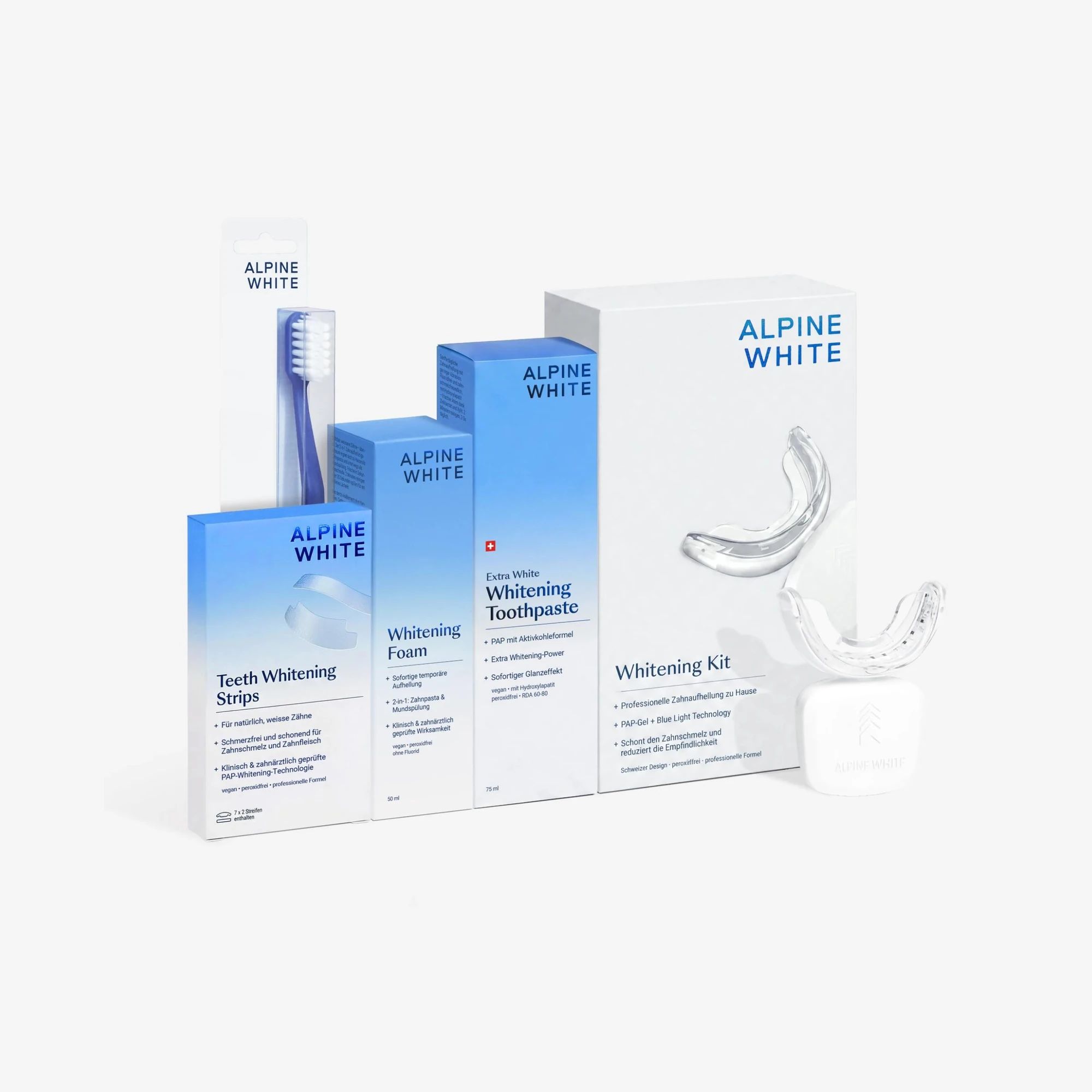

 Teeth Whitening