What is oil pulling and where does it come from?
Ayurveda, the ancient Indian system of medicine, has long valued oil-based treatments, especially for oral care. The Charaka Samhita, one of the oldest Ayurvedic texts, describes oil pulling as a way to cleanse and strengthen the mouth. Traditional teachings claim that regular oil pulling can ease more than 30 conditions, from bad breath to gum disease.
India has developed many rituals over the centuries to support physical and mental wellbeing, and oil pulling is one of the best known. It shows how long people have looked to natural methods to keep a healthy oral flora and help prevent dental problems.
Why try oil pulling?
Many people use oil pulling to support their teeth, gums and jaw, and to help guard against cavities, bad breath and other oral problems. Its fans say it gives the mouth a deeper clean than brushing and toothpaste alone, by drawing out bacteria and residue.
Coconut oil is a popular choice because it is gentle on the oral mucosa and fits easily into your daily teeth care. Swishing the oil around and between your teeth can help remove food particles and bacteria that build up during the day. Always spit the oil out afterwards, as it now holds the bacteria it has picked up. You can also buy oils made specifically for oil pulling, which are often enriched with additional ingredients.
How do you do oil pulling?
Oil pulling is simple and fits easily into your morning routine. Take a teaspoon of oil in your mouth. Organic coconut, sesame or sunflower oil are the usual choices. Rather than spitting it out straight away, swish it back and forth for around 15 to 20 minutes. During this time the oil binds to bacteria and other unwanted substances in your mouth. Sesame and coconut oil are especially popular because they taste pleasant and have antibacterial properties.
When the time is up, spit the oil out, as it is now loaded with bacteria. Then rinse your mouth thoroughly with warm water and carry on with your usual oral care.
What are the benefits of oil pulling?
- Antibacterial effect: oil pulling is said to reduce harmful bacteria in your mouth, which can help prevent gum inflammation, cavities and other problems. This matters most in the spaces between your teeth, where bacteria tend to collect.
- Deep cleansing: swishing oil is meant to loosen residue and unwanted substances, giving a cleansing effect beyond normal brushing.
- Better oral hygiene: used regularly, oil pulling can help reduce plaque and improve your overall oral hygiene, for healthier, whiter-looking teeth and fresher breath.
- A natural mouthwash: unlike many commercial mouthwashes, oil pulling contains no alcohol or added chemicals. Most people use everyday cooking oils such as coconut or sesame oil.
- Support for your gums: oil pulling may help reduce bleeding gums and the formation of gum pockets, and help keep your gums strong.
Tips for oil pulling at home
- Start with a small amount of oil and increase it gradually.
- Make it a daily habit, ideally in the morning on an empty stomach.
- Do not swallow the oil, as it contains the bacteria it has collected.
- Brush your teeth afterwards to remove any remaining residue.
Does oil pulling replace brushing and professional cleaning?
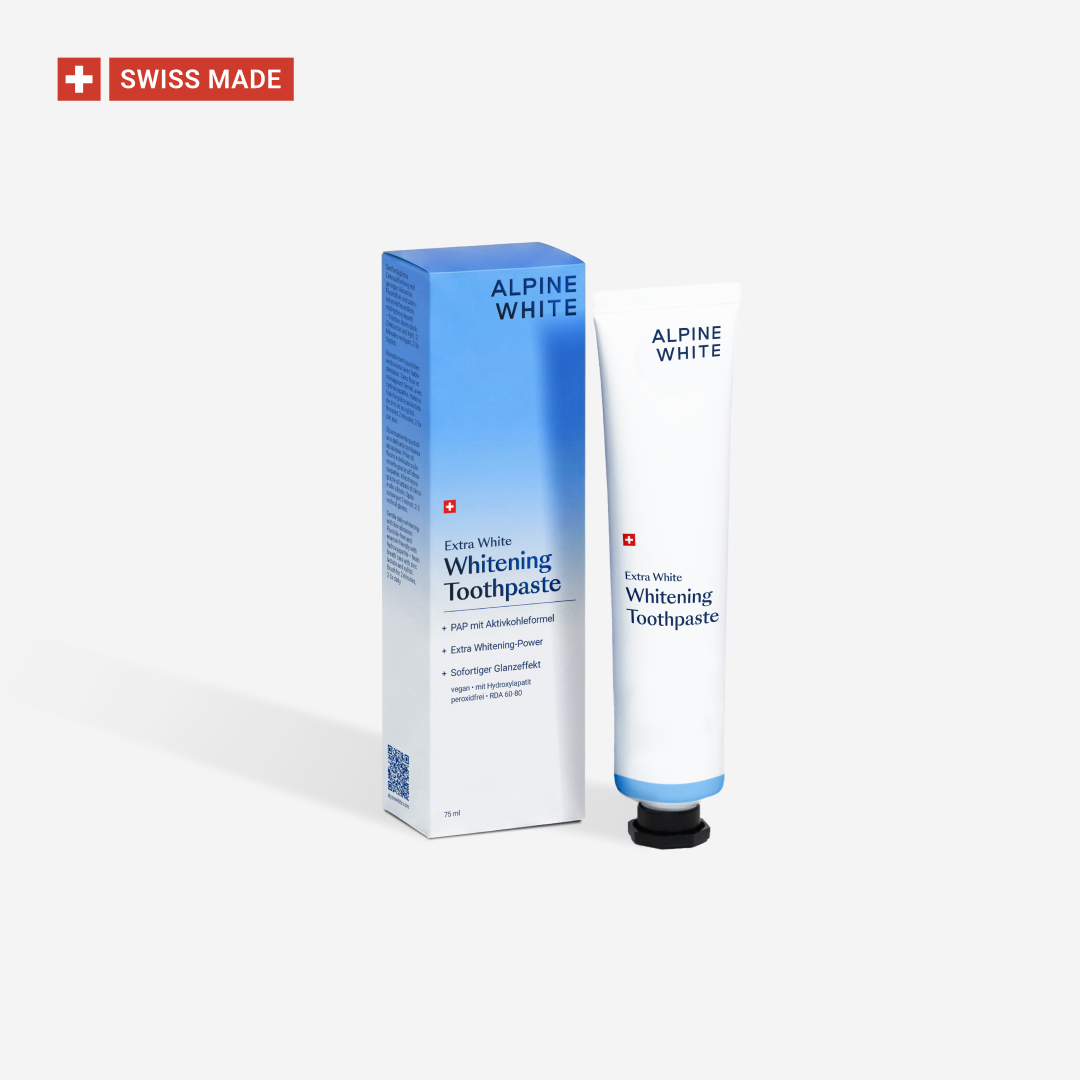
No. Oil pulling can be a useful extra, but it is not a substitute for brushing twice a day or for regular professional teeth cleaning at your dentist or dental hygienist. Alpine White supports your routine at home: our Whitening Toothpaste Extra White helps you care for your teeth every day, and our whitening strips gently whiten your teeth at home in a few days.
A dental hygienist can remove plaque and stains that brushing leaves behind, and your dentist can advise on professional whitening if your teeth are discoloured. If you notice pain, bleeding gums or persistent bad breath, see your dentist.


 Teeth Whitening