What is whitening toothpaste and does it work?
Whitening toothpaste is a special kind of oral care product made to remove stains and give you whiter teeth. It either gently polishes away stains or uses active ingredients to lighten surface discolouration. Regular toothpaste cleans your teeth and helps prevent tooth decay. Whitening toothpaste does that too, and also targets teeth whitening specifically.
The difference lies in mild abrasive cleaning agents and whitening ingredients. The abrasives remove stains from the tooth surface mechanically. Whitening agents such as phthalimido peroxy caproic acid (PAP) are popular because they can lighten deeper stains. Together they help you get an even, bright smile and a fresh, healthy look.
How does whitening toothpaste work?
Most whitening toothpastes use fine particles that lift stains mechanically. A high abrasion value (RDA value) removes stains well and can make teeth look whiter. But be careful: too high an RDA value can wear down your tooth enamel, so products with gentle abrasion are best for daily use. Gentle toothpastes are especially suitable if you have sensitive gums or sensitive teeth. If sensitivity is a problem, talk to your dentist.
Whitening agents like PAP target deeper discolouration. They lighten the shade of your teeth without needing intensive abrasion. Many people want whitening and protection for healthy gums in one product. That combination supports an attractive smile and also contributes to your dental health. The fluoride in these toothpastes also helps prevent tooth decay.
Many whitening toothpastes are also designed to work well with an electric toothbrush, which makes plaque removal even more effective. Products from the supermarket, pharmacy or online shops promise white teeth, fresh breath and less tartar. In practice, the best whitening toothpastes are the ones that clean thoroughly, whiten gently and protect your enamel. If you want a more intensive result, a professional whitening treatment at your dentist is another option.
Key ingredients in whitening toothpaste
Fluoride
Fluoride is an important protective ingredient in oral care. It helps prevent tooth decay and strengthens enamel. It supports the remineralisation of the tooth surface and makes your teeth more resistant to harmful acids.
Activated charcoal
Some whitening toothpastes, often called charcoal toothpaste, contain activated charcoal. This natural substance gently absorbs surface stains and brightens your teeth. It binds pigments from coffee, tea or nicotine and leaves a fresh, natural white.
Hydroxyapatite
Hydroxyapatite is a natural building block of tooth enamel. It helps remineralise and strengthen enamel, repairs microscopic damage and supports a healthy, resilient tooth surface.
What should you look for in a whitening toothpaste?
When you choose a whitening toothpaste, keep these criteria in mind:
- Whitening effect: how well does it remove stains and brighten your teeth?
- Enamel protection: is it gentle on your enamel, without excessive abrasion?
- Cavity protection: does it contain enough fluoride to protect against tooth decay?
- Tolerability: is it suitable if you have sensitive teeth?
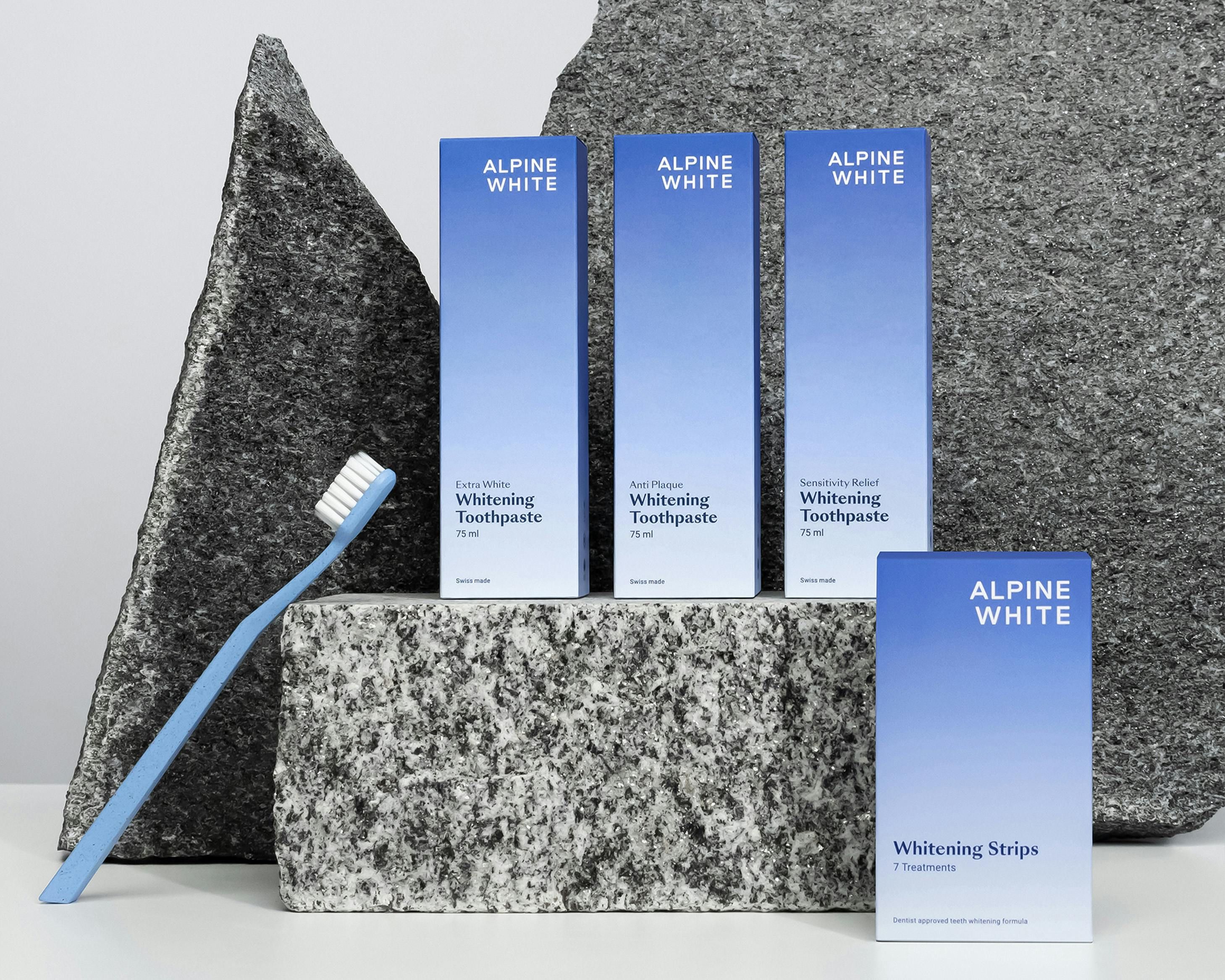
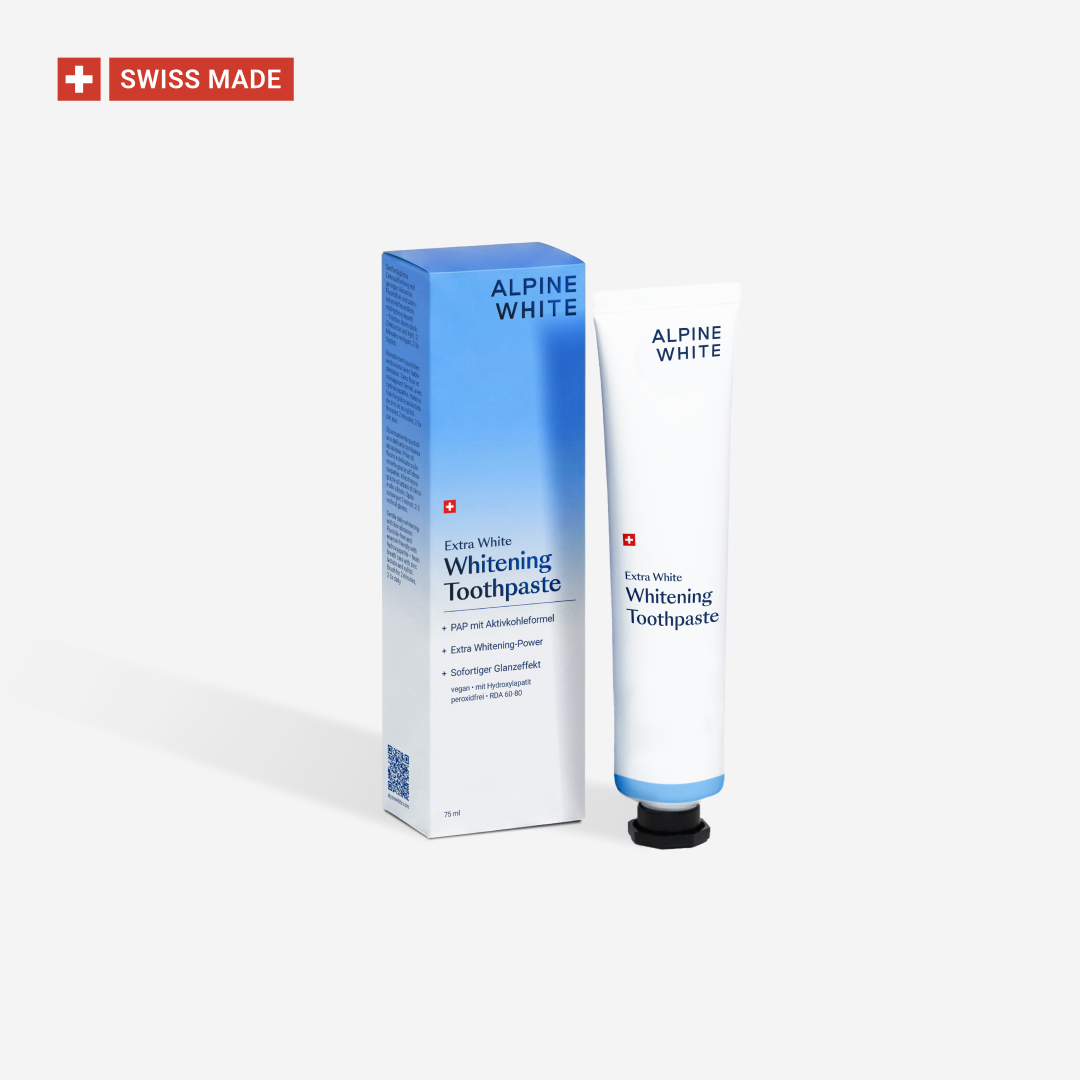
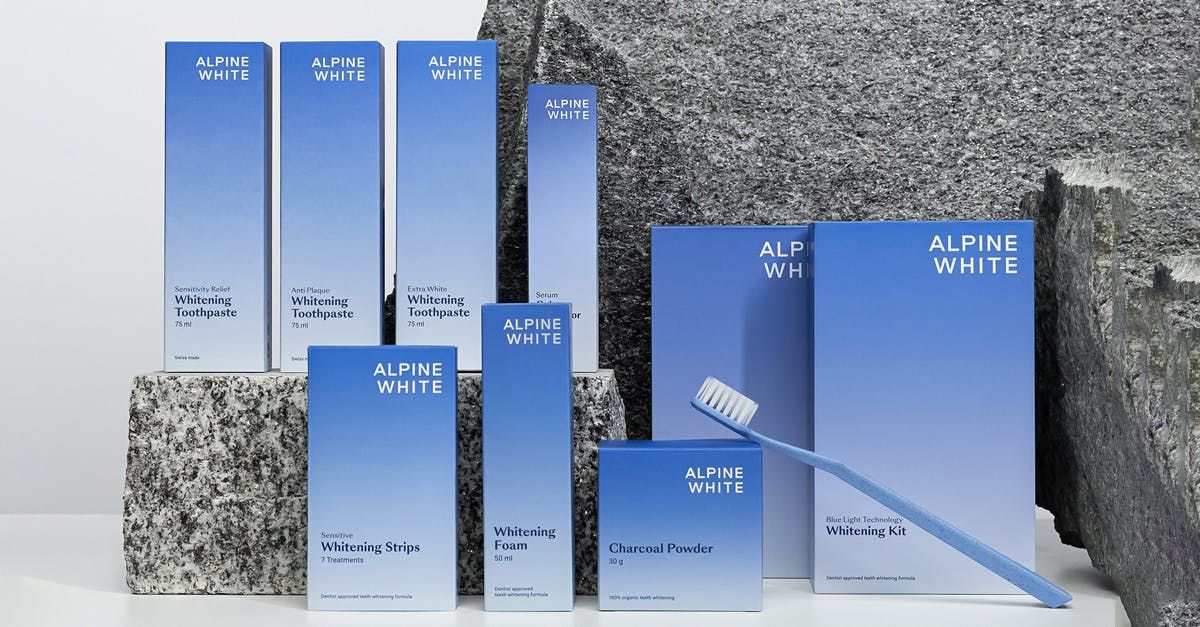
Alpine White Whitening Toothpaste Extra White
Alpine White is a Swiss brand. Our Whitening Toothpaste Extra White is made for anyone who wants to whiten their teeth and clean them gently at the same time. A key ingredient is activated charcoal, a proven way to remove stains. It acts like a magnet for pigments from coffee, tea or wine and binds them so they are gently brushed away. Your natural tooth colour is preserved and your teeth get a fresh, natural shine.
It also contains fluoride, which makes your teeth more resistant to tooth decay. Fluoride helps remineralise the tooth surface and strengthens enamel, a key protection against acids from food and drink. The RDA value (Relative Dentin Abrasion) of between 60 and 80 gives balanced abrasion. It removes stains without needlessly wearing down the tooth surface. That makes Extra White a good choice for daily care that both whitens and protects.


 Oral Care