Back to overview
Laughing woman with short curly hair, head tilted back, against a blue background

Teeth whitening without compromise

Teeth WhiteningMay 19, 20244 min read

Teeth whitening often forces a choice between a brighter smile and healthy teeth. Fast methods based on hydrogen peroxide can irritate the gums and leave teeth sensitive. Here is how gentle teeth whitening works, how it differs from power bleaching and how to keep your results looking natural.


Andrea Seraina

Andrea Seraina

Dental Content Specialist

What are the risks of conventional teeth bleaching?

Many teeth bleaching methods, especially those carried out at the dentist, use bleaching agents such as hydrogen peroxide, sometimes combined with UV light or heat, to whiten teeth quickly. These methods can cause tooth sensitivity, because they can affect the necks of the teeth and the inner tooth. Aggressive treatment may also leave the enamel more porous, which makes teeth more prone to plaque, tooth decay and stubborn stains.

The Alpine White approach: safe and effective teeth whitening

At Alpine White, the health of your teeth comes first. Our at-home whitening products are designed to be gentle on the tooth surface while lifting stains and brightening your natural tooth colour step by step. The aim is the result you want without the side effects of harsher methods.

Why choose gentle whitening?

  • Enamel protection: a gentle approach helps keep the risk of tooth sensitivity and erosion low.
  • Kind to your gums: a milder formula is easier on the gums, which suits people with sensitive mouths.
  • Easy to fit into your day: you whiten at home, at your own pace, with no UV light or special equipment.

How does gentle teeth whitening work?

Good results start with clean teeth. A professional teeth cleaning at your dentist or dental hygienist removes plaque and surface stains, so the whitening product can work evenly. After that, a whitening product lifts the pigments in the enamel without UV light or other harsh methods. The result is a natural white that suits your own tooth colour. Note that whitening does not change the colour of fillings, crowns or veneers, so talk to your dentist first if you have dental work.

Professional bleaching vs. whitening at home: which is right for you?

Professional bleaching is carried out by a dentist in a practice. If you would rather whiten in your own time, Alpine White whitening strips and the Whitening Kit are an easy at-home option. They also work well for keeping your results after a dental visit. Whichever route you take, good dental care is what keeps results looking good.

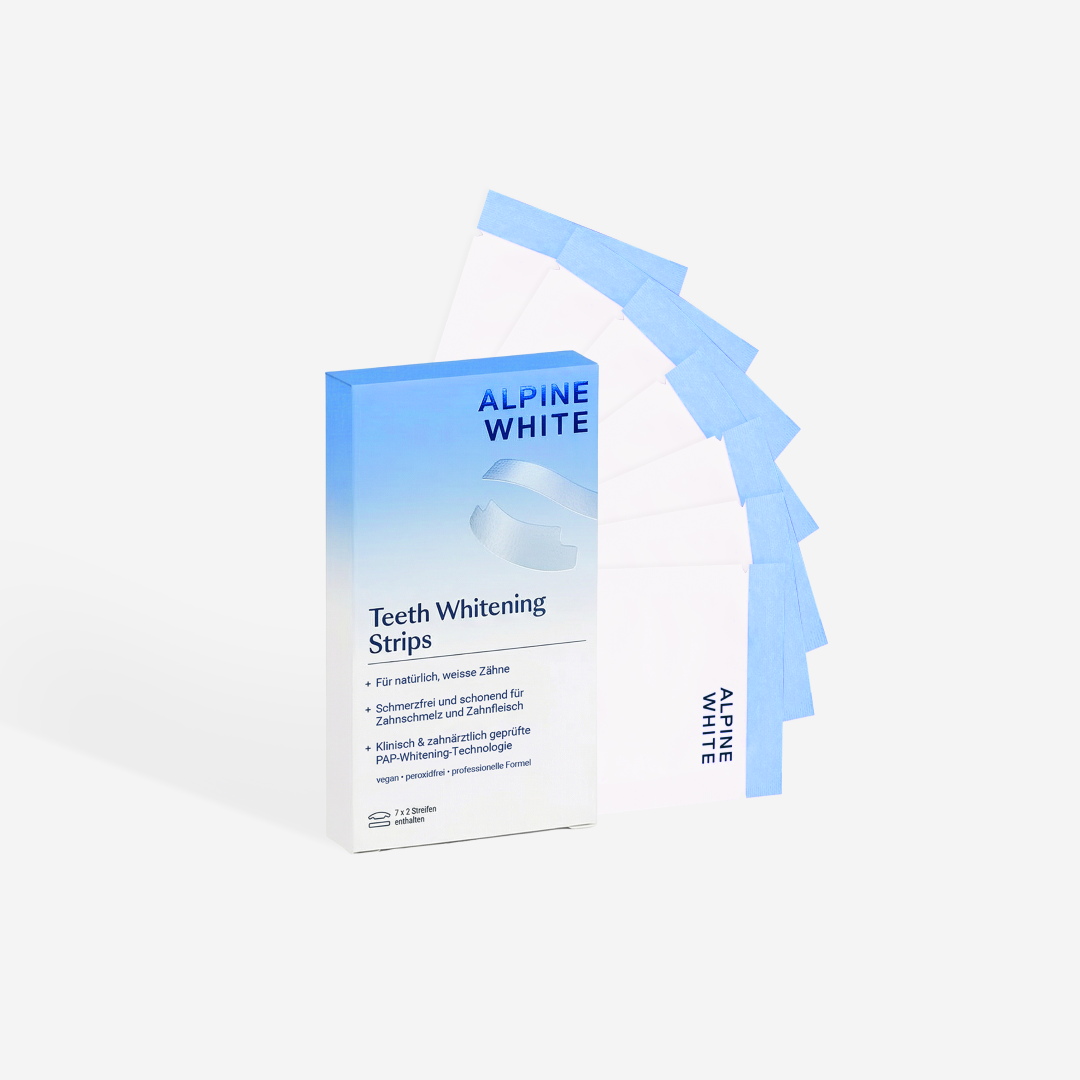
ALPINE WHITE Whitening Strips: pack with fanned-out pouches
4.4(128)

Whitening Strips

€ 29.90

14 pc • € 2.14

Learn more

Why a Hollywood white is different from natural whitening

The perfect Hollywood smile shown in the media can be tempting. Such very white teeth are often achieved with aggressive power bleaching that uses strong chemicals to reach intense whiteness in a short time. These methods are not without risk and can affect dental health in the long term. Alpine White takes a gentler approach that respects the natural structure and health of your teeth.

Gradual whitening for a natural look

Gentle whitening brightens teeth gradually. Instead of a radical change that often looks unnatural and can damage the tooth surface, the aim is to bring out the natural beauty of your teeth. It is a bit like hair colour: regular use and care are what keep the result looking fresh.

Why is regular use important?

Whitening is not a one-off event but an ongoing routine. Coffee, tea and red wine, as well as natural ageing, can bring new stains over time. Topping up your whitening now and then helps you keep your colour.

How does oral hygiene affect whitening results?

Good oral hygiene is the basis of any successful whitening. Brushing regularly with a quality toothpaste, plus a mouthwash if you like, reduces plaque and keeps teeth naturally brighter. A whitening toothpaste such as Alpine White Whitening Toothpaste Extra White can help you maintain the result between whitening sessions.

Realistic expectations

It is important to expect a realistic result. The goal is a natural, healthy white that respects your own tooth colour. That means a smile that looks good and stays healthy, without the risks and side effects of extreme bleaching. Knowing this helps you decide how to whiten your teeth in a way that is both safe and effective.

What is the difference from power bleaching?

Power bleaching, often offered in the US, typically uses strong chemicals such as hydrogen peroxide to reach dramatic whitening quickly. A gentle approach instead brings out the natural white of your teeth without putting your dental health at risk. It protects gums and enamel from the irritation and sensitivity that stronger chemicals can cause, and it aims for lasting results rather than quick but often damaging ones.

Conclusion

Gentle teeth whitening is more than a cosmetic treatment. It is an investment in your oral health and overall wellbeing. Choose a responsible way to whiten your teeth and see how easy and pleasant it can be. If you notice pain, bleeding gums or lasting sensitivity, speak to your dentist.

This might also interest you

Laughing man with sunglasses, looking up, close-up of the teethTeeth Whitening

Power bleaching: healthy alternatives for whiter teeth

Looking for a fast way to remove tooth stains? Many people consider power bleaching, a professional teeth whitening treatment that lifts deep-seated discolouration. Because it uses a high-strength peroxide gel, it can also cause painful sensitivity. In this guide, we explain what power bleaching is, how it works and what the risks are. We then show you gentler ways to whiten your teeth at home.

Lavish breakfast buffet with fruit, eggs, waffles, donuts and sausage packsTeeth Whitening

What to eat after teeth whitening

A whiter smile is only worth having if it lasts. In the first days after teeth whitening, what you eat and drink makes a real difference to how well your result holds up. So which foods are safe after whitening, and which should you avoid? Here is a simple guide, including a 48-hour white diet and long-term habits for white teeth.