Which dental floss is right for you?
To clean between your teeth properly, you need a dental floss that suits you. Most floss is made of nylon or a similar polymer, but there are still choices to make. You may want waxed floss to reach every corner of your mouth. Or you may prefer unwaxed floss to avoid any added coatings. Here are the pros and cons of each.
Waxed dental floss
Advantages of waxed dental floss:
- It often slides between teeth more easily, because the wax coating helps it glide. This makes it less uncomfortable and irritating than plain floss.
- It suits people with larger gaps between their teeth, as the wax makes the floss sturdier and less likely to fray or break.
- It can remove food particles and plaque more effectively, as it is stronger and can slide into hard-to-reach places.
- It often comes in flavours such as peppermint or cool mint.
Disadvantages of waxed dental floss:
- Some people find it harder to guide around the curves of their teeth, which can make it difficult to remove all plaque and debris.
- It is generally more expensive than plain floss because of the wax coating.
- Certain brands contain ingredients that can cause a reaction in people with sensitive mouths or gums. Read the label carefully so you know which product is best for your oral health.
- For some people, wax residue can build up on the teeth or between them.
- The taste or smell may be unpleasant for some people.
Unwaxed dental floss
Advantages of unwaxed dental floss:
- It is often cheaper than waxed floss, which makes it more affordable.
- It is thinner and less stiff, so it is easier to manoeuvre around the curves of your teeth and reach tricky spots.
- As it contains no added coatings, it is generally considered suitable for people with sensitive mouths and gums.
Disadvantages of unwaxed dental floss:
- It frays or breaks more easily than waxed floss, which can make thorough cleaning between the teeth harder.
- Because of its texture, it is more likely to tear in tight gaps or on sharp edges.
- Without the wax layer, it may not remove plaque and food debris as effectively as waxed floss.
Pick the option that works for you and give your smile the protection it deserves.
Alternatives to dental floss
If you dislike both waxed and unwaxed floss, there are other ways to clean between your teeth. Dental floss picks, toothpicks, interdental brushes or dental tape can all remove food debris and bacteria. If you wear braces, floss threaders help you clean thoroughly, and implants or other dental work can be cleaned the same way.
If you want an even more thorough clean, you can buy interdental brushes to clean the gaps between your teeth.
How do you use dental floss properly?
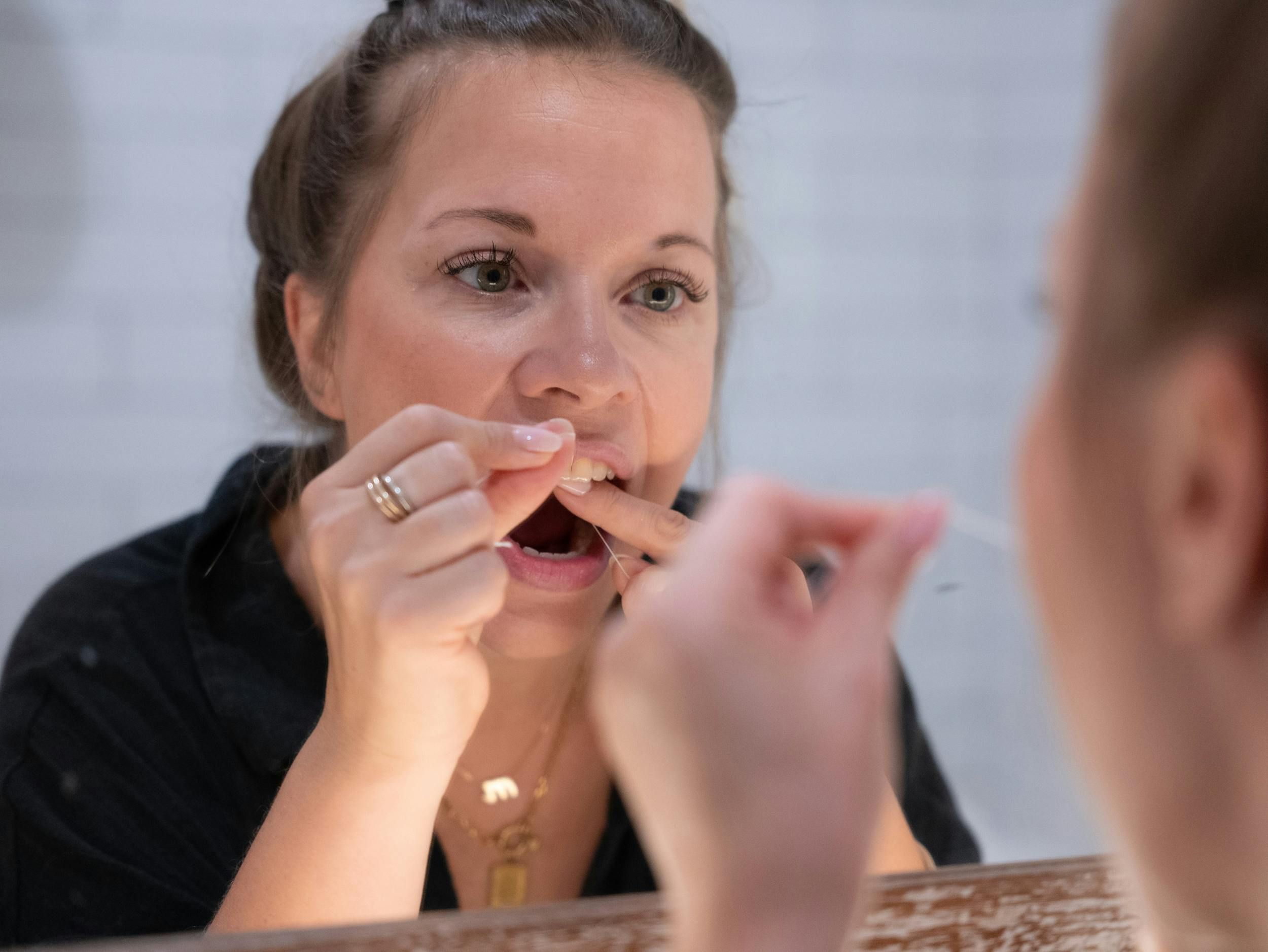
Once you have found the floss you like, it is all about technique. Flossing seems simple, yet it gets surprisingly tricky when you try to do it right. The good news is that one method will take your teeth care to the next level. Start at the back of your mouth and work your way forward gradually. This way you cover every area and avoid skipping the spots that are hardest to reach.
Why is flossing important?
Food debris and bacteria collect in the narrow spaces between your teeth, and a toothbrush does not remove them all. In the long run this can cause problems such as tooth decay and gum inflammation. Gum disease develops step by step, starting with gingivitis and, if the gums are left untreated, progressing to periodontitis. If your gums bleed regularly or feel painful, see your dentist.
Building a complete daily routine
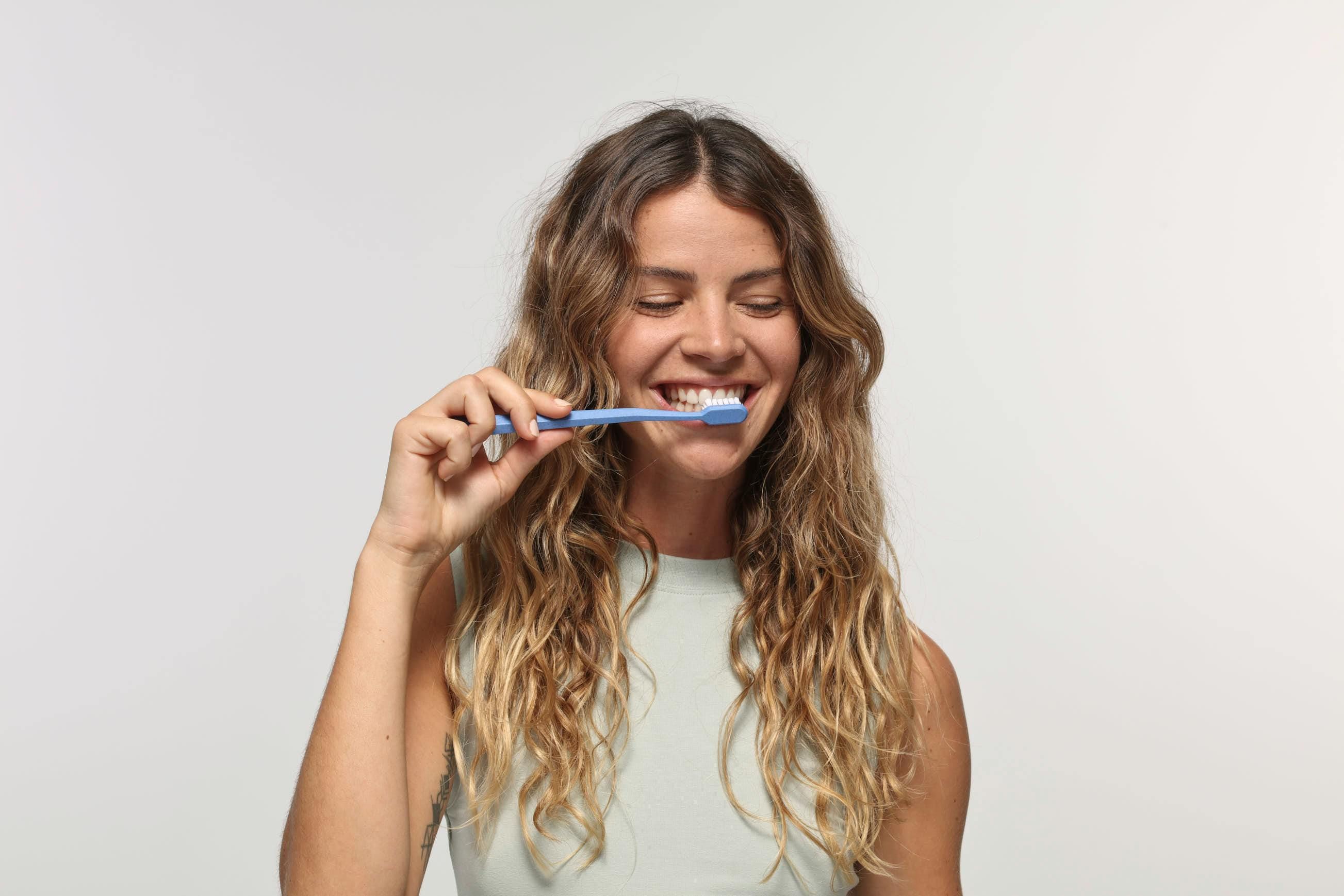
Flossing works best alongside regular brushing. Brush at least twice a day to remove plaque from the tooth surfaces and keep the gumline clean.
Use a fluoride toothpaste to clean the tooth surface gently. The Alpine White Whitening Toothpaste Extra White adds an extra whitening effect to your daily routine, and it is developed and produced in Switzerland.
A mouthwash from time to time can complement your routine and help against food residue and bacteria.
For even better oral care, ask your dentist or dental hygienist about a professional teeth cleaning (scale and polish) to remove plaque and stains that home care cannot reach.

 Dental Health