How does a round-head toothbrush clean?
A round-head brush works differently from a sonic toothbrush. The small round head encloses each tooth individually and cleans it with oscillating and rotating movements. The head turns and pulses on its own while you guide it deliberately from tooth to tooth. To get the full cleaning power, it helps to take your time with each tooth.
This technique takes a little more precision. You need to guide the head carefully along the tooth surfaces, the chewing surfaces and the gumline to remove plaque and stains. It can work well against plaque along the gumline, but it may irritate if you have sensitive gums or exposed tooth necks, so take care not to press too hard.
Round-head brushes are strong at removing stubborn plaque and suit people who build up a lot of plaque or tartar. Using the correct brushing motion is key to getting the most from this type of toothbrush.
Sonic vs round-head toothbrush: which cleans better?
A sonic toothbrush is known for gentle but very thorough cleaning. Sonic technology cleans not only the tooth surfaces but also the spaces between teeth and the gumline, with no extra pressure needed. If you have sensitive teeth or gums, it is often the better choice.
A round-head brush, on the other hand, gives targeted cleaning of each individual tooth. Its rotating movements are particularly good at removing plaque and stains, especially on the chewing surfaces and along the gumline. It is a good option if you want to prevent stubborn plaque and build-up.
In terms of cleaning performance, both give good results by different routes. Independent tests, including those by Stiftung Warentest, report above-average cleaning from both technologies, although a sonic toothbrush is often gentler on the gums and enamel.
Sonic toothbrush: pros and cons
Pros
- Excellent cleaning: a sonic toothbrush effectively removes plaque and stains, even from hard-to-reach areas.
- Gentle on gums: the soft vibrations are ideal for sensitive gums and exposed tooth necks.
- Easy to use: there are no special movements to learn, because the vibrations do the work for you.
- More hygienic: the ALPINE WHITE Sonic Toothbrush has antibacterial bristles that eliminate 99% of the bacteria on the brush.
Cons
- Higher price: sonic toothbrushes cost more to buy than manual or rotating toothbrushes.
- Battery life: some users find battery life short, but the ALPINE WHITE Sonic Toothbrush lasts up to three weeks on a charge, which suits travel too.
Round-head toothbrush: pros and cons
Pros
- Efficient cleaning: the oscillating movements remove stubborn plaque effectively.
- Cheaper to buy: round-head brushes are generally less expensive than sonic toothbrushes.
- Targeted cleaning: the round head is ideal for cleaning each tooth thoroughly.
Cons
- Pressure on the gums: with sensitive gums or exposed tooth necks, the pressure from an oscillating brush can do harm.
- More demanding technique: you need to be more precise to clean all tooth surfaces evenly.
When should you choose a sonic toothbrush?
- Sensitive teeth and gums: the gentle vibrations put less strain on your gums and protect exposed tooth necks.
- Exposed tooth necks: you can clean gently without damaging the enamel further.
- Cleaning between teeth: sonic technology reaches spaces that are hard to clean with an ordinary toothbrush.
- Braces: the vibrations help you clean thoroughly even with braces.
When is a round-head toothbrush the better choice?
- Heavy plaque build-up: the oscillating movements are particularly effective against stubborn plaque and deposits.
- Targeted cleaning of each tooth: the round head encircles each tooth, which allows very precise cleaning.
- Used to a rotating brush: if you already get on well with a round-head brush and have good results, it may well stay the best choice for you.
About the ALPINE WHITE Sonic Toothbrush
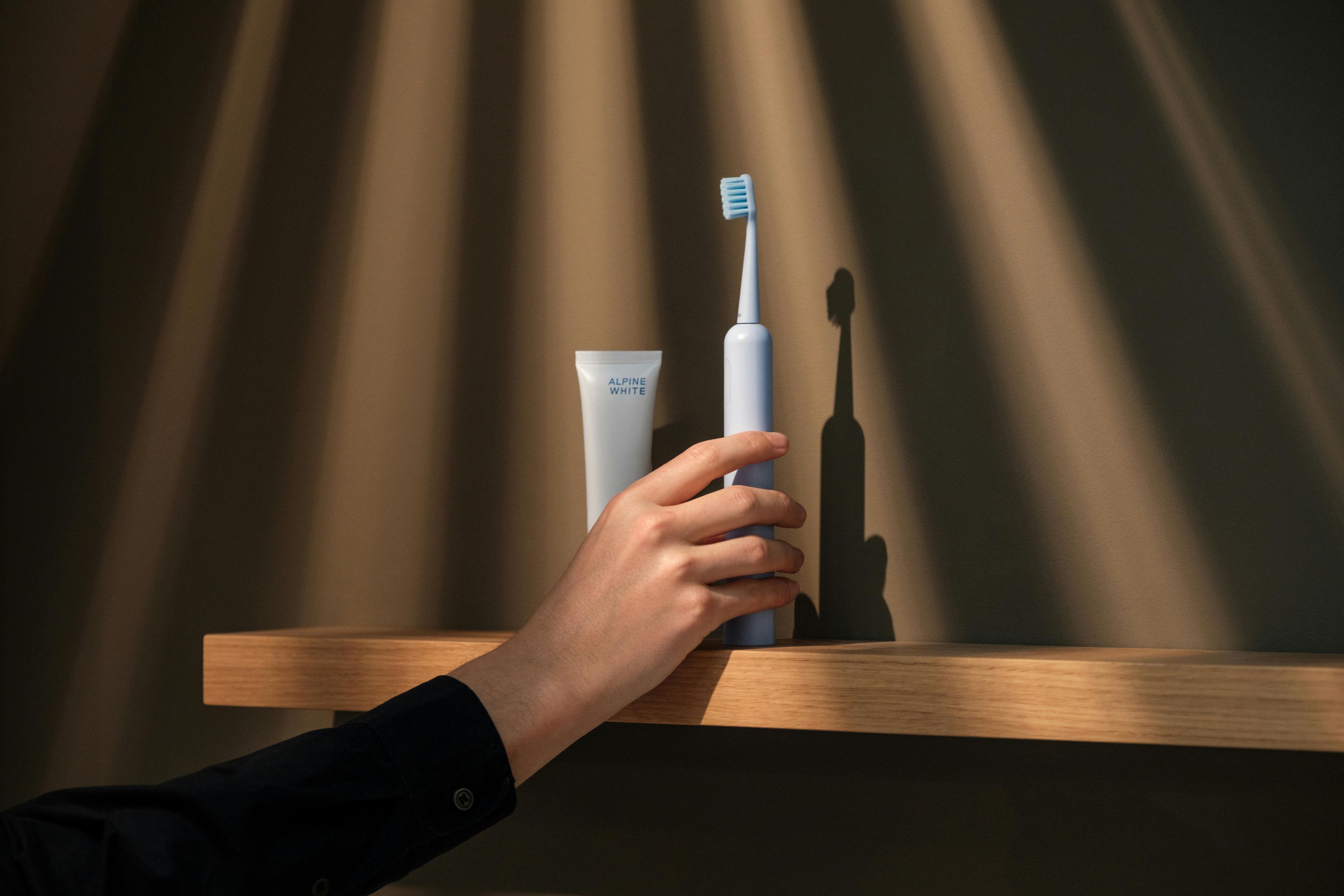
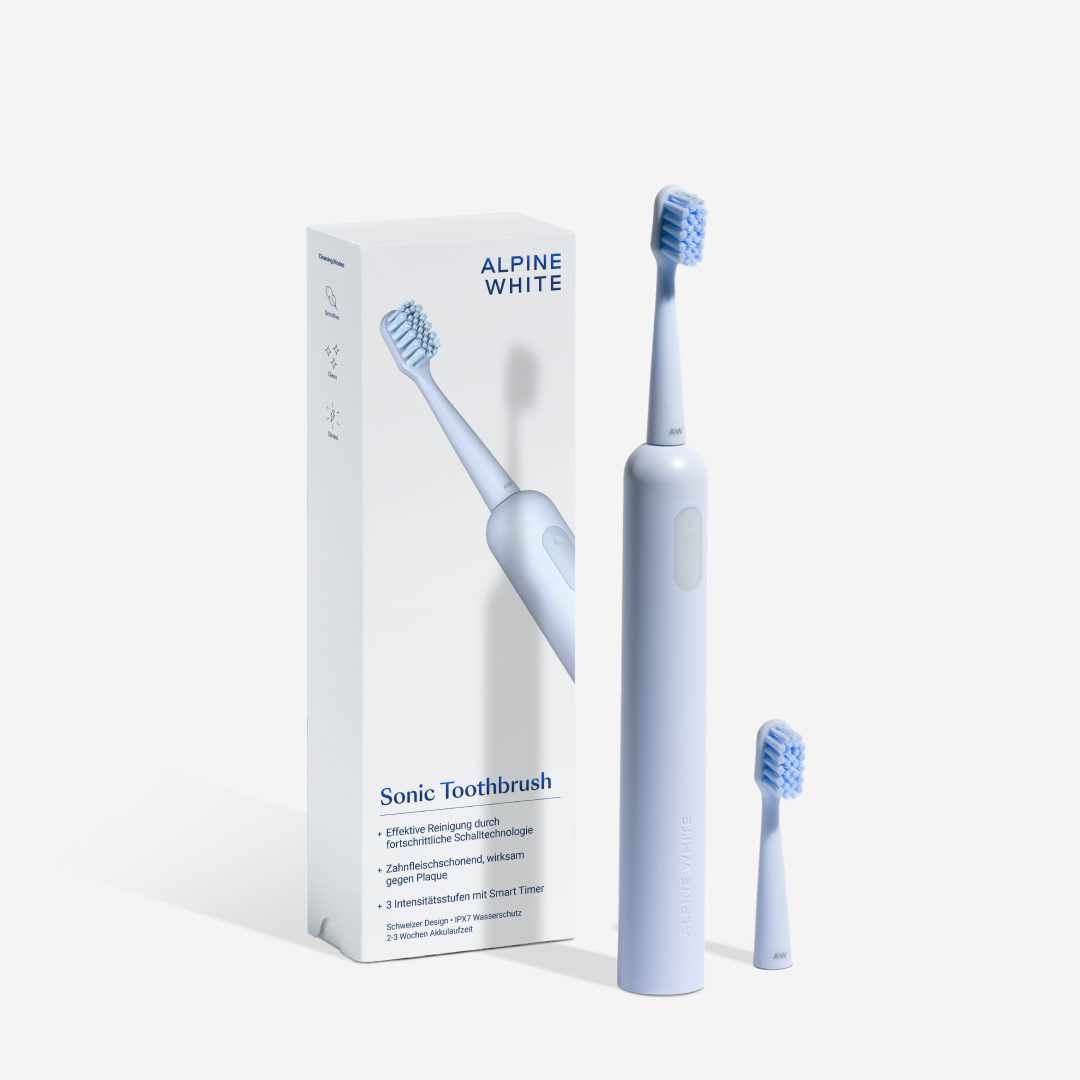
The ALPINE WHITE Sonic Toothbrush is a great way to improve your oral hygiene. Its sonic technology cleans effectively and supports a healthy oral flora. The Strong mode thoroughly removes stubborn stains and plaque. Together with dental floss, regular visits to a dental hygienist, water flossers and ALPINE WHITE whitening toothpaste, it gives you complete care that keeps your teeth clean and healthy.
The Sonic Toothbrush is powerful and also travel-friendly. It charges easily anywhere via USB-C and the battery lasts up to three weeks, so it is ready whether you are at home or away.
For sensitive teeth and gums there are three cleaning modes. Sensitive mode is designed for delicate areas, Clean mode gives a thorough daily clean, and Strong mode is for intensive cleaning that helps remove stains and plaque without irritating the gums. This matters if you are prone to periodontitis or have sensitive gums. If you have bleeding or painful gums, see your dentist.
To get the most from the brush head, rinse it thoroughly after each use and replace it every three months. That keeps your Sonic Toothbrush hygienic and cleaning at its best. The head is designed to clean tooth surfaces and hard-to-reach areas thoroughly, which is especially helpful if you wear braces or have exposed tooth necks.
Conclusion
Both types of toothbrush have pros and cons. A sonic toothbrush offers gentle yet effective cleaning, especially for sensitive teeth and gums. A round-head brush gives intensive, targeted cleaning of each tooth. In the end, it depends on your personal needs.
Our recommendation? Try a sonic toothbrush, especially if you have sensitive teeth or exposed tooth necks. With the ALPINE WHITE Sonic Toothbrush you get a thorough clean while protecting your gums. The choice is yours, but with the right brushing technique and daily care you will be on the safe side.

 Oral Care