What is dental plaque and how does it form?
Dental plaque is a sticky film made up mainly of bacteria and food debris. It forms continuously on the surface of your teeth and along the gum line. If plaque is not removed every day, it can harden into tartar, which you can no longer brush away. Only a dentist or dental hygienist can remove it, with a professional scale and polish.
What happens if plaque stays on your teeth?
Plaque that is not removed can cause several dental problems. Cavities develop when the acids produced by plaque bacteria attack your tooth enamel. Plaque can also cause gum inflammation (gingivitis), with symptoms such as bleeding gums and swelling. If gingivitis goes untreated, it can progress to periodontitis, a serious disease of the tissue that supports your teeth.
How to remove plaque and prevent it coming back
These simple habits help you remove plaque gently and keep your teeth cleaner for longer.
Brush properly: your first step to healthy teeth
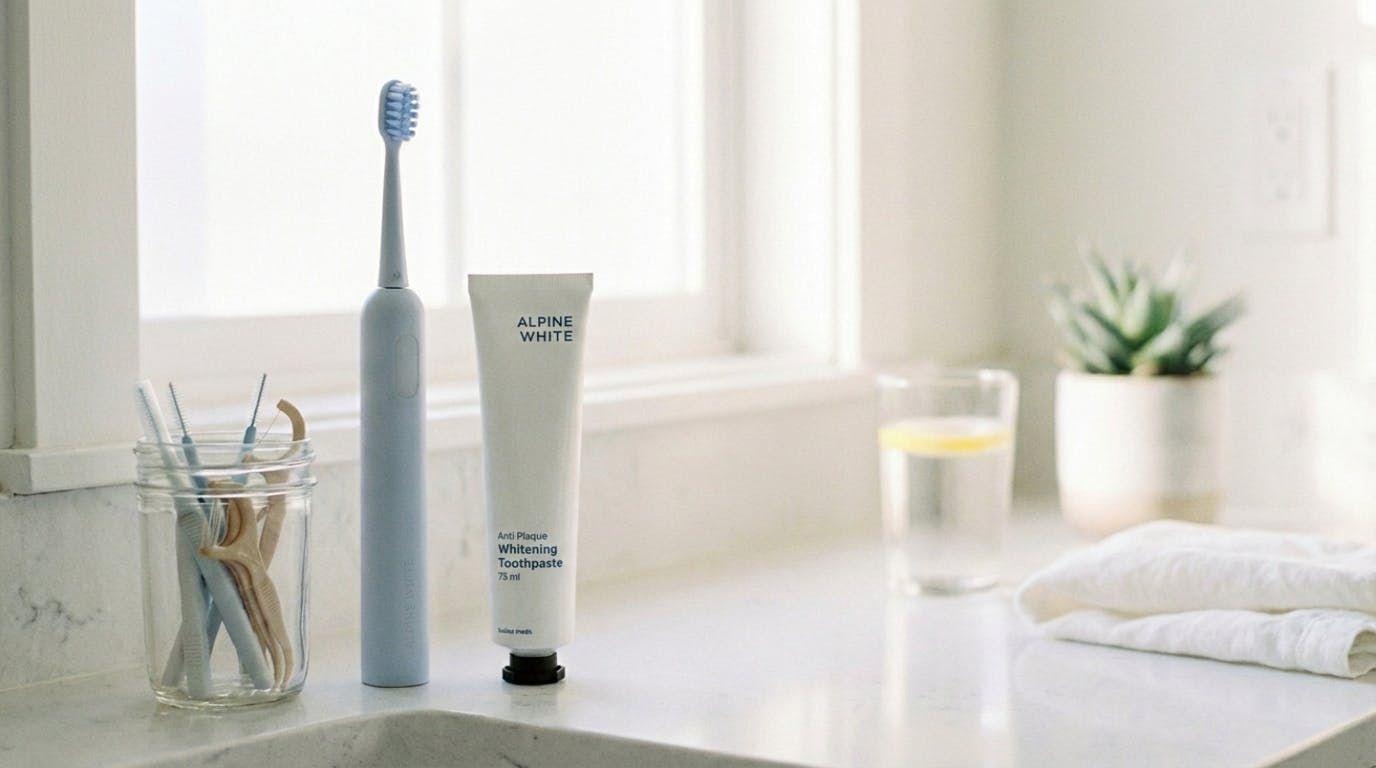
Thorough brushing is the most effective way to remove plaque. Brush at least twice a day, ideally in the morning and before bed. Use a toothpaste with fluoride to strengthen enamel and help prevent cavities. Our Whitening Toothpaste Extra White and Sonic Toothbrush make a good everyday combination for gentle plaque removal.
Why floss and interdental brushes matter
Dental floss and interdental brushes clean the spaces between your teeth, where a toothbrush cannot reach. Using them regularly removes plaque and food debris from these hard-to-reach areas and is a key part of good oral hygiene.
Does mouthwash help against plaque?
A mouthwash can be a useful addition to your daily dental care routine. It helps freshen your mouth, supports a balanced oral flora and can help with bad breath. It does not replace brushing and flossing, so choose one that suits your teeth and gums.
Diet and dental health
Your diet plays an important role in preventing plaque. Sugary foods and drinks feed plaque bacteria, so cut back where you can. A balanced diet rich in vitamins and minerals supports healthy teeth and gums.
Do you need professional teeth cleaning?
Even with careful brushing, some deposits build up over time. A professional teeth cleaning (a scale and polish) at your dentist or dental hygienist is an important part of looking after your long-term dental health. Your dentist or hygienist can advise how often it makes sense for you.
Dental hygienists use professional instruments to remove hard deposits and tartar that can form despite regular, careful dental care. These deposits raise the risk of gum disease and cavities and can cause unpleasant bad breath. The treatment also reaches areas that are hard to clean at home.
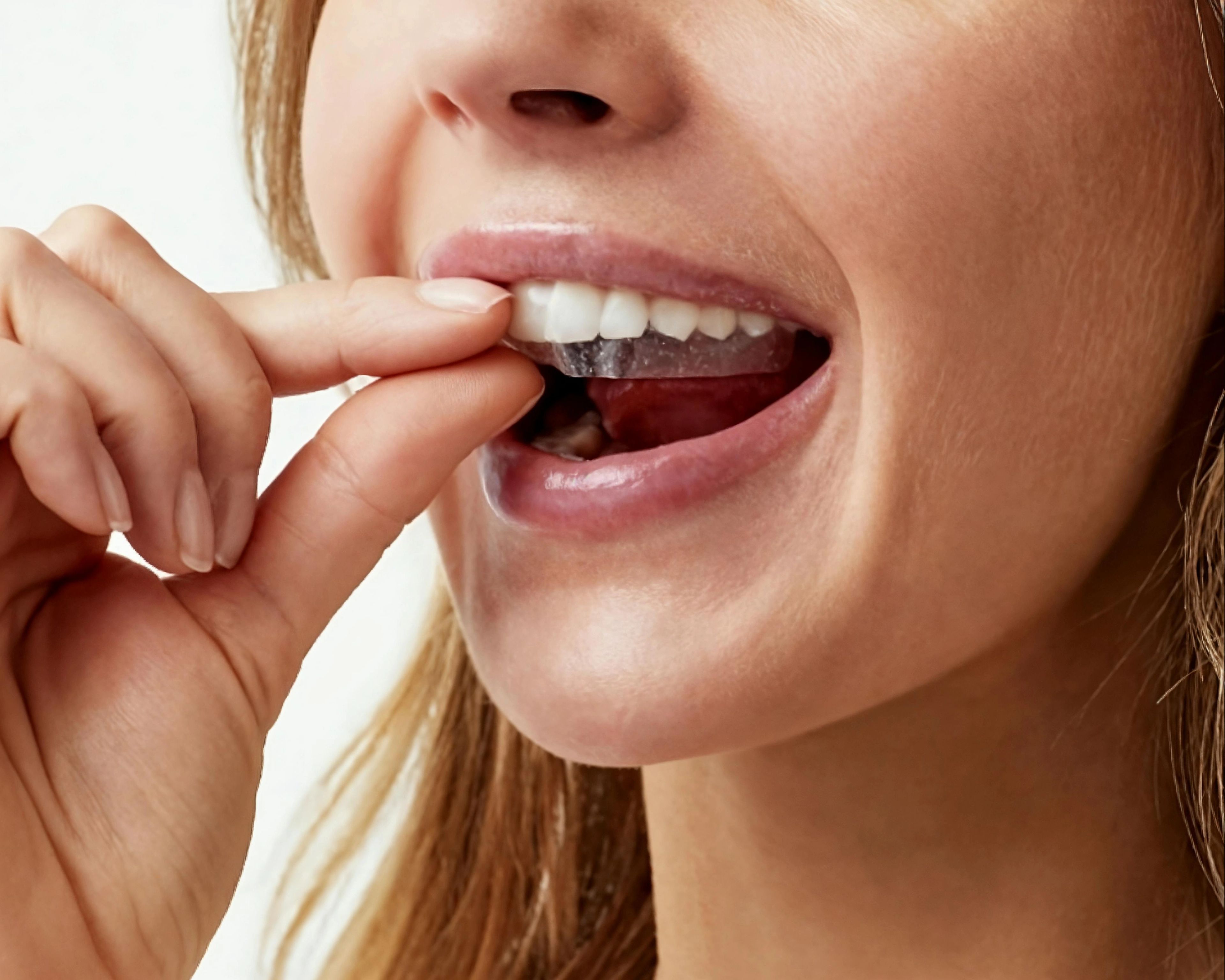
A cleaning also helps with looks. Stains from food, drinks or smoking can dull your smile, and a professional clean removes many surface stains. Dentists can also offer professional bleaching if you want a brighter result. To maintain a bright smile between appointments, our Whitening Strips offer gentle at-home whitening. If you smoke, see our guide to whitening for smokers.
Crowns, braces and fillings
If you wear crowns, bridges or braces, you may need special cleaning aids. Your dentist can recommend the best products and techniques for your situation.
Milk teeth and fillings also need extra attention. Milk teeth need gentle but thorough care to prevent plaque build-up and lay the foundation for healthy permanent teeth. Around fillings, clean the edges carefully so bacterial plaque and calculus cannot collect.
Tools that make plaque visible
Disclosing tablets are a handy aid. They stain soft plaque, which is otherwise hard to see with the naked eye, so you can spot the areas you tend to miss when brushing.
Tartar removal is another key part of dental care. Dentists and dental hygienists use special instruments called scalers to remove it, especially along the gum line and in the gum pockets, where bacteria and their by-products can collect.
Saliva also helps. It naturally cleans your teeth and neutralises acids produced by plaque bacteria, so a balanced oral flora and a healthy saliva environment are essential for dental health. Some dental insurance plans cover services such as professional teeth cleaning, so it is worth checking what yours includes.
Keeping plaque under control
Tackling plaque is a core part of dental care. Brush twice a day, floss regularly, eat a balanced diet and see your dentist or dental hygienist regularly, and your teeth and gums stay healthier. Good oral hygiene protects more than your teeth, because it supports your general well-being too.
We hope this guide gives you practical tips for healthier teeth. See a dentist if you notice pain, bleeding gums or persistent bad breath. Keep at it, and smile with confidence.


 Teeth Whitening