Bleaching gel vs. whitening gel: is there a difference?
The terms are often used interchangeably, but there are small differences. Bleaching gel usually contains hydrogen peroxide or carbamide peroxide, which penetrate the enamel and oxidise the colour pigments. Whitening gel often refers to products that clean and polish the teeth without penetrating the enamel.
Is teeth whitening safe for your gums and enamel?
Yes, if you use the products as directed. Keep the whitening agent away from your gums, as it can cause irritation. Alpine White products are formulated to be safe and effective without damaging your enamel.
What about fillings, veneers and tartar?
Whitening products work best on natural teeth. Fillings, veneers and tartar do not respond to the whitening agent. It is therefore worth booking a professional clean (scale and polish) with your dental hygienist before you start, so your teeth are ready for whitening.
How often should you whiten your teeth?
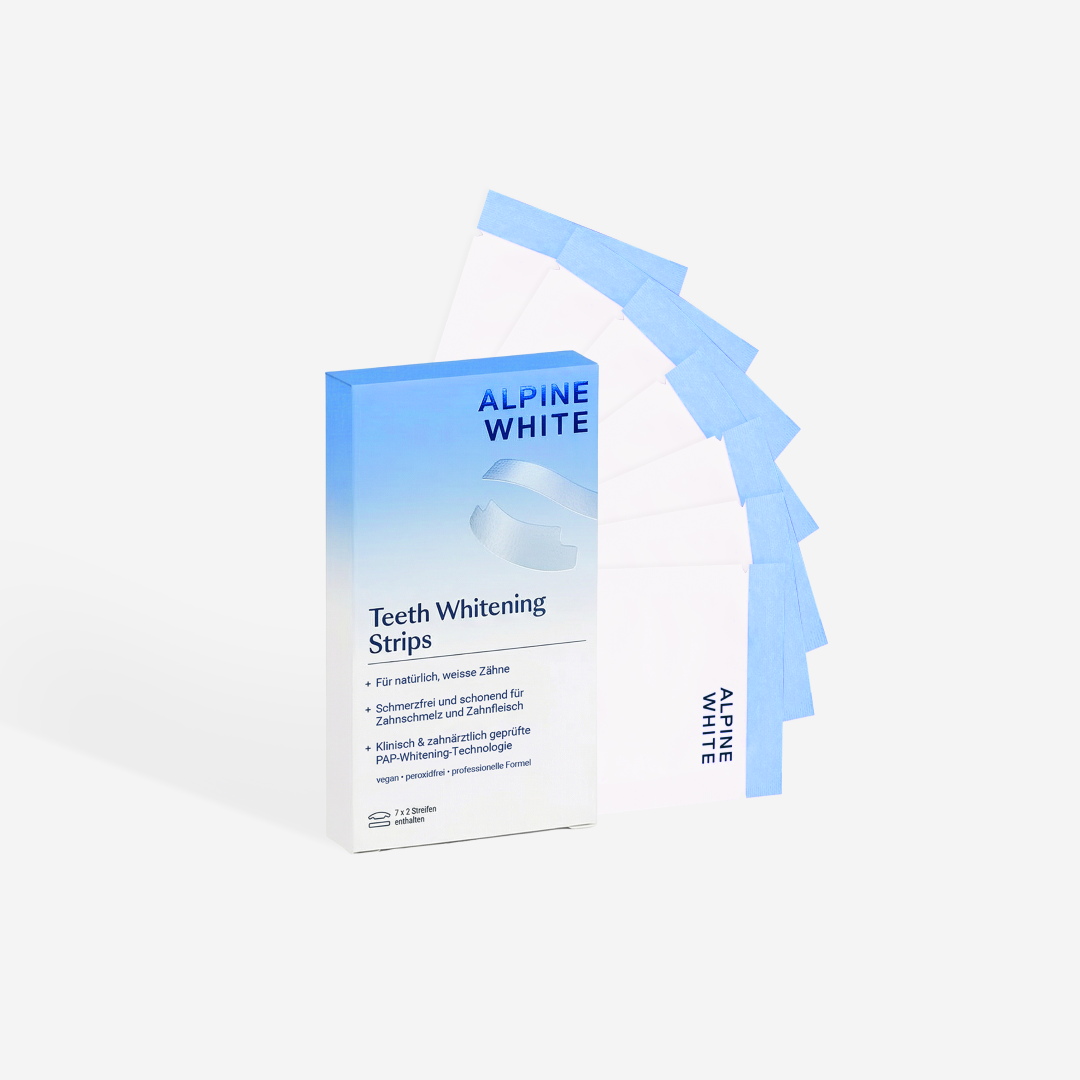
It depends on your habits and the product you use. Smoking, tea, coffee and red wine can all stain your teeth. With peroxide-free whitening at home, power bleaching at your dentist or a whitening strips set, you can see impressive results in a short time.
What kind of gel do dentists use for bleaching?
Dentists usually use a professional bleaching gel with a higher concentration of hydrogen peroxide or carbamide peroxide. These gels are stronger than those sold for home use, so they can deliver more effective results in less time.
The Alpine White formula, however, contains no peroxides, as these can cause tooth sensitivity and pain. You can read more about it further down.
What is the best bleaching gel?
The best bleaching gel depends on your needs and preferences. Professional gels used by dentists give faster and often more dramatic results. There are also many good over-the-counter products for home use. Choose the one that suits your budget, your sensitivity and your whitening goals.
How long do the results of bleaching gel last?
The duration varies with the product and how you use it. As a rule, the result lasts from several months to a few years. Regular touch-ups are recommended to maintain the shade you want.
Is bleaching gel toxic?
Bleaching gel is not toxic when used as directed. Do not swallow it, and keep it away from your gums and the rest of your mouth, as it can cause irritation.
How do you use bleaching gel?
Bleaching gel is usually placed in a custom-fitted tray, which sits over your teeth. The tray keeps the gel in direct contact with the teeth and stops it spreading around your mouth.
Why is bleaching gel not suitable for children?
Children's teeth are more sensitive and easier to damage. Their gums are also more delicate, which raises the risk of irritation and burns from the gel. For this reason, whitening is not recommended for children.
How long does it take for bleaching gel to work?
It depends on the concentration of the active ingredient and how long you apply it. Some professional treatments deliver results in a single session, while home kits may need several applications.
What does bleaching gel look like?
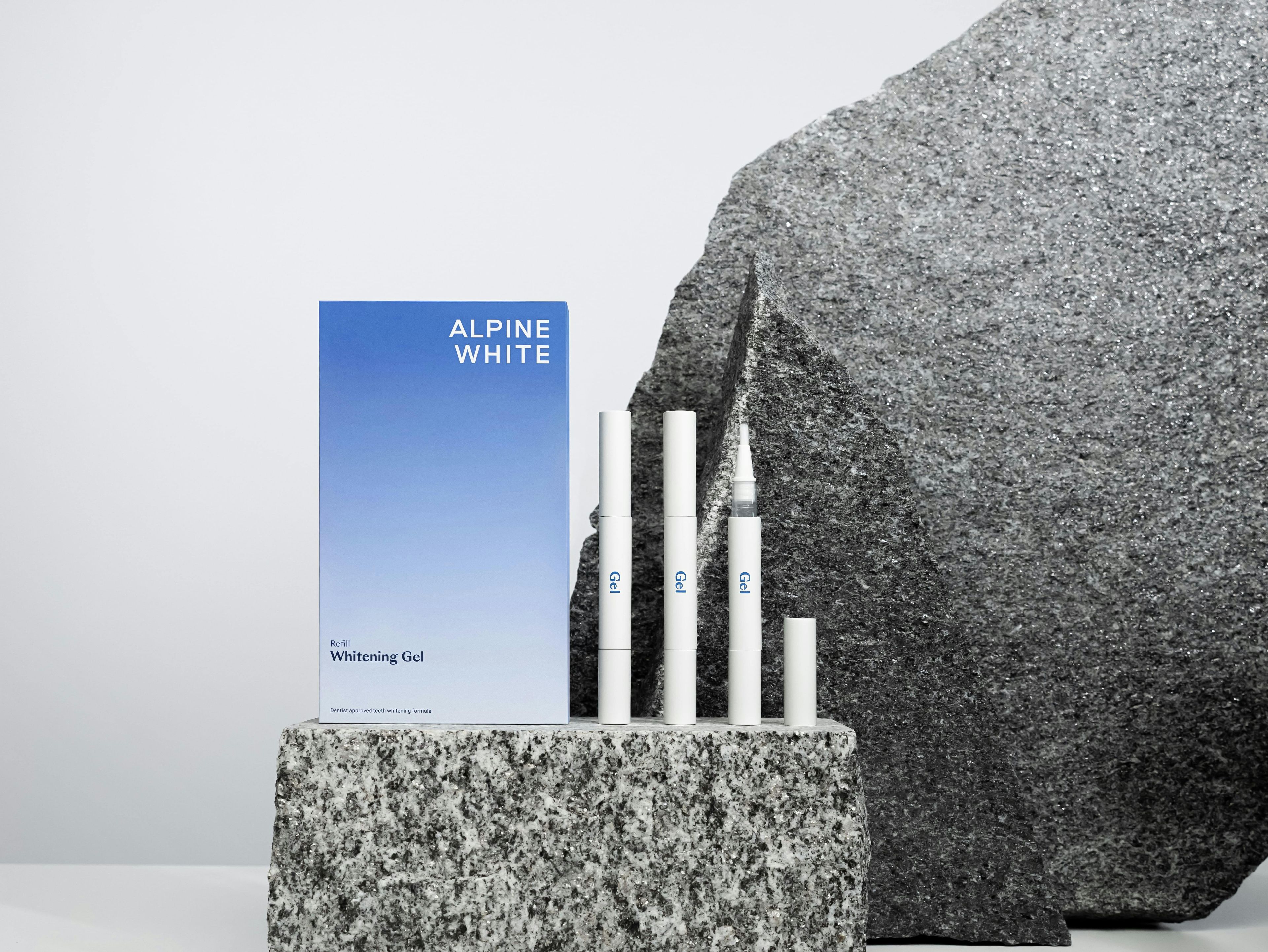
Bleaching gel is usually a clear or slightly blue, thick liquid. It comes in small tubes or syringes to make application easier.
How does whitening gel protect my teeth?
The main aim of bleaching gel is to whiten, but some products also contain ingredients that strengthen enamel and protect against future staining. Not every gel offers this extra protection.
Why choose a whitening kit?
A whitening kit, such as the Alpine White Whitening Kit, gives you everything you need for effective whitening at home. Kits typically include trays that spread the gel evenly over your teeth, plus the gel itself. Some even include a whitening pen for quick touch-ups on the go.

 Teeth Whitening