Why is tongue cleaning important?
The tongue has a rough, textured surface, and the mouth is warm and moist. That makes it an ideal home for microorganisms. Many of these microbes are harmless or even useful for digestion and the immune system, but some types of bacteria can cause health problems.
A coated tongue, usually seen as a whitish layer, can be a sign of a fungal infection such as oral thrush. Harmful bacteria can contribute to cavities and periodontitis by producing acids that attack the tooth enamel and inflame the gums. A white coating that does not go away can also point to other conditions, such as scarlet fever or gingivitis. Gently removing the coating through regular tongue cleaning helps prevent these problems and supports your overall oral health. If the coating persists, see your dentist.
How does tongue care fit with brushing your teeth?
Removing plaque and bacteria is the goal of a good daily routine: brushing your teeth properly, cleaning between your teeth with dental floss, and gently brushing or scraping your tongue. Together, these steps help keep your gums healthy and reduce the risk of gum inflammation. Adding tongue cleaning is a simple but effective step, because it targets the bacteria that linger on the taste buds and throughout the mouth. A Sonic Toothbrush helps with the teeth, while a tongue scraper or soft tongue brush takes care of the tongue.
Home care alone is not always enough for optimal oral hygiene. A professional teeth clean with a dental hygienist, including professional tongue cleaning, is an important part of complete oral care. Food residues left on the tongue and between the teeth can become a breeding ground for bacteria, and these bacteria are often behind gum inflammation and other oral problems. Cleaning your tongue and the spaces between your teeth consistently helps prevent this and keeps your mouth feeling fresh.
How does your mouth microbiome affect your general health?
The influence of the oral microbiome (mouth flora) reaches well beyond the mouth. Bacteria on the surface of the tongue, especially in the papillae, can cause more than local problems. Studies suggest that poor oral hygiene may be linked to a higher likelihood of cardiovascular disease, diabetes and even respiratory illness. The bacteria and the toxins they release can also trigger inflammatory reactions in the body, which may contribute to chronic disease.
Regular, thorough tongue cleaning that removes whitish coating and the bacteria trapped in the papillae therefore matters for your general health as well as your mouth. Reducing the bacterial load on the tongue may also lower the risk of sore throats and other infections. Caring for the tongue, the spaces between your teeth and the taste buds plays a central role in prevention and supports a healthy balance of mouth flora.
How do you get rid of bad breath and tongue coating?
Tongue cleaning tools for home
Alongside your daily tooth care, a tongue brush or tongue scraper can noticeably improve your mouth flora and reduce bad breath. Be gentle: pressing too hard can trigger the gag reflex and irritate the delicate lining of the mouth. Natural remedies such as sage can support oral hygiene and help with fresher breath. Good toothpaste and mouthwash also help reduce the sulphur compounds that cause bad breath.
Professional tongue cleaning at the dentist
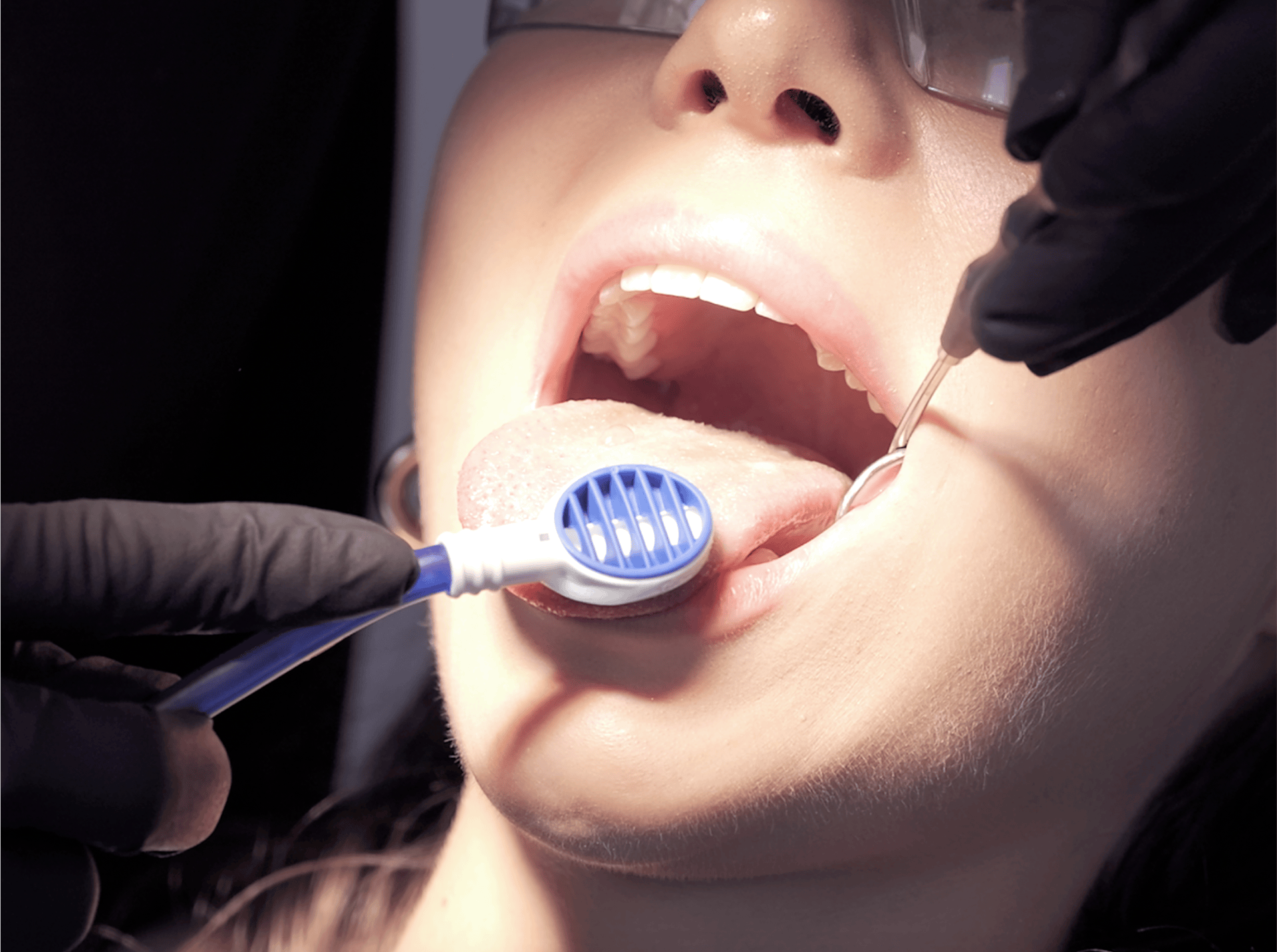
Your dentist or dental hygienist can clean your tongue as part of a professional visit. Dental teams keep up with new techniques through regular training, so the care can be tailored to your needs and health. A typical professional tongue cleaning is quick and comfortable, and many people notice a fresher mouth straight away:
- Steady the tongue: the tip of the tongue may be held with a gauze pad so it stays in a stable position.
- Apply gel: a special gel makes the cleaning easier and gentler.
- Clean gently: the tongue is cleaned with care to remove bacterial coating while protecting the delicate papillae.
Keep your mouth flora healthy every day
A healthy tongue is a sign of good oral health. With proper care, including toothpaste, mouthwash and a tongue cleaning tool, you can significantly reduce the sulphur compounds responsible for bad breath. Alpine White supports your at-home routine with products such as Whitening Toothpaste Extra White, which keeps teeth clean and bright between visits to your dental hygienist. Start with the tongue, and make it part of your daily routine.

 Oral Care