What are the benefits of peroxide-free teeth whitening?
Besides gently whitening your teeth, peroxide-free whitening offers several other advantages:
- No gum irritation: without peroxide, you should not experience painful irritation or inflammation of your gums.
- No damage to the enamel: the formula does not attack the enamel, so your teeth stay protected.
- Suitable for sensitive teeth: many people have sensitive teeth that react badly to conventional bleaching agents. Gentle whitening is designed with them in mind.
- Long-lasting effect: gentle methods keep the result visible for longer, and you can repeat the whitening regularly without compromising your dental health.
Power bleaching or gentle whitening: what is the difference?
There are several ways to whiten teeth and get a bright smile. Two popular approaches are power bleaching and gentle, peroxide-free whitening. Both promise a visible improvement in tooth colour, so which one suits you best? Here is how they differ.
Power bleaching: quick results with intensity
Power bleaching is an intensive whitening procedure usually carried out at a dental practice. A strong bleaching agent, often based on hydrogen peroxide, whitens teeth quickly and effectively. A special light or laser is frequently used to speed up the process.
Advantages of power bleaching:
- Quick results: within a single session, your tooth colour can become several shades lighter.
- Deep whitening: the bleaching agent penetrates deep into the tooth structure, so even stubborn discolouration can be removed.
- Suitable for heavily stained teeth: people with very intense staining, for example from smoking or coffee, often benefit from the powerful effect of power bleaching.
Disadvantages of power bleaching:
- Hard on the enamel: strong bleaching agents can attack the enamel, and the risk of sensitive teeth after treatment is higher.
- Gum irritation: the strong bleaching agent can irritate the gums and cause discomfort.
- Shorter-lived results: power bleaching delivers impressive immediate results, but these often fade faster than with gentler methods.
Gentle whitening: effective without peroxides
Unlike power bleaching, gentle whitening is based on a peroxide-free formula. The focus is on protecting the enamel: without aggressive bleaching agents the tooth substance is preserved, while stains are still effectively removed. That makes it especially suitable for people with sensitive teeth.
Advantages of gentle whitening:
- Gentle on the enamel: the formula does not attack the enamel, which supports healthy teeth in the long term.
- No irritation: as no aggressive chemicals are used, the gums are not irritated.
- Suitable for sensitive teeth: if you react sensitively to conventional whitening methods, a peroxide-free option is a safer choice.
- Long-lasting results: although gentle whitening is milder, the results last, and you can repeat it regularly to keep your smile white.
Disadvantages of gentle whitening:
- Several applications needed: power bleaching often shows visible results after one session, while gentle whitening may need several applications to reach the same tooth colour.
- Not ideal for extreme staining: very strong discolouration may be treated more effectively with power bleaching.
Home whitening or professional whitening: which is better?
When it comes to teeth whitening, many people wonder whether to whiten at home or have it done by a dentist. Both options have pros and cons.
Home whitening kits are often sold in drugstores and offer a convenient way to whiten your teeth at home. However, many of them contain bleaching agents such as hydrogen peroxide, which can attack the enamel. The results are also often less intense and may not last as long as professional whitening.
Professional whitening at the dentist gives a much more intense result. Results show more quickly and last longer, and the treatment is carried out under professional supervision, which minimises the risk of damage or irritation.
What should you look for in at-home whitening products?
If you decide to whiten at home, there are a few things to watch for so you do not put your dental health at risk. Avoid products with a high content of hydrogen peroxide and choose gentle whitening products that do not attack the enamel.
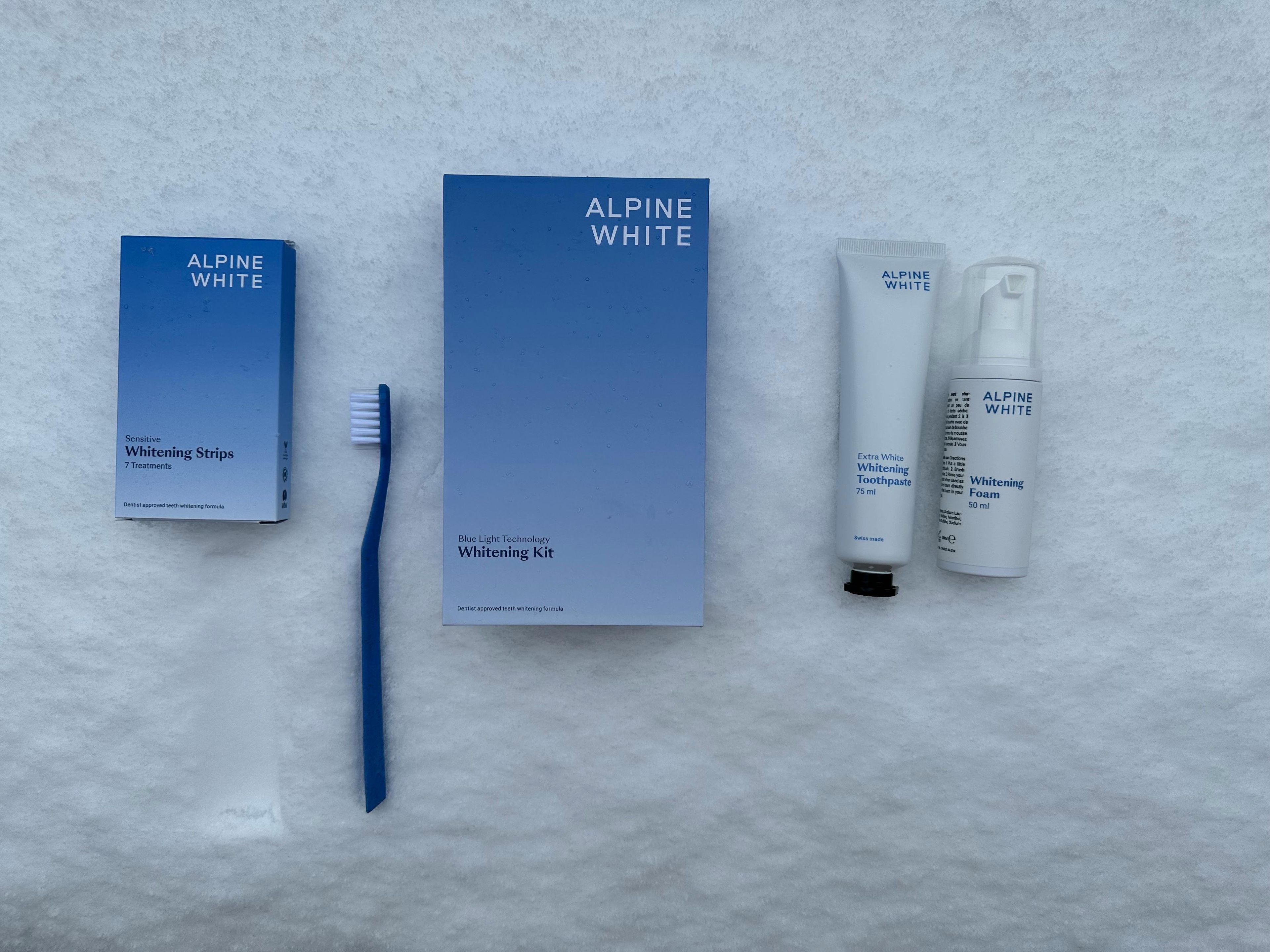
Alpine White's range includes enamel-friendly products for use at home, such as our Whitening Strips and the Whitening Kit. They are peroxide-free yet effective, so you can whiten your teeth without worrying about your tooth substance.
How do you look after your teeth after whitening?
Once your teeth have been whitened, good dental care helps to keep the result. Regular oral hygiene not only protects against cavities but also keeps your smile white for longer. Here are some tips:
- Brushing: use a gentle daily toothpaste that supports the enamel, such as our Whitening Toothpaste Extra White, and avoid harsh abrasives that could attack your freshly whitened teeth.
- Mouthwash: choose mouthwashes without aggressive chemicals to keep your gums healthy and protect your teeth from staining.
- Professional teeth cleaning: consider a professional teeth cleaning once or twice a year to remove tartar and plaque thoroughly.
- Limit staining foods and drinks: after whitening, avoid heavily pigmented drinks such as coffee, tea or red wine as far as possible to make the effect last longer.


 Teeth Whitening