Back to overview
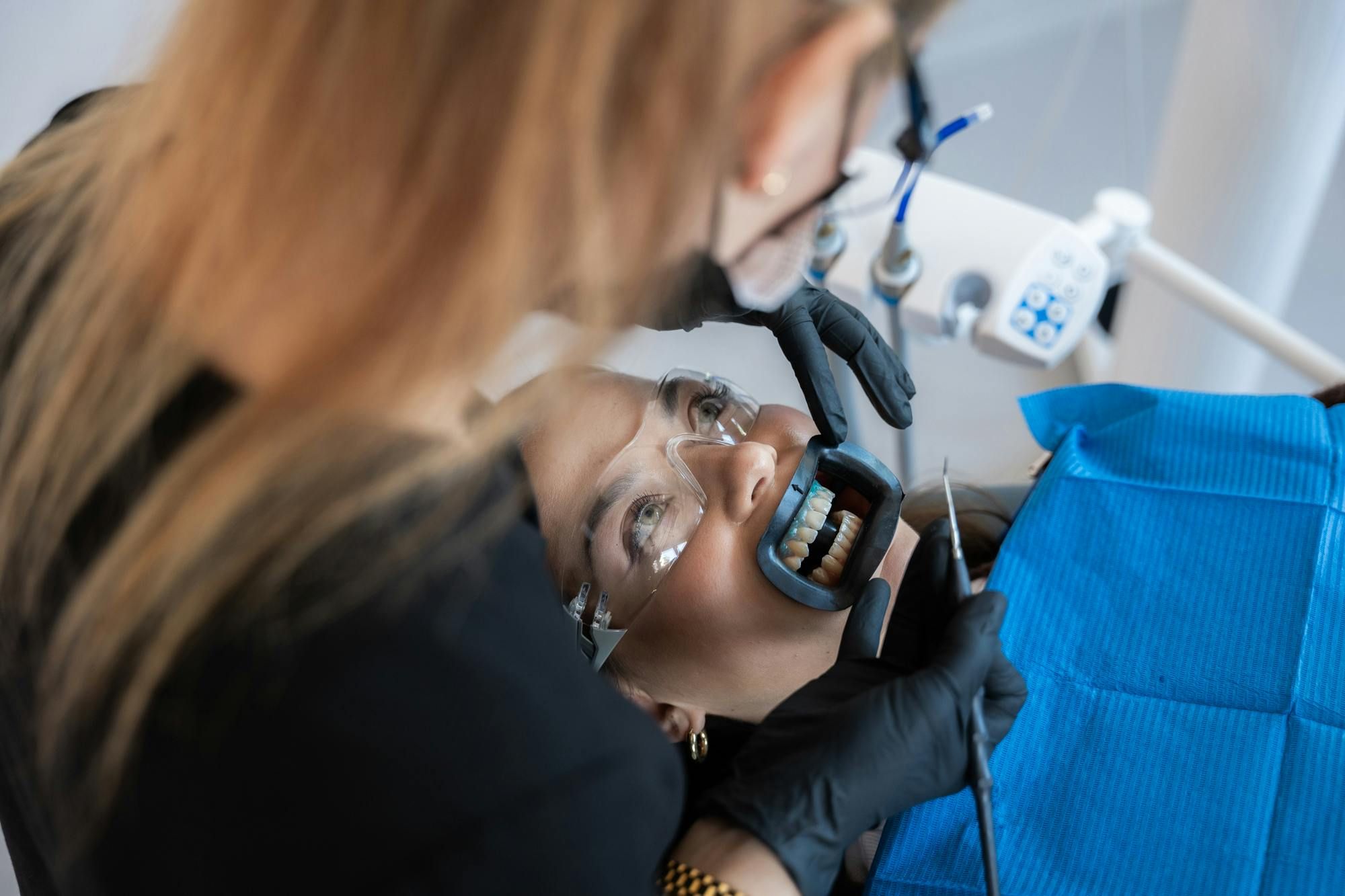
Female patient with safety glasses and mouth prop in treatment chair, dental professional with black gloves

Professional teeth bleaching: how in-office whitening works

Teeth WhiteningJun 29, 20233 min read

Want teeth that are not only white but healthy too? In-office teeth whitening is a professional way to lift stains in a single visit. Here is how it works, what to expect, and how to keep your results going at home with Alpine White.


Andrea Seraina

Andrea Seraina

Dental Content Specialist

What is in-office teeth whitening?

Teeth whitening, also called teeth bleaching, is a cosmetic treatment that lightens the colour of your teeth. The aim is to reduce stains and pigments so your smile looks brighter. A whitening agent is applied to the teeth, and the agent and the method can differ. Read more about the different teeth whitening methods.

In this article we focus on in-office whitening, also known as chairside bleaching. It is carried out by dental professionals in a practice, usually with a stronger agent than you would use at home. Some dentists use peroxide-based gels, for example in power bleaching, which can lead to tooth sensitivity. Peroxide-free approaches based on PAP (phthalimido peroxy caproic acid) are a gentler alternative.

So that you know what to expect, here is the process step by step, along with what affects your result and how to look after your teeth afterwards.

What are the benefits of in-office whitening?

The main advantage is speed: a trained professional can lift stains noticeably in a single appointment. Because it is supervised, your dentist can also check your teeth first and protect your gums. A gentle, peroxide-free PAP formula is kind to the tooth surface and enamel and to your gums, so it can also suit sensitive teeth or exposed tooth necks.

If you feel nervous about the dentist, talk to your practice beforehand. Many people find it easier once they know what will happen. Our guide to dental anxiety can help.

What affects your whitening result?

The final result depends a lot on the natural colour of your dentin, the layer beneath the enamel. Whitening removes extrinsic stains, such as deposits from coffee, tea or smoking. If your dentin is naturally dark, you may not reach the shade you hoped for.

With strong discolouration, plan for several sessions to get white teeth. This applies to in-office whitening and to power bleaching alike. Power bleaching can give you white teeth in very little time, but it is a more aggressive method, as the strong agent penetrates deep into the enamel.

A professional clean with a dental hygienist (a scale and polish) before whitening can improve the result. It removes tartar and first surface stains, so the whitening agent can work better on the tooth surface. Read more about dental hygiene.

Whitening does not change veneers, crowns or fillings, so they will not get lighter. Ask your dentist how your natural teeth and any restorations will match afterwards.
What happens during an in-office whitening appointment?

Before treatment, you will usually fill in a health questionnaire so the team knows your history and can adapt the treatment to you.

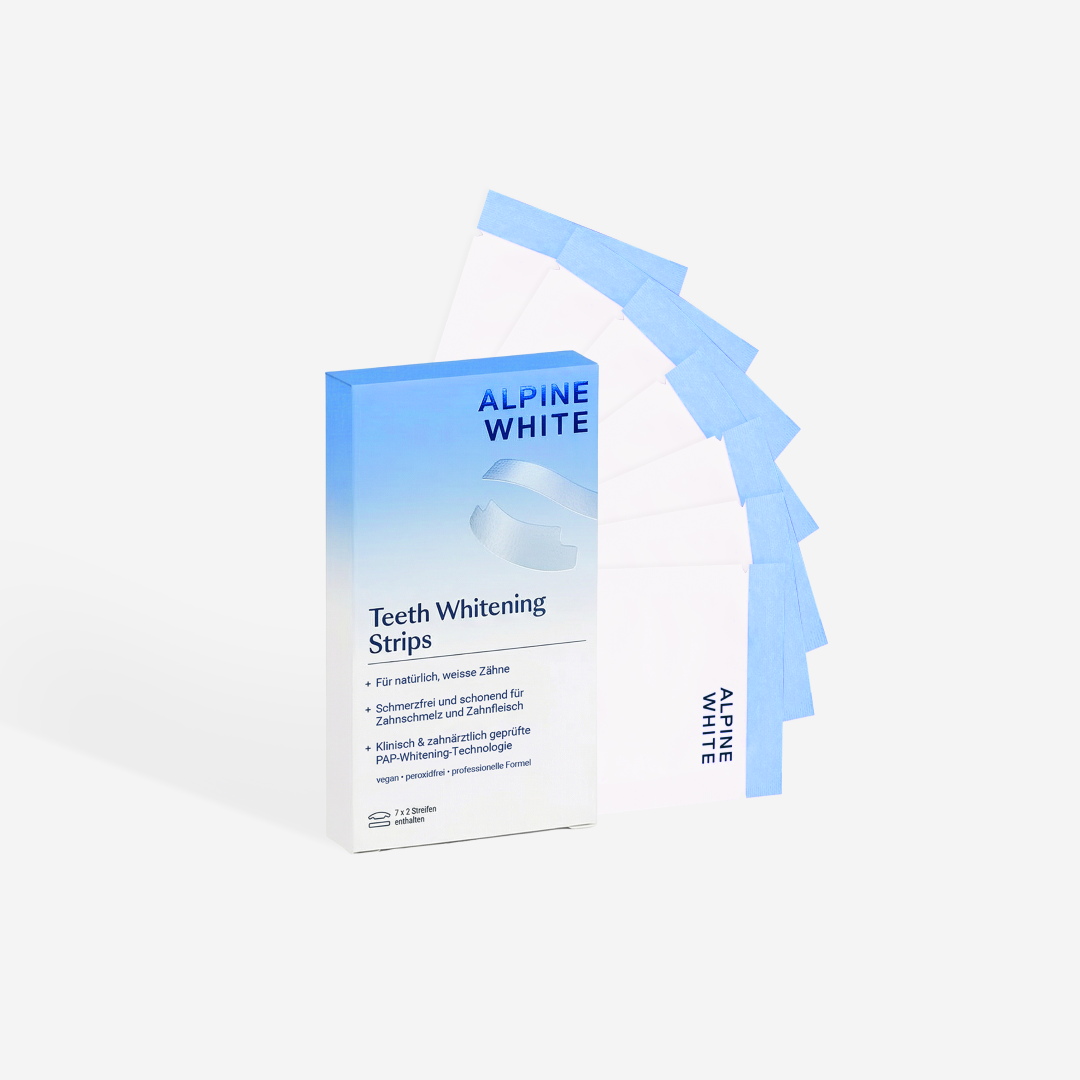
At the appointment, your tooth shade is measured with the VITA scale and your teeth are polished. The whitening gel is then left to work on your teeth, typically in several rounds of around 15 minutes. At the end, your final shade is measured, and you may be given a take-home whitening strip to continue at home. Alpine White whitening strips are a simple way to carry on in between visits.

ALPINE WHITE Whitening Strips: pack with fanned-out pouches
4.4(128)

Whitening Strips

€ 29.90

14 pc • € 2.14

Learn more

What should you do after teeth whitening?

For the first 24 hours, avoid foods and drinks that stain, such as red wine. Do not smoke or use mouthwash. At the same time, keep up good oral hygiene, which means regular teeth care every day.

To keep your teeth white, use at-home whitening products such as Alpine White Whitening Strips, the Whitening Kit or Whitening Toothpaste Extra White for your daily routine. They help brighten your teeth and support protection against problems such as cavities and gingivitis. If you have pain, bleeding gums or lasting sensitivity, see your dentist.

This might also interest you

Two smiling women against a white background, one in green top, the other in beige jacketDental Hygiene

Professional teeth cleaning with a dental hygienist

A visit to the dental hygienist does two jobs. Cosmetically, a professional teeth cleaning removes stains and plaque for a cleaner, brighter smile. Medically, it protects your gums and teeth, so they stay healthy for much longer. Here is how a scale and polish works, what it prevents and how to support it at home.

Carrots, oranges, ginger, lemon and chilli beside a bottle of juice on woodNutrition & Lifestyle

Foods for healthy teeth: what to eat and what to avoid

You brush twice a day and clean between your teeth, but are you doing everything you can for a healthy mouth? What you eat and drink affects your teeth and gums, both in the short and the long term. In this guide we show you the best foods for healthy teeth, and the foods and drinks that are better kept to a minimum.