Back to overview
Smiling woman with curly hair looks to the side

How often can you whiten your teeth?

Teeth WhiteningSep 26, 20244 min read

Wondering how often you can whiten your teeth and still keep them healthy? It is one of the most common questions about teeth whitening, whether you are just starting out or already have some experience. The short answer: it depends on your habits, the method you choose and how well you look after your teeth. Here is how to find a sensible rhythm and keep your results for longer.


Andrea Seraina

Andrea Seraina

Dental Content Specialist

Why do people whiten their teeth regularly?

Teeth whitening is a regular part of dental care for many people. Wanting white teeth and a bright smile is completely understandable, especially when coffee, tea or red wine can leave stains on the tooth surface. Smoking and the natural ageing of your tooth enamel can also make your teeth look darker.

Discolouration comes from pigments that settle in the enamel and gradually change the colour of your teeth. Whitening lifts these pigments so your teeth look lighter again. Because new stains build up over time, many people wonder how often they should repeat it.

How often should you whiten your teeth?

How often you whiten depends on several factors. One of the most important is your own oral hygiene. If you see a dental hygienist for a professional teeth cleaning and brush and clean between your teeth thoroughly every day, your whitening results will last longer. Your habits matter too: coffee, red wine and nicotine all stain teeth faster. A regular whitening routine helps keep discolouration in check so you can enjoy brilliantly white teeth for longer.

Professional whitening or whitening at home?

You might be wondering whether to whiten at home or at a dental practice. Both have advantages, and the right choice depends on what suits you. Professional bleaching, such as in-office or power bleaching, is carried out by a dentist and gives quick results. In a single session, your teeth can become several shades lighter.

Whitening teeth at home is ideal if you would rather work on your smile in your own time. You stay in control and can fit the application around your schedule. With whitening strips or a quick whitening treatment in between, you decide when and how often to top up your results.

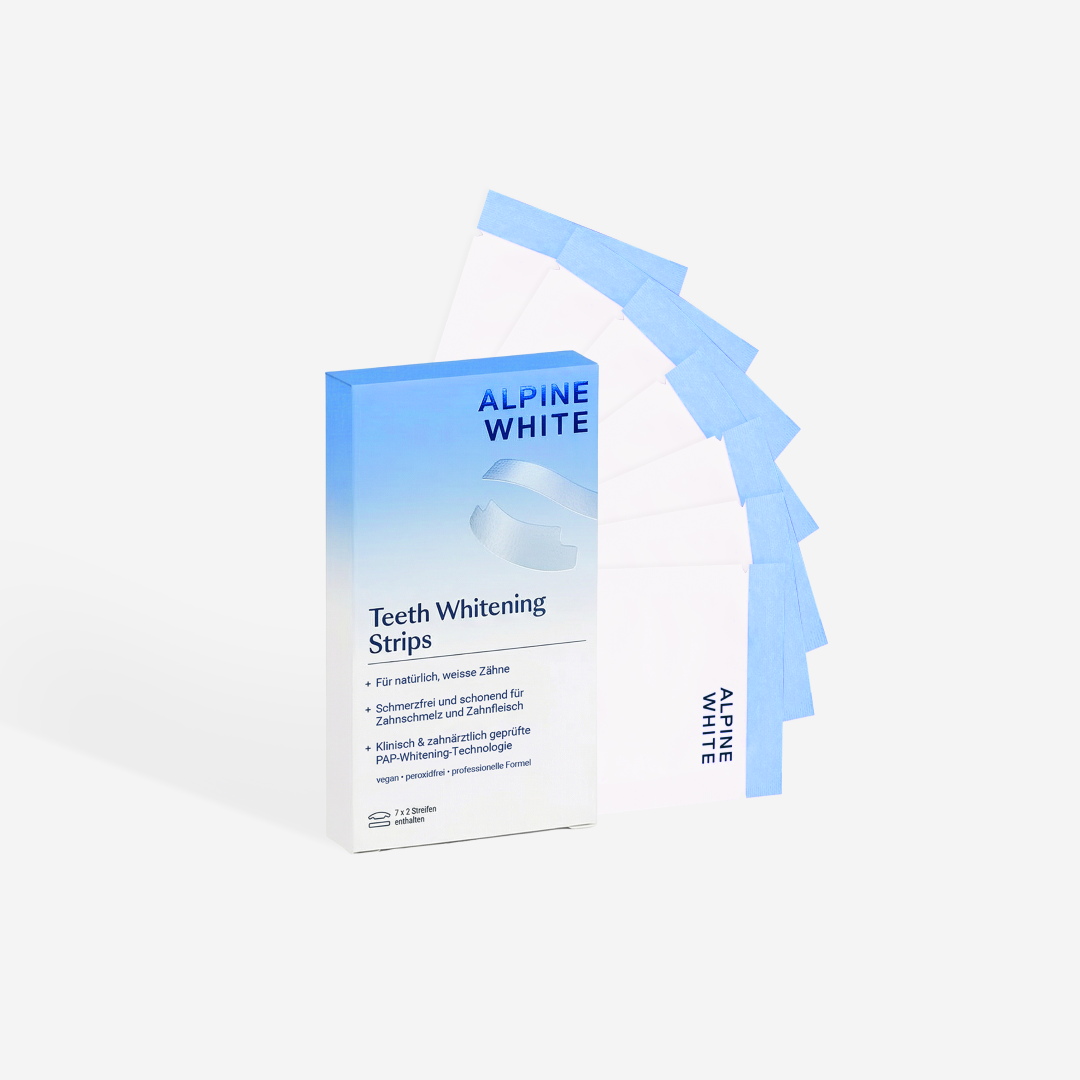
ALPINE WHITE Whitening Strips: pack with fanned-out pouches
4.4(128)

Whitening Strips

€ 29.90

14 pc • € 2.14

Learn more

Peroxide-free whitening: gentle on enamel and gums

Conventional bleaching methods often use hydrogen peroxide to whiten teeth. This works, but frequent use can lead to sensitive teeth, irritated gums or even damage to the enamel. That is why dentists advise using such treatments only at intervals and taking good care of your teeth afterwards.

Alpine White takes a different approach. Our whitening products are free of peroxide and work with PAP (phthalimido peroxy caproic acid), so they are designed to be gentle on teeth and gums. Whether you choose whitening strips or the Whitening Kit, you can use them as part of a regular routine, following the instructions on the pack. Exposed tooth necks, fillings or sensitive teeth? If you are unsure, ask your dentist before you start.

Regular touch-ups keep your smile bright

If you want a lasting bright smile, it helps to repeat whitening regularly. Even the best whitening products cannot stop your teeth from absorbing pigments again over time. If you often have colourful food and drinks, tooth discolouration can return.

Topping up about every three to six months helps you maintain the lighter shade. Choose a gentle but effective whitening method, such as peroxide-free Alpine White whitening, so you can repeat it without putting your oral health at risk.

How do you look after your teeth after whitening?

Good oral care is crucial for keeping your results. That means daily brushing with a fluoride toothpaste, which strengthens your teeth and protects against cavities. Regular check-ups and a scale and polish with your dental hygienist also help remove tartar and keep your teeth healthy in the long term.

Watch your diet too. For a few days after whitening, avoid strongly pigmented foods and drinks such as coffee, red wine or berries. They can stain freshly whitened teeth more quickly.

If you use dental trays for whitening, clean and check them regularly. This stops bacteria and stains from settling in them. A routine that refreshes your whitening every few months keeps your smile brighter, so you can enjoy your white teeth without compromising your dental health.

What should you watch out for when whitening?

When whitening your teeth, remember existing dental work such as veneers, crowns or bridges. Natural teeth become noticeably lighter, but dental materials usually keep their original colour. After whitening, you may see a colour difference between your natural teeth and your restorations. It is best to talk to your dentist first about how to get an even result.

Your gums matter too. If you have periodontitis or sensitive gums, check the ingredients of any whitening product carefully and ask your dentist for advice. Peroxide-free formulas are gentler, but they do not replace professional advice.

The dentin beneath the enamel also influences your final tooth colour. Whitening removes surface stains, but deeper discolouration in the dentin may remain. Keep your expectations realistic and, if in doubt, seek professional advice.

The role of oral hygiene

Brighter teeth are not only the result of successful whitening, but also of thorough oral hygiene. Have tartar removed regularly and brush with a fluoride whitening toothpaste to support your results between treatments.

Conclusion

How often you whiten your teeth depends on your habits, the method you choose and how well you care for your teeth. A top-up every few months works for many people, and gentle, peroxide-free products make regular whitening at home easier. Combine them with good oral hygiene and your smile will stay fresh and bright. Your oral health always comes first.

This might also interest you

Laughing woman with short curly hair, head tilted back, against a blue backgroundTeeth Whitening

Teeth whitening without compromise

Teeth whitening often forces a choice between a brighter smile and healthy teeth. Fast methods based on hydrogen peroxide can irritate the gums and leave teeth sensitive. Here is how gentle teeth whitening works, how it differs from power bleaching and how to keep your results looking natural.

Laughing man with glasses in front of a yellow-orange wallTeeth Whitening

Gentle teeth whitening without peroxide

More and more people want whiter teeth, and it is easy to see why: a brighter smile boosts confidence. But many whitening products rely on hydrogen peroxide, which can irritate your gums and leave teeth sensitive. The good news is that there are gentler options. In this guide you will learn how teeth whitening without peroxide works, how to protect your enamel and gums, and how to whiten your teeth at home with Alpine White.

Female dentist treats a patient in a bright practice with large windowsTeeth Whitening

Teeth whitening for a confident smile

Do you dream of whiter teeth and a smile you feel confident about? Interest in teeth whitening has grown fast, and there are more ways than ever to whiten teeth. This guide explains how teeth whitening works, which methods exist, what to check first and how to keep your results.